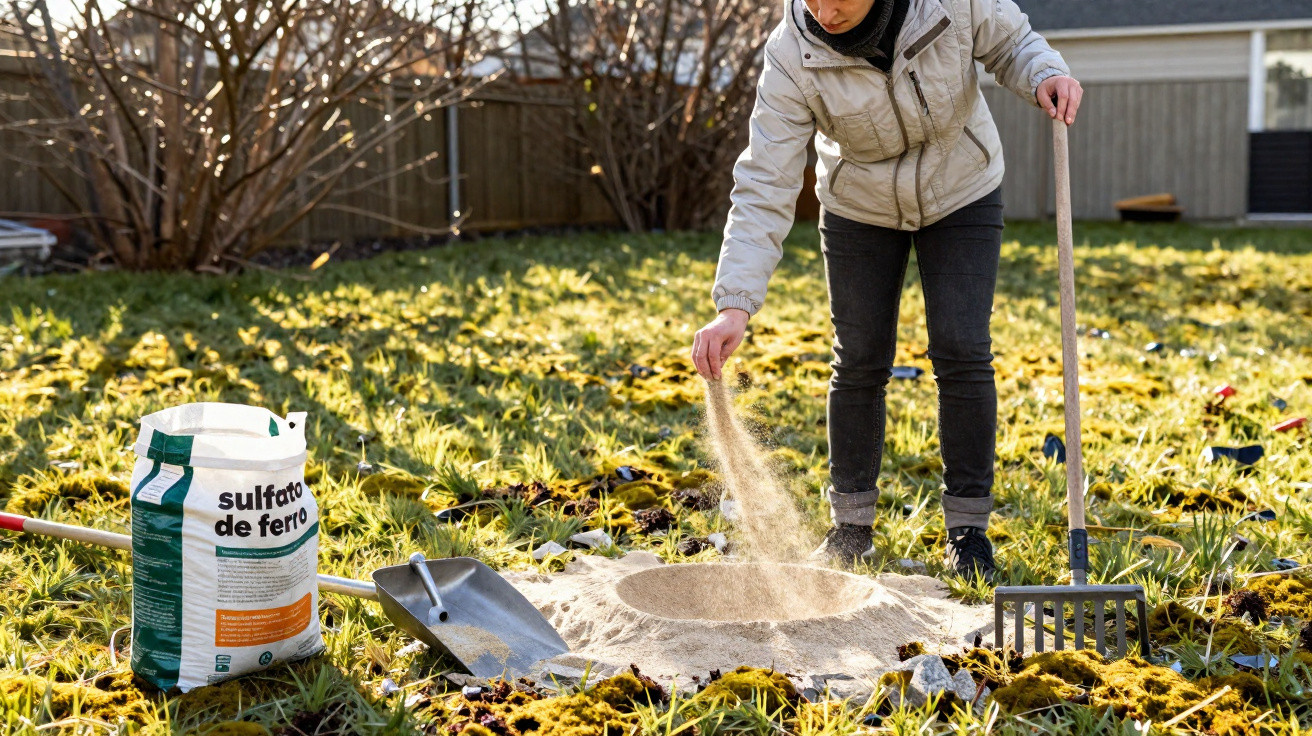
Many amateur gardeners panic and reach for costly specialist products. Yet an old, remarkably straightforward method starts much earlier – before the first mild days arrive. Passed down from our grandparents’ generation, this approach uses two readily available materials to stop moss gaining a foothold in the first place.
Why moss so often takes over in spring
After a wet winter, soil is commonly waterlogged, compacted and short of air. Those are precisely the conditions moss thrives in. The damp, cool weather of late winter and early spring is almost perfect for its delicate cushions.
Grass has different requirements: it needs light, nutrients and loose soil. When the ground has become sealed, the lawn is permanently shaded or heavily used, grass begins to lose ground. Moss then spreads gradually, beginning in small patches before forming a dark carpet.
Several familiar factors are particularly likely to encourage moss:
- standing water caused by poor drainage
- overly acidic, nutrient-depleted soil
- deep shade from trees, hedges or walls
- frequent use, for example as a children’s play area or dog lawn
- continual close mowing instead of leaving the grass slightly longer
Moss is not a sign of a “bad gardener”, but a warning: the site does not suit the lawn – while it suits the moss perfectly.
Treating the lawn only with an iron product in spring addresses the symptoms rather than the cause. As soon as another cool, damp spell arrives, the issue returns. Older generations therefore adopted a preventative routine that begins towards the end of the cold season.
The old trick: prepare the lawn in late winter
The principle is to give the lawn a head start shortly before spring. Moss is held back before it can establish itself properly. The method relies on two materials: iron sulphate and river sand, often supplemented with a little rock dust.
Step 1: Apply iron sulphate in late winter
Iron sulphate, usually sold as a lawn feed for controlling moss, is familiar to many gardeners. The key difference is when it is used. Rather than applying it in April or May, this routine starts at the end of winter, once the lawn is largely free of snow and the soil is no longer frozen.
The first stage is carried out as follows:
- Dissolve the iron sulphate in water according to the manufacturer’s instructions.
- Apply the solution evenly across the lawn on a dry but overcast day.
- Avoid walking on the area where possible over the following days.
- Once the moss cushions have darkened and dried out, rake them out thoroughly.
The product attacks the fine structure of the moss, causing it to turn dark and die. At the same time, the iron supplies the grass with a nutrient it uses to produce chlorophyll. After a few weeks, many lawns appear noticeably richer in colour and denser.
Important: rinse off any splashes on paving, patio slabs or concrete immediately with water, otherwise stubborn rust stains can develop.
Step 2: Add a thin layer of river sand and rock dust
After the dead moss has been raked away, the lawn can look rough and somewhat bare. This is the point at which the second part of the routine begins. Instead of immediately covering it with fertiliser, spread a very thin layer of sand over the grass.
Washed, relatively coarse river sand mixed with a small proportion of rock dust is ideal. Experienced gardeners use the following guide quantities:
| Material | Amount per square metre | Purpose |
|---|---|---|
| River sand | Approx. 2–3 mm layer depth | Improves drainage and soil structure |
| Rock dust | 10–15% proportion of the sand | Adds minerals and lightly buffers the pH value |
The sand fills shallow hollows, opens up the upper soil layer and helps water drain away more effectively. There is less standing water, while the surface dries faster once the sun becomes stronger. Moss dislikes these conditions, whereas grass can extend its roots more easily.
Combining moss removal with iron sulphate and soil improvement with sand creates conditions in which grass retains the upper hand.
Keeping the lawn low in moss afterwards
The two-stage late-winter routine provides a strong foundation. To prevent the lawn from deteriorating again the following year, it also needs several simple but consistent care measures throughout the seasons.
Mow correctly: leave it a little longer
Many people mow their lawn extremely short out of habit, almost like a golf green. For most domestic gardens, this is the wrong approach. A cutting height of around 5 to 6 centimetres is better. The grass then develops deeper roots and shades the soil more effectively, leaving moss with less light.
Useful guidelines for healthy mowing are:
- never remove more than one third of the blade length in a single cut
- mow more often but less severely during the growing season
- raise the cutting height slightly in hot, dry weather
Aerate the soil and remove thatch regularly
Moss readily settles in compacted ground with poor air circulation. Scarifying the lawn in spring and autumn removes old root debris and thatch from the turf. This gives the grass more air and room to grow.
In heavily compacted areas, aeration is also worthwhile: small holes are made in the soil to allow more oxygen and water into deeper layers. A little more sand can then be worked in, where it will settle into the holes.
Apply nutrients in moderation – do not overdo it
A dense lawn is always the best defence against moss. It needs feeding to achieve this, but only in appropriate quantities. Many manufacturers promote powerful quick-release fertilisers that produce intensely green grass for a short time, but may disrupt the balance of the soil over the longer term.
Gentler approaches favour slow-release fertilisers applied at a moderate rate. Some gardeners also swear by finely scattered wood ash from the fireplace, provided it contains no paint residues or coal. Some mix it with compost, while others apply a light layer directly to problem areas.
For persistent islands of moss, some people also use sodium bicarbonate, more commonly known as bicarbonate of soda. Applied sparingly as a powder or dissolved in water, it slightly alters the pH value in the surface layer and can therefore disrupt moss growth. Careful dosing is advisable so that the soil balance is not upset.
What really causes moss in a lawn
Anyone who battles moss every year should investigate the underlying causes rather than relying solely on treatments. It is often the result of a combination of soil type, position and use. Heavy clay behaves differently from sandy ground, and a narrow north-facing side of a house differs from a sunny south-facing area.
A soil test from a garden centre or laboratory reveals how acidic or alkaline the ground is and which nutrients are lacking. Further lawn care can then be tailored accordingly. In some cases, an appropriately timed application of lime is enough to make conditions far less favourable for moss.
Combining the old winter routine of iron sulphate and river sand with these findings usually reduces moss pressure year after year. The lawn looks more resilient, recovers faster after wear and stays evenly green for longer in wet springs.
A realistic perspective is also needed in the long term: moss may still reappear in extremely shady corners or permanently wet dips. In these places, it can make more sense to replace lawn with shade-loving perennials, ground-cover plants or a deliberately created moss area – reducing the maintenance required.















Comments
No comments yet. Be the first to comment!
Leave a Comment