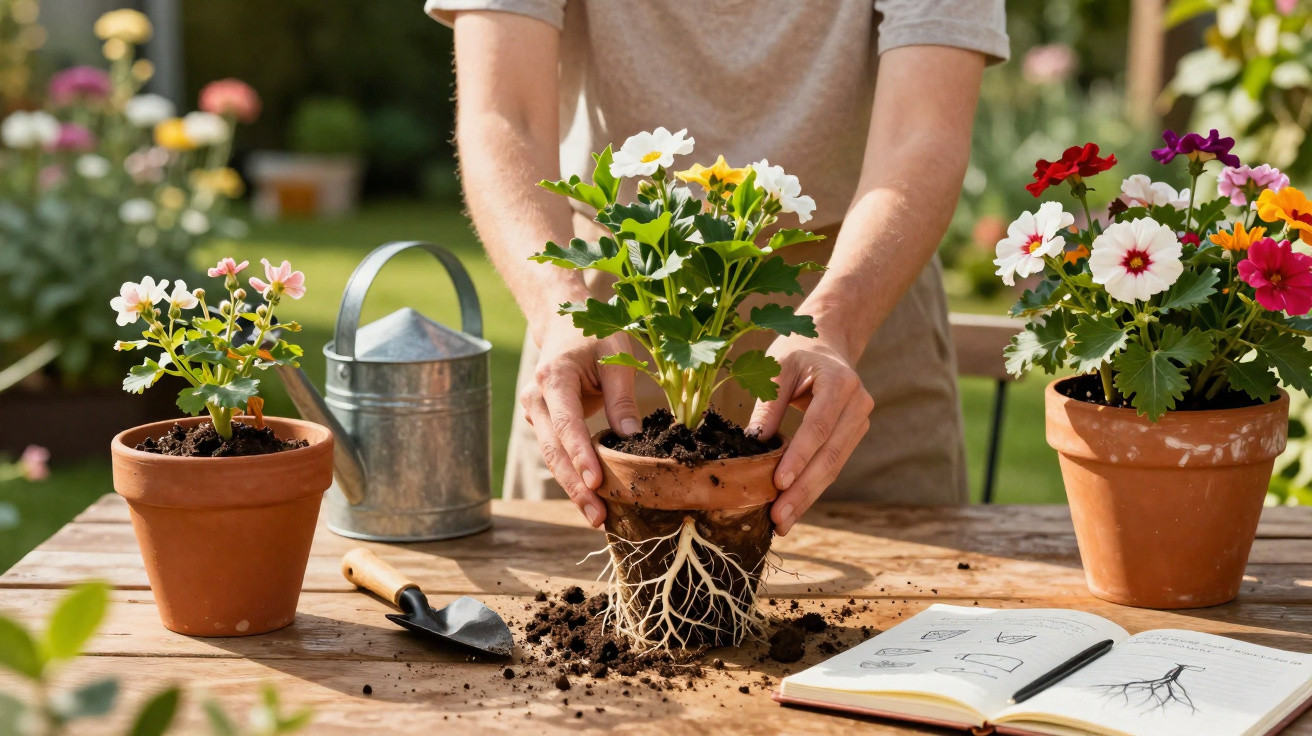
You pass your neighbour’s garden and feel that familiar little pang. Their roses are upright, with sturdy stems and velvety petals. Their geraniums are bursting with colour, while yours at home are… doing their best: slightly limp, somewhat pale and a touch like “I had potential once”.
You water them, choose healthy-looking plants and even chat to them when nobody is around.
Still, something is not quite right, although it is hard to identify exactly what.
One understated, decidedly unglamorous factor separates sagging flower beds from thriving borders. Once you notice it, you will see your flowers differently forever.
The hidden reason some flowers never really take off
Take a walk through any town in late spring and the contrast is obvious. Some front gardens resemble a florist’s display brought outdoors, whereas others appear… weary. The plants and weather may be the same, but the outcome is completely different.
The deciding factor is often not the plant itself or the fertiliser brand.
It is the invisible activity below ground: the living soil surrounding the roots.
A reader in Kent once told me about the year she nearly gave up on dahlias. She had bought precisely the same variety as a friend living opposite, during the same weekend and from the same shop. They had even planted them on the same day.
By July, her friend’s dahlias had reached chest height and were covered in blooms. Hers were no more than knee-high, with spindly stems and hesitant flowers, as though they were always arriving late to a party.
She initially blamed the weather, slugs or perhaps the tubers. One evening, though, she watched her friend watering. Rather than merely sprinkling the surface, she gave the plants a thorough soak at their base every few days. Before planting, she had also discreetly dug compost into the bed instead of leaving it only on top.
That was the crucial difference. It was not a miracle fertiliser.
It was care at root level: proper soil structure, deep watering and oxygen where roots really grow.
The real fix: caring for the roots, not just the flowers
When your flowers seem weaker than everyone else’s, begin with the most straightforward adjustment: water differently. Frequent, shallow watering encourages roots to remain close to the surface, where they are vulnerable to heat and wind.
Instead, water more thoroughly but less frequently, allowing moisture to reach 15–20 cm into the soil. This encourages plants to root more deeply, into ground that is cooler, more stable and more forgiving.
Then consider the soil your plants inhabit. For a root system, compacted soil is much like concrete. A plant may have the correct position and sufficient sun, yet its roots cannot breathe or spread if the ground is dense and lacking air.
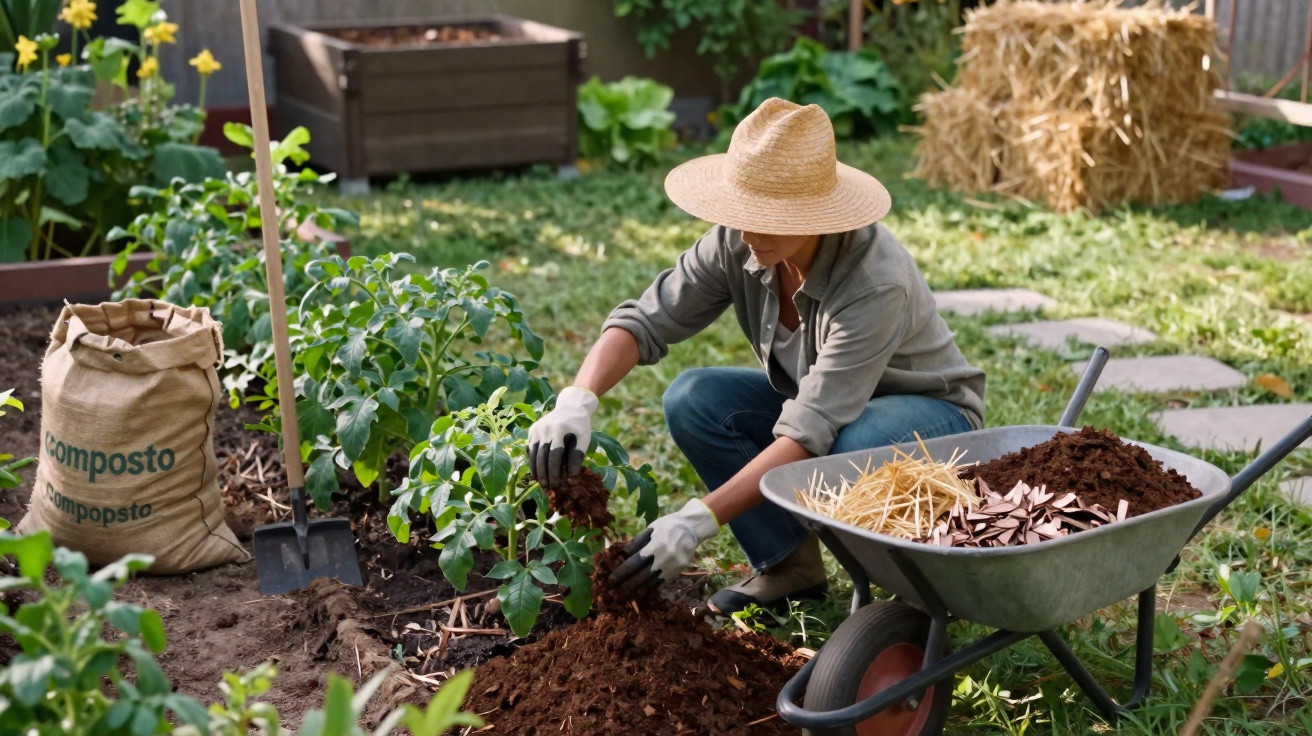
Carefully loosen the soil around young plants using a hand fork, then work in a little compost or well-rotted manure. You do not need a huge amount; a modest layer is enough. Realistically, nobody does this every day, but tackling it once or twice yearly can transform the way flowers grow.
Sometimes it’s not that you have a “bad hand” with plants. It’s that your flowers are stuck living in a hard, shallow world while your neighbor’s roots are on a quiet holiday in soft, living soil.
- Water deeply once or twice weekly
This builds robust root systems and produces firmer stems. - Lightly loosen the upper 10–15 cm of soil
It provides roots with space, air and easier access to nutrients. - Add compost or leaf mould regularly
This nourishes soil life, improves drainage and encourages better flowering. - Mulch around each plant’s base
Mulch limits evaporation, cools the roots and stops the surface from forming a crust. - Avoid constant tinkering
Allow roots to establish and develop rather than disrupting them every few days.
Why this small shift changes everything you see above ground
Once you focus on roots rather than petals, the whole story of your garden changes. Instead of comparing blooms, you begin to consider what is happening beneath your feet. Your neighbour’s flourishing border no longer seems mysterious; it looks like the result of patient habits centred on the roots.
Your own plants may react more quickly than expected. They first become a little more upright, then their stems grow thicker, followed by buds appearing in clusters rather than as isolated single flowers.
You may also spend more time kneeling down and testing the soil with your fingers instead of simply looking from the window. That simple habit of checking whether the ground is cool and moist further down gradually replaces guesswork.
The emotional sting of walking past another person’s immaculate garden also begins to fade. You understand what they have probably done differently: added more compost, watered more deeply and interfered less with the surface. You are now playing the same game, only with better rules.
There is no instant miracle, and that is strangely liberating. Flowers supported by strong roots need a season or two before they truly shine, but they cope better with heatwaves, missed watering sessions and windy weather once they do.
You begin to have greater faith in your garden. Rather than watering in a panic, you water with purpose. And when a stranger eventually slows outside your gate to admire your blooms, you will remember that the meaningful change started in the quiet darkness of the soil, long before anyone noticed the flowers.
| Key point | Detail | Value for the reader |
|---|---|---|
| Deep, spaced-out watering | Soak the soil to root depth once or twice a week instead of daily sprinkles | Leads to stronger roots, less droop, and more resilient flowers |
| Looser, living soil | Gently break up compacted ground and add compost or organic matter | Gives roots air, nutrients, and room to grow, increasing bloom quality |
| Simple, repeatable habits | Check soil with your fingers, mulch yearly, avoid constant disturbance | Makes flower care easier, more intuitive, and less frustrating long-term |











Comments
No comments yet. Be the first to comment!
Leave a Comment