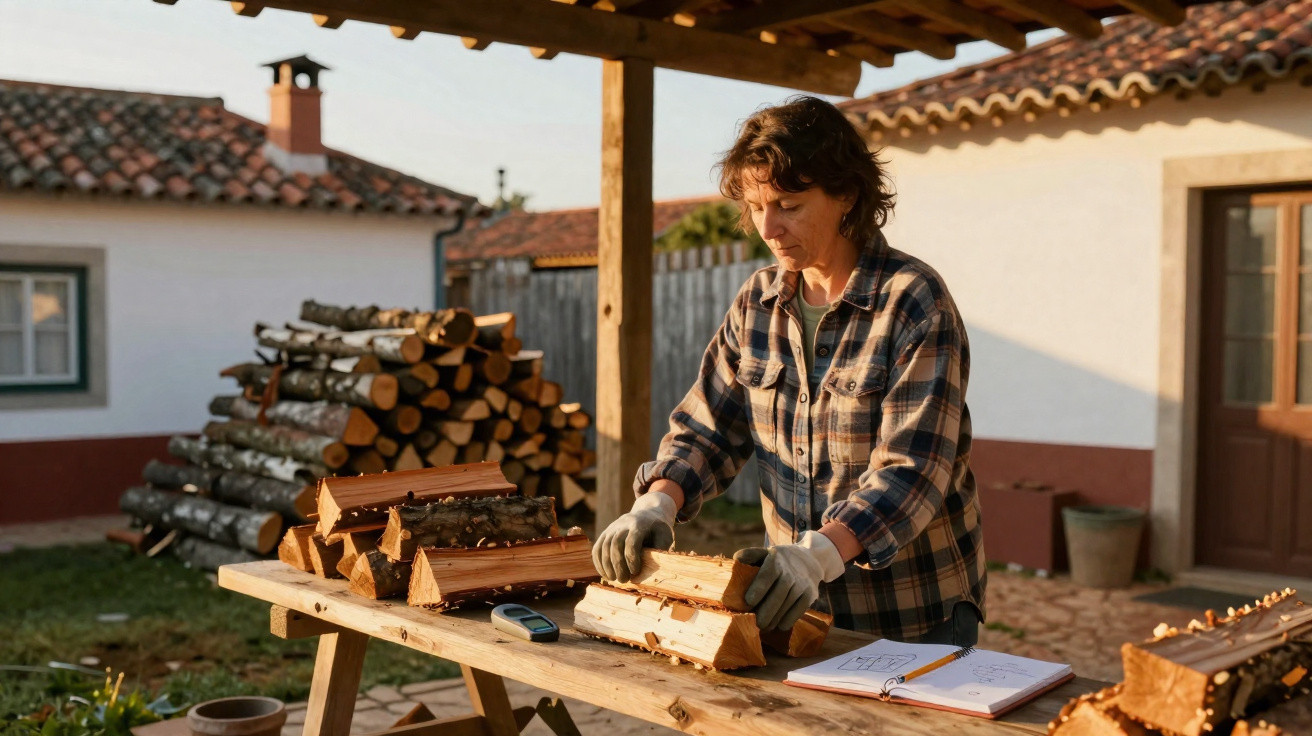
On a wet October morning in a small village, the first real cold spell finally set in. People opened their sheds with a flicker of anticipation, picturing the comforting crackle of a cosy evening fire. Then came the let-down: logs bloated with moisture, bark coated in a fine grey fuzz, and a sour odour hanging in the air. Firewood stacked months before would not catch; it simply hissed instead of burning.
Neighbours blamed the weather. Others complained about “bad wood.” But when specialists were called in, their assessment was harsh: poor storage, basic guidance overlooked, and householders branded “lazy” and “ignorant.”
The problem was that nobody had properly explained those rules to them in the first place.
When months of preparation become a heap of unusable logs
Most of us know that moment: you light a match confidently, only for the fireplace to refuse to cooperate. The flame touches the log, splutters briefly and fades, leaving smoke and irritation behind. The people who carefully stacked their wood in spring are then left watching it smoulder, feeling partly annoyed and partly at fault.
Some ring the local chimney sweep or an energy adviser, hoping for an easy fix. Instead, they receive a reprimand about moisture content, airflow and the direction of the stack. These terms can feel like accusations aimed at people who supposedly “didn’t do it properly”. The criticism can bite harder than the cold.
Consider Marie and Julien, a couple who moved from the city to a rural home last year. In April, they bought three cubic metres of “seasoned oak”, arranged it tidily against a garden wall, carefully covered it with a plastic tarp and carried on with everyday life. By November, not one log would burn as it should.
Smoke filled their chimney, while their newly decorated sitting room smelled like a rain-soaked campsite. A neighbour tested the wood with a moisture meter and found that it contained more than 30% water. That made it unsuitable for clean heating. The specialist they contacted merely shrugged, saying they had “stored it like amateurs.” Nobody had told them that wrapping a pile tightly in a tarp is among the quickest ways to rot a year’s supply of wood.
These everyday household mishaps are rooted in a straightforward technical fact: even once it is “dead”, firewood remains a living material. It breathes, takes in moisture from the surrounding air and releases it gradually. Put against the wrong wall, facing the wrong way or directly on the ground, it acts like a sponge. Rather than drying through the long summer months, it ferments and deteriorates.
Specialists often insist that “everyone knows” wood needs good air circulation, a raised base and a south-facing wall. Yet not everyone grew up with a wood-burning stove or a grandfather showing them how to make a proper stack. Criticising people for not knowing overlooks something essential: knowledge has to be passed on.
Storing firewood so it burns properly in winter
A successful woodpile begins well before winter, and it involves more than simply “buy dry wood”. The first step is remarkably straightforward: allow the logs to breathe. In practice, this means raising them at least 10–15 cm above the ground on pallets or wooden battens, preventing them from drawing in moisture from below.
Orientation matters next. A wall exposed to sun and wind dries firewood much like a natural hairdryer. A north-facing spot that is shaded and confined, however, slowly starves the pile of air. Keep spaces between rows, do not compress everything into a single dense mass, and protect the top while leaving the sides completely open. A proper roof is best, though even a slightly sloping sheet of corrugated metal works far better than an airless tarp.
Most unsuccessful woodpiles have the same story. The logs are placed straight onto soil, then wrapped entirely in plastic “for protection”. With no air movement, condensation becomes trapped and fungi thrive. Several months later, the wood may appear sound on the outside, while remaining saturated within.
In truth, few people spend their Sundays holding a moisture meter and testing every log as though it were a laboratory specimen. They depend on what they have observed, what the seller vaguely mentioned while unloading the delivery, or brief advice picked up on social media. When experts respond with eye-rolling remarks about “laziness”, they overlook the fact that many households are trying their best with incomplete and sometimes conflicting guidance.
Some professionals have begun challenging this blame-focused attitude. Rather than assigning fault, they favour teaching people. One experienced stove installer told me:
“I keep seeing perfectly good wood ruined by storage, then people feel stupid on top of being cold. If we explained storage as clearly as we explain how to pay the invoice, we’d solve half the problem.”
To avoid becoming another disappointed firewood owner, follow a handful of practical rules:
- Raise firewood on pallets or blocks; never put it directly on soil.
- Keep the sides exposed to air and cover the top only.
- Position the stack towards sun and wind whenever you can.
- If it is not certified very dry, order wood at least 6–12 months in advance.
- Split thick logs, as smaller pieces dry more quickly and evenly.
Beyond “laziness”: learning, sharing and avoiding another wasted winter
Behind failed fires and mouldy logs lies a broader issue: how practical knowledge is handed down. For older generations, dealing with wood was often a childhood task. They learnt almost instinctively where it should be kept and how a log should feel if it was ready to burn. Younger homeowners frequently have to work it out alone, with YouTube as their only guide and hurried delivery drivers who unload the wood and leave.
Calling them “ignorant” overlooks the wider picture: lifestyles have changed, energy costs have risen, and wood heating is returning without the cultural instruction manual that once came with it. That gap leads to wasted money and energy, extra smoke, and a sense of embarrassment that people do not always acknowledge.
| Key point | Detail | Value for the reader |
|---|---|---|
| Ventilation of the stack | Wood raised off the ground, sides open, top protected only | Logs remain dry, burn hotter and last longer through winter |
| Timing of purchase | Order wood months in advance if it is not already fully seasoned | Cuts moisture problems and reliance on poor-quality, last-minute loads |
| Ending the blame game | Move from accusing “lazy users” to explaining clear, simple methods | Less guilt, more independence and fewer expensive storage errors |
FAQ:
Question 1 Why does my wood hiss and smoke rather than burn properly?
Hissing and heavy smoke generally indicate that the wood is still wet inside. Moisture locked in the log turns into steam, cooling the fire and producing additional smoke. Even wood that appears dry at the surface may be too damp if it was stored badly or placed directly on the ground.Question 2 Is covering the pile with a tarp really a bad idea?
A full, tight tarp around the entire pile causes problems because it holds moisture in. A tarp can be useful if it covers only the top and leaves the sides open. The aim is to shield the wood from direct rain while allowing air and wind to pass through the stack.Question 3 How long does wood need to dry before it is ready to burn?
Depending on the species and how it has been split, wood usually requires between 12 and 24 months to dry. Softwoods dry more rapidly, while thick hardwood rounds take much longer. If a seller offers “freshly cut” wood in autumn, it is for next year, not for this winter.Question 4 Can I still use wood that went mouldy in storage?
Light surface mould may disappear after the wood finishes drying in improved conditions, but badly mouldy logs often indicate prolonged dampness. Burning heavily mouldy wood is not ideal for indoor air quality. Many people choose to use it for outdoor fires or throw away the worst pieces.Question 5 Do I really need a moisture meter, or is that excessive?
A small moisture meter is useful but not essential. Tapping logs together and listening for a clear “clack”, looking for cracks at the ends, and judging how light the log feels can all provide clues. A meter simply confirms that the wood is around the 15–20% range preferred by most stoves.
















Comments
No comments yet. Be the first to comment!
Leave a Comment