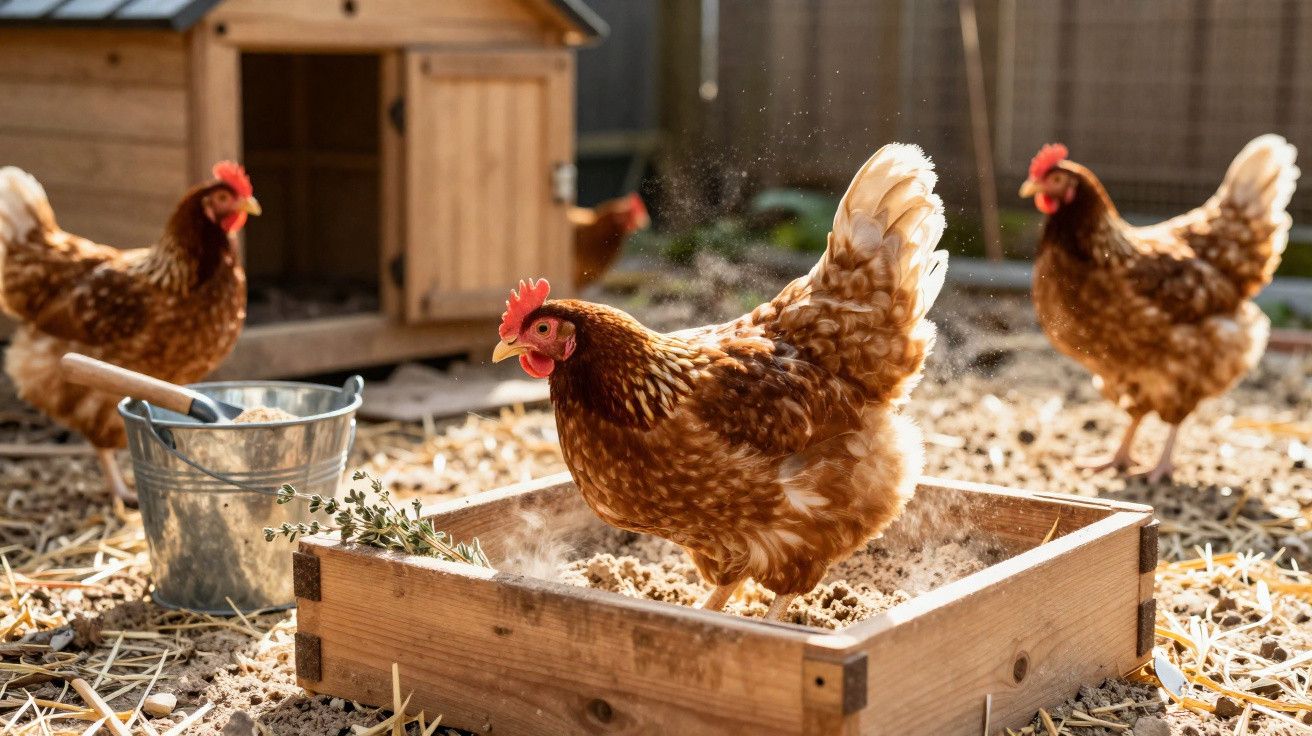
In spring, the signs are often unmistakable: chickens keep scratching, look dishevelled and produce fewer eggs. In many coops, the same culprit is responsible - red poultry mites and other skin parasites. Rather than buying costly chemical treatments from the shops, an increasing number of keepers are using a straightforward addition to the run that can largely tackle the issue by itself: a purpose-made chicken dust bath.
Why red poultry mites quickly become a problem in the chicken coop
Red poultry mites thrive in dark cracks, damp timber and narrow gaps around the coop. They hide during daylight hours, then emerge at night to feed on blood, weakening the birds.
- Chickens suffer from intense itching.
- Their feathers stand out and become dull and untidy in appearance.
- Egg production drops noticeably, with fewer eggs that are often smaller.
- Over time, anaemia and a weakened immune system can result.
Many keepers immediately turn to sprays, powders and concentrates from the garden centre. These products often work only temporarily, affect the air inside the coop and can be expensive. They also overlook a natural ally in parasite control: chickens' instinctive grooming behaviour.
A dust bath, not a wash: chickens clean themselves differently
Anyone who lets chickens roam freely in the garden will have seen it: the birds scratch out a hollow in dry soil, settle into it and roll enthusiastically through dust and loose particles. To newcomers, it can initially look strange, almost like a fit - but it is simply chicken-style personal care.
“A well-prepared dust-bathing area works like a natural wash station against mites, lice and other pests.”
As chickens roll about, fine particles reach the skin, dislodge larvae and eggs, absorb excess skin oils and block the parasites' breathing openings. Red poultry mites, feather lice and other unwelcome visitors are therefore far less able to establish themselves or multiply in large numbers.
Water does not help chickens with this task. On the contrary, a proper “bath” wets their plumage, destroys its insulating layer of trapped air, chills the birds and creates a damp environment in which bacteria and mites find almost ideal conditions. Chickens therefore do not need a garden hose; they need a dry, dusty area prepared specifically for them.
The solution: a dedicated chicken dust bath in the run
All that is really required is a suitable container and the right filling. Together, they create a chicken “wellness area” that also acts as a natural barrier to parasites.
Suitable containers for a chicken dust bath
Almost anything sturdy with raised sides can be used:
- a strong wooden crate or wine crate
- an old mortar tub or plastic container
- a shallow galvanised metal tub
- a second-hand livestock or feed trough
Only a few details matter: the sides should be high enough to stop the dust from being thrown out straight away, yet low enough for the birds to step or jump in and out easily. For four or five chickens, a container measuring around 50 x 50 centimetres and 15 centimetres deep will usually be sufficient.
The ideal ratio for the filling material
For the dust bath to work properly, it needs a dry mixture with very fine particles. For a larger container, the following blend has proved effective:
- 10 litres of dry, fine sand
- 5 litres of sieved wood ash
- 5 litres of very fine, stone-free garden soil
Each component has its own purpose:
| Component | Function in the dust bath |
|---|---|
| Fine sand | Acts like an exfoliant, mechanically loosening larvae, mites and dirt from the feathers. |
| Sieved wood ash | Blocks parasites' breathing openings and absorbs excess skin oils. |
| Fine soil | Binds the mix together, making it pleasant to use and helping it hold its form while birds roll in it. |
The wood ash must be completely cold and carefully sieved, so that no hot remnants or coarse fragments end up in the bath. Anyone who barbecues regularly or has a fireplace will have a supply available for much of the year.
The best location for a dust bath in the chicken run
The chosen position determines whether chickens can use the bath consistently. An ideal corner is:
- dry and unlikely to turn muddy,
- sheltered from rain, for example beneath a roof or canopy,
- easy to reach, allowing several birds to use it at once,
- not in permanent shade, but also not in harsh midday sun.
If rain regularly enters the container, the fine mixture turns into a heavy sludge that no chicken will want to use. A simple wooden overhang, corrugated sheet cover or protected spot beside the coop is usually enough.
Keeping the chicken dust bath effective over time
The dust bath needs a little maintenance to remain useful, but it involves very little effort.
Weekly routine
A brief weekly inspection is worthwhile:
- Break up clumps using a small rake or hand trowel.
- Remove feathers and visible droppings.
- Top up the mixture if the filling level has fallen noticeably.
Once the mixture feels damp, becomes heavy or takes on an even grey, dull colour, it has absorbed too much moisture and dirt. At that point, the only solution is to empty it completely and make a fresh batch. The old material can be added to the compost without difficulty.
Signs that it is working
Many keepers report an improvement in their birds' condition after just a few weeks. Common signs include:
- Chickens scratch themselves much less often.
- Their plumage looks smoother and glossier.
- The birds spend relaxed, almost “blissful” minutes in the dust bath.
- Egg production and eggshell quality improve again.
“For many experienced keepers, a well-used dust bath is now an essential part of a chicken coop - alongside food, water and perches.”
How a dust bath fits into a complete health plan
Anyone wishing to keep red poultry mites under lasting control should combine the dust bath with other straightforward measures. Parasites favour dark hiding places, damp corners and dirty surfaces. It is therefore worth taking a critical look at the coop:
- Reduce or seal joints, cracks and gaps in the timber.
- Remove and clean perches regularly.
- Keep bedding dry, adding smaller amounts more frequently.
- Empty and replace nest boxes and laying nests completely from time to time.
A dust bath is not a replacement for basic coop hygiene, but it greatly strengthens its effect. The birds actively help by tackling parasites on their own bodies, while the keeper maintains the coop and its surroundings.
By filling the dust bath thoughtfully, you give chickens an effective tool in their “wings”. They instinctively accept this type of care and need no period of adjustment. Many will practically dive into the new container as soon as it is placed in the run.
For small-scale keepers with limited budgets and little time, a dust bath is therefore a particularly appealing option: the cost remains low, the materials are easy to obtain and the birds do most of the work themselves - with visibly healthier feathers, less itching and a coop in which mites find it far harder to spread.













Comments
No comments yet. Be the first to comment!
Leave a Comment