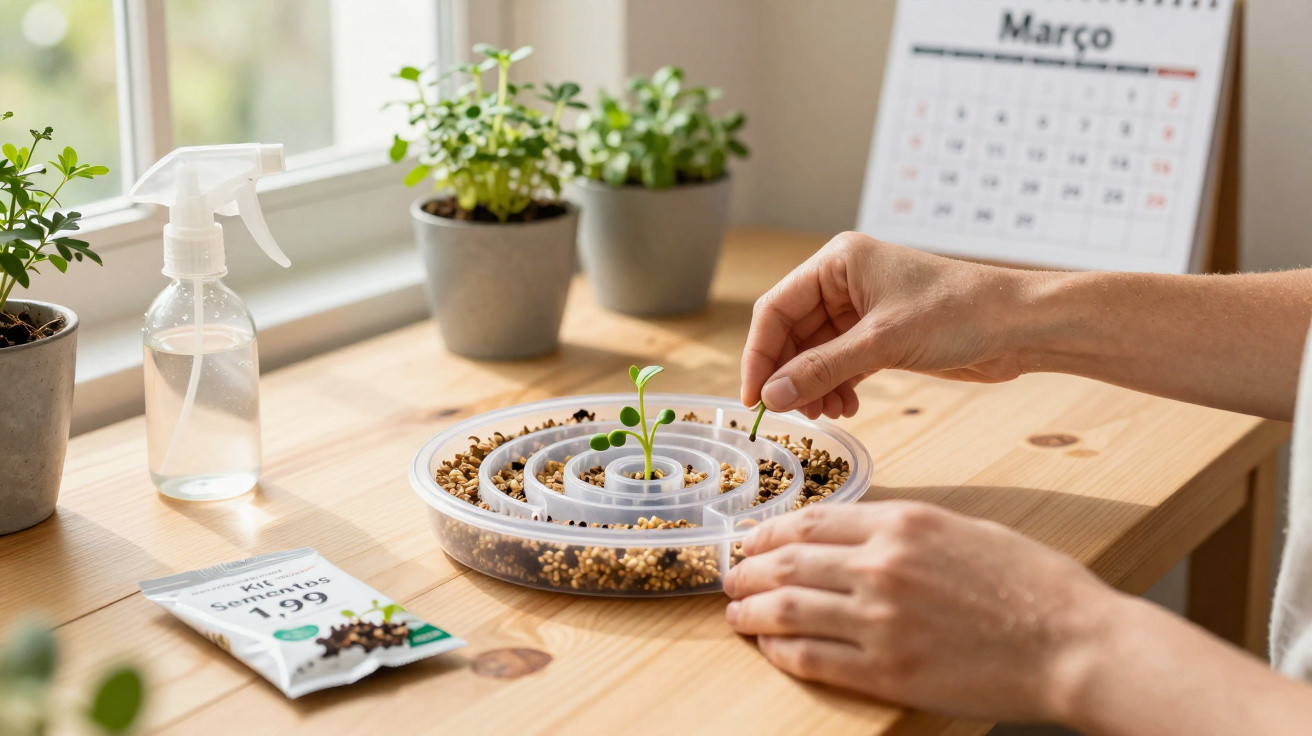
Seed racks are full and the days are getting brighter – yet getting the season under way often feels only half successful. Seedlings topple over, mould spreads, and tomatoes and other crops shoot up thin and leggy. In many March gardens, the issue is not a lack of skill but disorganised sowing. An unassuming Action product, the My Garden “seed snail” kit for €1.99, promises a surprisingly straightforward solution.
What the €1.99 Action set really contains
At first glance, this looks like the sort of impulse-buy gadget found near the till. In reality, there is a far more considered system behind it: the kit brings together everything needed for an organised start to sowing in one compact format.
How the My Garden seed snail works
The pack essentially contains four components:
- a growing pot that provides a sturdy base;
- a long, narrow seed strip measuring approximately 60 x 10 cm;
- two elastic bands for securing it;
- the spiral shape created when the strip is rolled up.
Prepare the seed strip with fine growing medium, scatter the seeds loosely across it, then roll it into a snail shape. Place this spiral upright in the pot and hold it together with the elastic bands. This creates a compact yet clearly organised sowing area that can be monitored within a single container.
“The major benefit: all seedlings are close together, yet remain easy to monitor – one glance is enough to check moisture, mould and growth.”
Why March is the ideal time
The shift from winter to spring creates conditions that can be difficult for seeds. Indoor air is often dry, sunshine may be absent one day and blaze through the window the next, while temperatures beside the glass fall sharply at night. This is exactly where the kit comes into its own: everything is contained in a small space and can quickly be moved to a more suitable spot.
Rather than having five separate trays spread across a windowsill, you have one centralised system that can be lifted away from draughts or moved closer to the light in a single motion.
Common sowing mistakes the seed snail neatly reduces
Anyone who starts sowing afresh every March tends to encounter the same pitfalls surprisingly often. The seed snail is designed to address precisely these trouble spots.
Too wet, too crowded, too confusing
Three familiar mistakes are especially likely to cause disappointment:
- Overwatering: trays sit in water, the growing medium becomes airless and fungi take over.
- Sowing too densely: a green carpet may look appealing initially, but the seedlings soon start collapsing one after another.
- Windowsill chaos: varieties, labels and differing requirements all become muddled together.
The spiral format makes it much easier to control water levels precisely. Instead of pouring large amounts on from above, use small quantities to moisten the strip evenly. The defined sowing area also makes it simpler to space seeds out rather than scattering them in clumps.
Consistent moisture: the real trigger for germination
Most seeds need steady contact with lightly moist growing medium, rather than a cycle of drought followed by a deluge. The rolled strip absorbs moisture much like a sponge and releases it gradually. Checking it briefly each day and adding a minimal amount of water or mist when needed gets conditions close to the point at which germination begins most effectively.
Steady warmth rather than a windowsill heat shock
Many home gardeners place sowings directly on a windowsill above a radiator. The sun can beat down during the day, the glass cools everything at night and the heating warms the base – a temperature rollercoaster for seedlings. The small pot offers greater flexibility: a position inside the room, slightly away from direct radiator heat, will usually provide much more even conditions.
A professional-looking sowing setup in 15 minutes
The kit’s main appeal is that even beginners can achieve a tidy process without overthinking it.
Choose a light, fine seed compost
Use dedicated seed compost or a very fine, loose growing-medium mix. Moisten it lightly before filling so that it holds its shape when pressed between your fingers without becoming dripping wet. Heavy garden soil is best left outdoors, as it quickly compacts and can slow germination.
Step-by-step method
- Unroll the seed strip on a table.
- Spread a thin layer of moist seed compost over it.
- Scatter the seeds loosely, leaving a little space between them.
- Carefully roll up the strip from one side.
- Stand the roll in the pot and secure it with the elastic bands.
- Lightly moisten the top edge once more, and the job is done.
“The aim: seeds sit at a similar depth throughout, make sufficient contact with the growing medium and are protected from major watering mistakes.”
Watering without displacing the seeds
Pouring directly from a watering can onto freshly sown compost can easily wash away entire rows of seed. With the seed snail, a spray bottle or a small watering can fitted with a rose is enough. Water little and often rather than heavily and infrequently. This keeps seeds largely in place and produces pleasingly even lines of germination along the spiral.
Keep it moist, ventilate it and inspect it daily
At the start, a little protection is useful, such as a loose covering or a transparent lid over the pot. Regular ventilation is essential once condensation appears. A quick daily check will reveal when the first shoots emerge and when they need more light.
Which plants are especially suitable in March
To make the €1.99 kit genuinely worthwhile, choose varieties that can be started now and germinate reliably.
Classic vegetables for an early start
Popular choices that suit the spiral format include:
- Tomatoes: warmth-loving plants that are ideal for raising indoors.
- Peppers and chillies: they need a long season and benefit from an early, stable start.
- Lettuce: often germinates quickly and provides encouraging early results.
- Brassicas: depending on the variety, these can be started indoors as early as March.
If you are unsure where all the resulting plants will go, sow smaller quantities in several batches. That way, all the seedlings will not become unmanageable at the same time.
Fragrant herbs that need extra care
Herbs such as basil, parsley and chives often germinate better in a warm indoor setting than in a bed that is still cool. Basil in particular enjoys the stable conditions that the seed snail can provide easily. Parsley may take its time, but responds well to consistent moisture.
Flowers for a long summer display
Sow ornamental plants now and you will have much stronger flowering plants in summer. Whether you choose French marigolds, zinnias or a mixture of summer flowers, sowing in a compact space allows you to trial different varieties without turning the entire living room into a nursery.
When seeds fail to emerge: quick first aid
Even with a well-organised system, some sowings can initially disappoint. In most cases, the cause is something that can be corrected.
Too much water: spot the signs and act
If the strip remains soaking wet or develops a musty smell, rot is a risk. Stop watering, remove any cover and place the pot somewhere with a little more airflow. Allow the surface to dry slightly before cautiously adding water again. The target is a noticeably moist condition, not one that looks glossy and wet.
Insufficient light: rescuing leggy seedlings
If you react too late, you will soon see thin, unsteady stems leaning towards the window. Move the pot immediately to a bright position and turn it regularly. With tougher plants such as tomatoes, seedlings can later be planted slightly deeper when pricking out to help them stand more firmly.
Temperature problems: encourage germination by changing location
If almost nothing has germinated after two or three weeks, examine the location more closely. If it is much colder directly by the window than in the rest of the room, moving the pot further into the room – where there is similar light but less cold shock – may make the difference.
From spiral pot to bed: turning seedlings into strong plants
The real success is not the first hint of green, but how well plants establish later in the garden or on the balcony.
Repot at the right time
Once the first “true” leaves appear after the seed leaves and the stems no longer wobble like spaghetti, it is time to separate individual plants from the snail and place them in small pots. Pulling them out too early can damage their delicate roots. Leave them too long, however, and the young plants will compete for light and nutrients.
Harden plants off before moving them outdoors
Plants that have spent weeks in a warm living room do not cope well with being moved straight outside. Instead, acclimatise them gradually to fresh air and cooler temperatures over several days. Begin with short stays in the shade, then increase them slowly – this helps plants cope far better with the change of location.
How the kit remains useful throughout the season
The €1.99 kit is not finished after the first March round. It can also be used for later sowings, small trials with unusual varieties or quick repeat sowings when space becomes available in a bed. Anyone who enjoys experimenting – with rare tomato varieties or seed collected at home, for example – has an inexpensive, reusable tool at hand.
For beginners especially, the system removes much of the uncertainty from the process. Clear organisation, minimal space requirements and controllable moisture turn a shaky start to the season into an orderly routine, where seeds benefit from stable conditions rather than chance.













Comments
No comments yet. Be the first to comment!
Leave a Comment