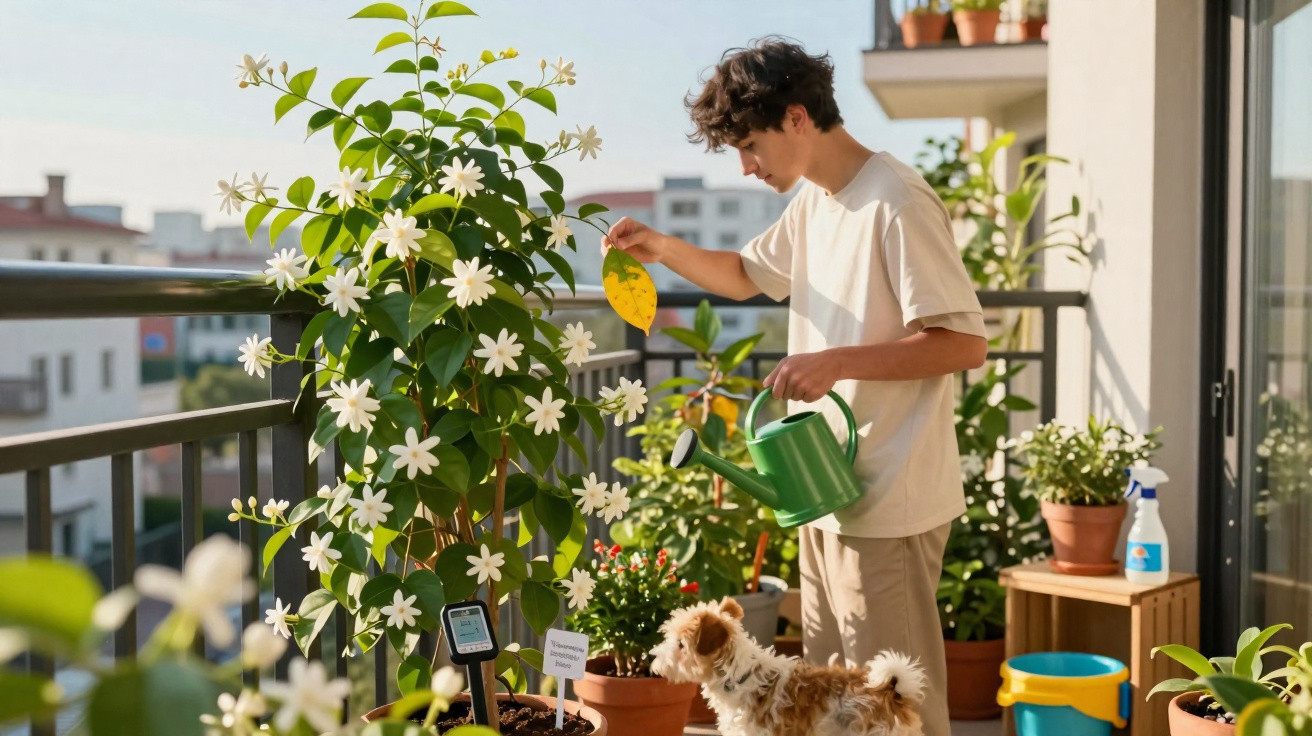
Star jasmine is often presented as the dream climber for balconies and gardens: evergreen, lavishly flowering and, on summer evenings, scented like a holiday abroad. In reality, however, a purchase from the garden centre can easily end in disappointment: leaves discolour, buds drop, the plant spreads unchecked – and many pet owners wonder whether it could harm their four-legged companions. Checking a few key points before planting can prevent precisely these problems.
Location and climate: when star jasmine genuinely thrives outdoors
Star jasmine comes from areas with mild winters. In Central Europe, it performs best where temperatures only rarely fall far below freezing. In such locations, it can remain outside all year and increases in both height and width every season.
The situation is different in places with harder frosts. Leaves may turn black and fall, while individual shoots can freeze back to ground level. Although the plant often regrows, flowering may be delayed or fail altogether if frost returns each winter.
“A south- or west-facing position, protected from wind and as frost-free as possible – that is star jasmine’s comfort zone.”
In colder areas, it is worth choosing a large container instead of planting it in a border. The ideal position is:
- directly beside a sheltered house wall
- facing south or west
- away from constant draughts, such as those at exposed corners
- somewhere the pot can be protected in winter with horticultural fleece, bubble wrap or a thick hessian sack
When star jasmine is planted directly in the ground, avoid placing it in a frost pocket – the coldest part of the garden. A slightly raised, free-draining spot in front of a wall retains warmth and helps prevent waterlogging.
Keeping growth under control: an ornamental plant can soon become a green bulldozer
Once its position suits it, star jasmine grows remarkably quickly. Many amateur gardeners underestimate this, then find that within a few years it has covered downpipes, railings and neighbouring shrubs.
It is therefore best to plan from the outset for:
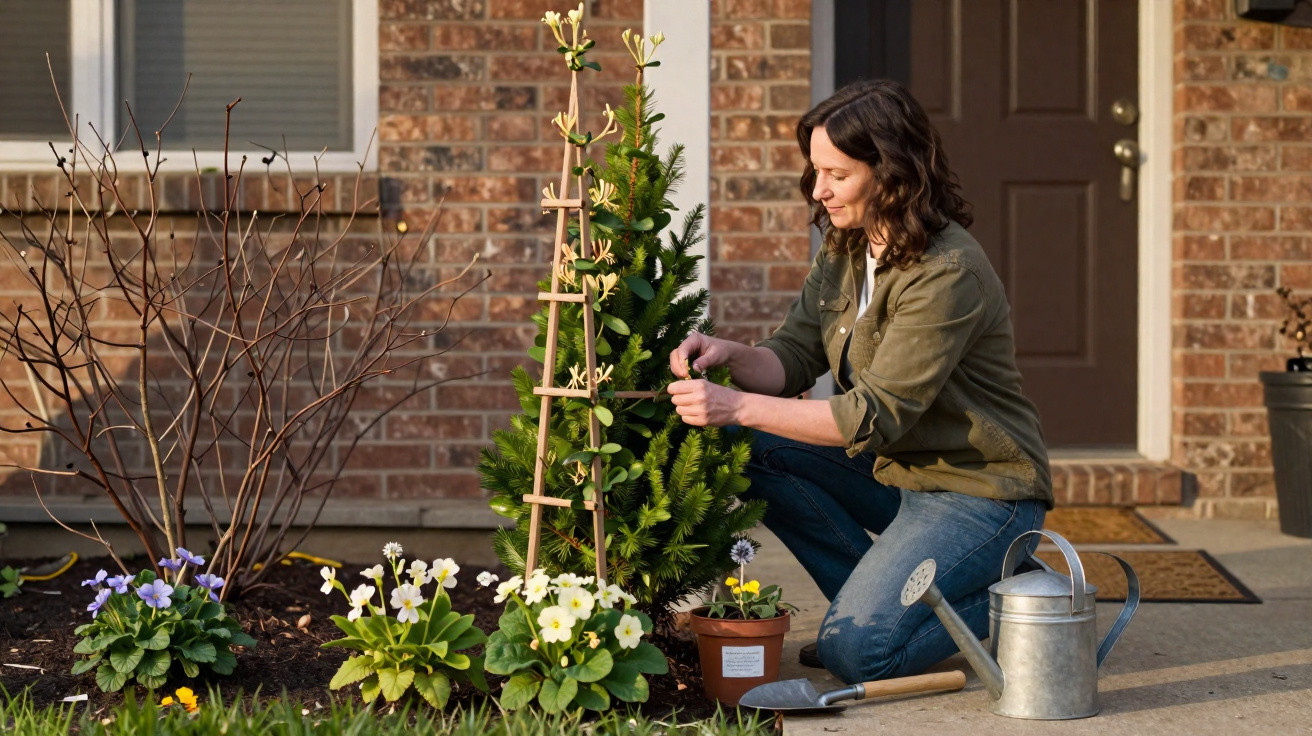
- a sturdy trellis or wire-support system on the wall
- enough clearance from windows, gutters and neighbouring plants
- annual pruning after flowering
Regularly shortening the tips of the shoots encourages the shrub to branch more, remain compact and flower more densely. Left entirely unchecked, it will soon send climbing stems into every available space – including roof tiles, air vents and the canopy of a nearby shrub.
Yellow leaves: why water and light are usually the real culprits
The most common complaint about star jasmine is: “It develops yellow leaves and drops its buds.” In many cases, the straightforward cause is lack of water, particularly in containers.
Watering correctly: a thirsty beauty with high expectations
Star jasmine prefers soil that is fresh to slightly moist. Its root ball must never be allowed to dry out completely. In a sunny position in a pot, it will often need watering every day during hot weather, and sometimes twice daily at the height of summer.
“Yellow leaves plus a dry pot: this is almost always a clear sign that the plant has not had enough water.”
If the root ball has dried out entirely, ordinary watering is rarely enough. The compost repels the water, which simply runs down the sides. In this case, use a soaking treatment:
- Fill a large bucket or tub with water.
- Submerge the pot until no more air bubbles rise to the surface (10–20 minutes).
- Allow it to drain well, then water more consistently afterwards.
The compost in the pot must be loose and free-draining. A layer of expanded clay or gravel at the bottom of the container helps to prevent waterlogging, which could otherwise cause root rot.
Light requirements: no cloud of flowers without sunshine
Too little light is the second major reason gardeners are disappointed. Star jasmine needs several hours of sun to flower profusely. It may grow on a dark north-facing balcony, but it will form few, if any, buds.
Five to six hours of sunshine per day is ideal, for example against a warm south- or west-facing wall. If the plant is kept in too much shade, its shoots become long and thin, and the buds drop before they can properly open.
Soil type and lime: when veins stay green while leaves turn yellow
Star jasmine is sensitive to lime-rich soil and hard tap water. It is one of the plants known as acid lovers. If the pH level is clearly above 6.5, it absorbs iron less effectively. This causes a characteristic symptom: the leaf surface turns yellow while the veins remain green – an indication of iron deficiency, technically called “chlorosis”.
“Yellow leaves with green veins point less towards drought than to a problem with lime and nutrient uptake.”
This can be addressed by:
- watering with rainwater whenever possible
- mixing peat-free rhododendron or ericaceous compost into containers
- using a specialist iron-containing treatment if lime is a serious issue
- improving garden soil with leaf mould, composted bark or conifer litter
A simple rule of thumb applies: anyone who successfully grows rhododendrons, blueberries or camellias will usually also have suitable conditions for star jasmine. In traditionally lime-rich areas, growing it in a pot with the right specialist compost is nearly always worthwhile.
Pests and care: other stresses for this climbing star
Overall, star jasmine is regarded as robust. Even so, pests can occasionally appear in summer, especially in warm, sheltered positions.
Mealybugs, scale insects and sticky leaves
Sticky leaves coated with a black film are a warning sign. Sap-sucking insects such as mealybugs or scale insects have left behind their sugary secretion, known as “honeydew”. Sooty mould fungi then colonise this sticky layer.
If spotted early, the plant can be roughly wiped down with a soft cloth and lukewarm water, followed by a suitable plant-protection product based on soap or vegetable oil. It is important to wet the undersides of the leaves thoroughly, as this is where most of the insects are found.
Beetles and feeding damage
Occasionally, beetles chew the leaves and flowers. They are usually clearly visible on the shoots. In a small garden, it is enough to collect them by hand in the morning and drop them into a bucket of water with a little washing-up liquid.
Risk to dogs, cats and children: how toxic is star jasmine?
One issue that is often buried at the bottom of plant descriptions should be clear before buying: star jasmine is considered potentially toxic to pets. Dogs and cats in particular, if they like chewing leaves, may develop diarrhoea, vomiting and pronounced lethargy after eating parts of the plant.
“Anyone who lets a dog or cat roam freely in the garden should choose the location for star jasmine carefully or, if in doubt, select another climbing plant.”
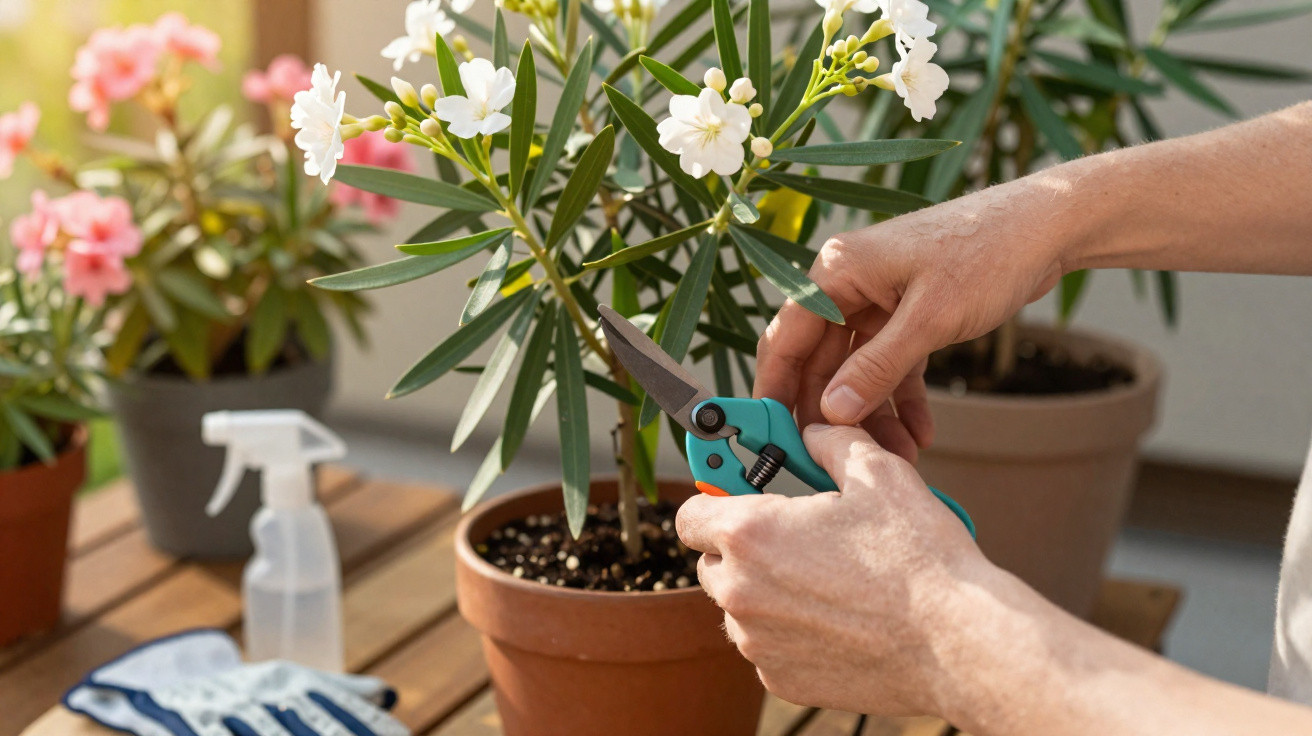
When shoots are cut or broken, the plant releases a milky sap. This latex can irritate the skin. People who are sensitive should wear gloves while pruning and avoid direct contact with the eyes and mucous membranes.
For households with young children, a location that they cannot easily reach is advisable – for example, high up a wall with no direct access. Star jasmine is less suitable within reach of a sandpit or directly beside a playhouse.
Quick check before planting: does star jasmine suit my home?
| Question | “Yes” answer | “Rather no” answer |
|---|---|---|
| Do winter temperatures usually stay above -10 degrees? | Planting in the ground is possible, with light protection | A large pot is better; overwinter frost-free or with good protection |
| Is there a sunny, warm spot against a wall? | Good bud formation can be expected | The plant will grow but flower sparsely, if at all |
| Is soft water or rainwater available? | Lower risk of lime-related yellow leaves | Growing in ericaceous compost in a pot is advisable |
| Do pets or young children move freely around the planting area? | Choose a location at a distance or favour another species | Less problematic where access is restricted |
Practical examples and alternatives for sensitive gardens
Anyone with a south-facing city balcony often has ideal conditions: protection from wind, plenty of warmth and enough sunshine. In a 40- to 60-litre pot filled with loose, slightly acidic compost, star jasmine will readily climb two to three metres up a simple wire trellis and turn the balcony into a green, scented setting – provided the watering can is used regularly.
A different approach makes sense on housing estates with young children and pets: use star jasmine only on higher façades, and choose less problematic climbers such as climbing hydrangea or clematis in the garden itself. This preserves the look of a planted house wall without allowing a dog or toddler direct access to the plant.
Why the effort is still worthwhile
With all its requirements, star jasmine may initially seem complicated. In practice, it is simply a plant that needs clear conditions: not too cold, not too dry and not too lime-rich. Those who meet these needs are rewarded for years with glossy foliage and fragrant, star-shaped flowers.
Especially in densely built-up urban neighbourhoods, a single well-managed plant can completely change the character of a balcony: it screens views, softens some of the noise and creates a holiday feeling on warm evenings – without an airline ticket. For many garden enthusiasts, that is reason enough to consider the location, watering routine and safety issue carefully before planting.












Comments
No comments yet. Be the first to comment!
Leave a Comment