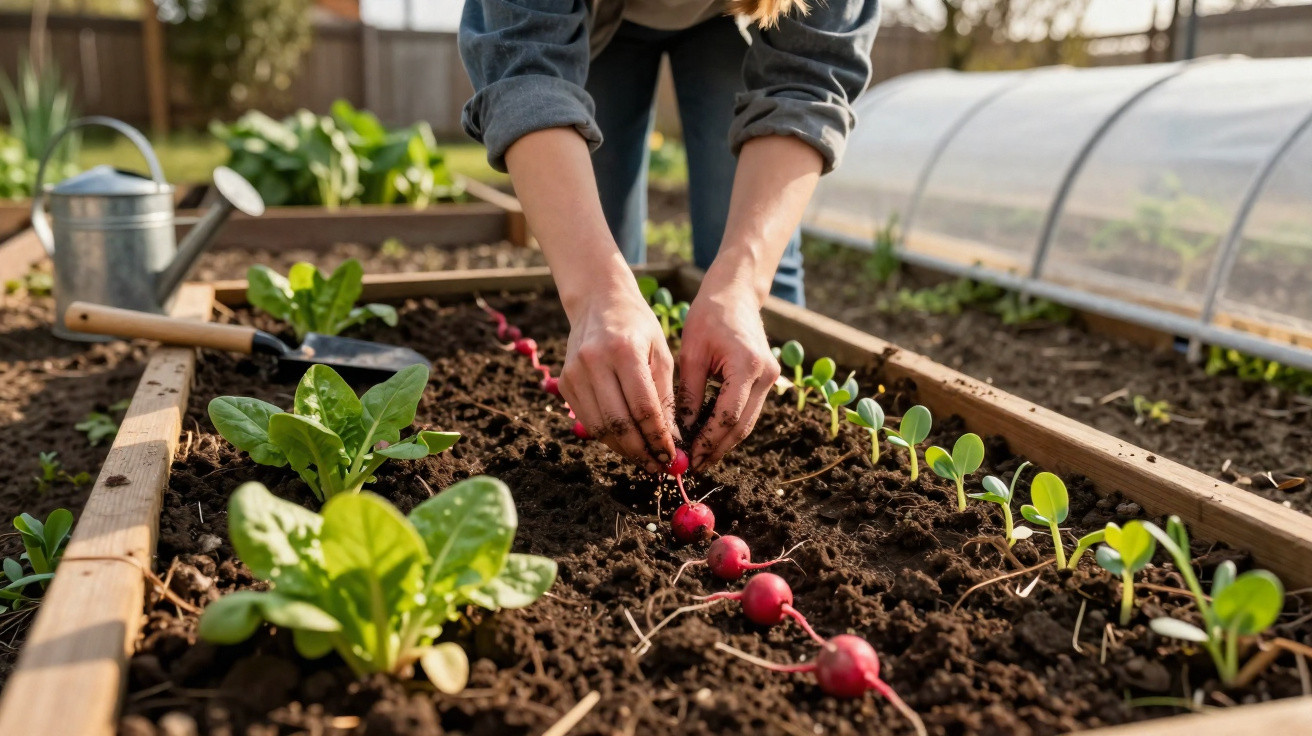
Winter is slowly retreating, and your hands are itching to feel soil again – but you do not want to wait forever for the first harvest.
That is exactly where March comes into its own. Plant wisely now and, just a few weeks later, you could be harvesting crisp radishes, tender lettuce or young spinach leaves – well before the big summer glut of vegetables begins. Four particularly fast-growing choices can make your bed productive as early as spring.
Why March marks the starting point for the vegetable garden
From March onwards, the mood in the garden changes: days lengthen, the soil thaws and the sun grows stronger. The vegetable garden comes back to life, bringing the prospect of an early harvest with it. Getting started now lays the foundations for the entire growing season.
Before reaching for the seeds, give the soil some attention. After winter, wet leaves, dead plant material and broken twigs are often scattered across the bed. Clear them away. This allows air to reach the soil, makes fungal diseases less likely and removes some of the places where slugs can hide.
Next comes the basis of every successful harvest: the soil itself. Loosen it with a garden fork or a cultivator, removing stones and old roots as you go. A layer of well-rotted compost improves its structure and gives seedlings nutrients. Experts have stressed for years that humus-rich soil produces plants that grow more quickly and are more resilient.
“Anyone who prepares the soil carefully in March will harvest noticeably more, and earlier, in April and May.”
It is also worth creating a simple growing plan: where will leafy vegetables go, where will root crops grow, and where will climbing plants be placed? Setting aside fixed areas for lettuce, root vegetables and climbers prevents overcrowding and competition for light and nutrients.
These four vegetables provide a first harvest in under 30 days
Many traditional vegetables, including tomatoes and peppers, take a long time to reach harvest. Several hardy early crops are very different: they tolerate cool weather and grow rapidly. Four are particularly appealing to sow in March.
1. Radishes – the lightning-fast choice for impatient gardeners
Radishes are the sprinters of the vegetable bed. Just a few days after sowing, the first seedlings push through the soil. Depending on the variety and the weather, you may be pulling the first roots from the ground after only three to four weeks.
- Germination: usually after 4–7 days
- First harvest: around 25–30 days after sowing
- Position: sunny to partially shaded
- Special feature: ideal for children and beginners
Sow them in shallow drills and cover only lightly with soil. If you sow a short row every few days, you can extend the harvest over several weeks. Thin out plants that are growing too closely together early on; otherwise, the roots may stay small or turn woody.
2. Loose-leaf and cut-and-come-again lettuce – tender leaves in record time
Not all lettuce grows at the same pace. Cos and iceberg lettuces take a little longer, but loose-leaf and cut-and-come-again varieties produce delicate leaves remarkably quickly. When sown densely, you can start cutting the first leaves after three to four weeks.
One major benefit is that you harvest only the outer leaves while leaving the centre intact. The plant then continues growing, so the bed supplies fresh salads over a long period. In spring, even a partially shaded spot is enough to keep the young leaves succulent and mild.
3. Spinach – a true superfood when harvested young
Spinach thrives in cool conditions, making it ideal for early spring. Sown in March, it grows quickly. For so-called “baby leaves”, three weeks is often enough.
The younger the spinach is when harvested, the more tender and mild its flavour will be. Use the leaves raw in salads, briefly wilt them in a frying pan or blend them into smoothies. Experts regularly highlight their high content of vitamins, minerals and secondary plant compounds.
“Young spinach leaves are among the quickest and, at the same time, most nutrient-rich harvests in the spring vegetable bed.”
4. Early peas – the first sweet pods of spring
Peas take a little longer than the other three choices, but early varieties often produce their first pods after just under six weeks. The way to achieve an “under 30 days” harvest is to start them indoors: sowing in pots at the beginning of March and planting them out later cuts the waiting time considerably.
Sugar snap peas and garden peas are especially popular because the young pods can be eaten raw or lightly blanched. Children often enjoy picking and eating them straight from the plant, quickly making them forget the frustration of the long winter break.
How to prepare the bed and seeds properly in March
For these turbo vegetables to fulfil their potential, the starting conditions need to be right. Three factors matter most: soil, seed spacing and watering.
Soil: loose, warm and nutrient-rich
All four vegetables prefer loose, crumbly soil. Waterlogging slows them down, while hard clods stop fine roots from spreading. Slightly raised beds or low mounded beds warm up more quickly and drain better – a real advantage in spring.
Spacing and sowing depth at a glance
| Vegetable | Sowing depth | Spacing within the row | Spacing between rows |
|---|---|---|---|
| Radishes | approx. 1 cm | 2–5 cm | 15–20 cm |
| Loose-leaf/cut-and-come-again lettuce | 0.5–1 cm, cover only lightly | 5–10 cm | 20–25 cm |
| Spinach | 1–2 cm | 5–10 cm | 20–25 cm |
| Peas | 2–3 cm | 4–6 cm | 30–40 cm |
Keeping reasonably close to these spacings prevents stress caused by competition and reduces disease. Rows sown too densely may look lush and green at first, but they often lead to weak growth and tiny yields later.
Watering: moist, but never soaking wet
During germination, the soil must not be allowed to dry out completely. At the same time, young roots do not like constantly wet conditions. The best approach is gentle watering, ideally with a rose attachment or a watering can fitted with a fine nozzle, applied more often in smaller quantities.
One tip is worth its weight in gold in spring: water in the morning. This gives leaves and the soil surface time to dry before evening, helping to prevent fungal diseases and making conditions less inviting for slugs.
Protection from cold, slugs and more
March can be unpredictable: mild sunshine during the day and frost in the soil at night. A simple fleece tunnel or an old window frame used as a cold frame is enough to protect sensitive young plants and keep the soil a few degrees warmer.
At the same time, the first tender leaves also attract the first hungry visitors. Slugs love young lettuce and spinach leaves. Physical barriers, such as slug fences, rough borders made from wood wool, or targeted hand-picking in the evening, are often more effective than any chemical treatment.
How to build the quick harvest into your annual plan
These four fast starters are perfect for filling gaps in the vegetable bed. Before slower-growing crops such as cabbage, celery or tomatoes, grow radishes or spinach first. By the time the main crop needs the space, the early crop will already have been harvested.
This lets you use the same area twice without overworking it. A typical combination in a home garden might look like this:
- March: sow radishes and spinach in rows
- April: make the first harvest, then plant young tomato or cabbage plants into the cleared areas
- May/June: the main crops grow, while more lettuce is sown between them
By planning this way, you will have fresh vitamins in spring, plenty of main vegetables in summer and still have a well-structured bed in autumn.
Why an early start in March pays off twice
A speedy harvest in under 30 days is only part of the benefit. Sowing in March helps you establish a rhythm, get to know your own soil and see early on which areas stay warm, damp or comparatively cool.
Radishes, lettuces, spinach and early peas forgive many beginner mistakes. At the same time, they immediately show how small changes in soil, watering and position can make a difference. This direct feedback helps you approach the rest of the gardening season more thoughtfully – and encourages you to carry on after that first lightning-fast harvest.












Comments
No comments yet. Be the first to comment!
Leave a Comment