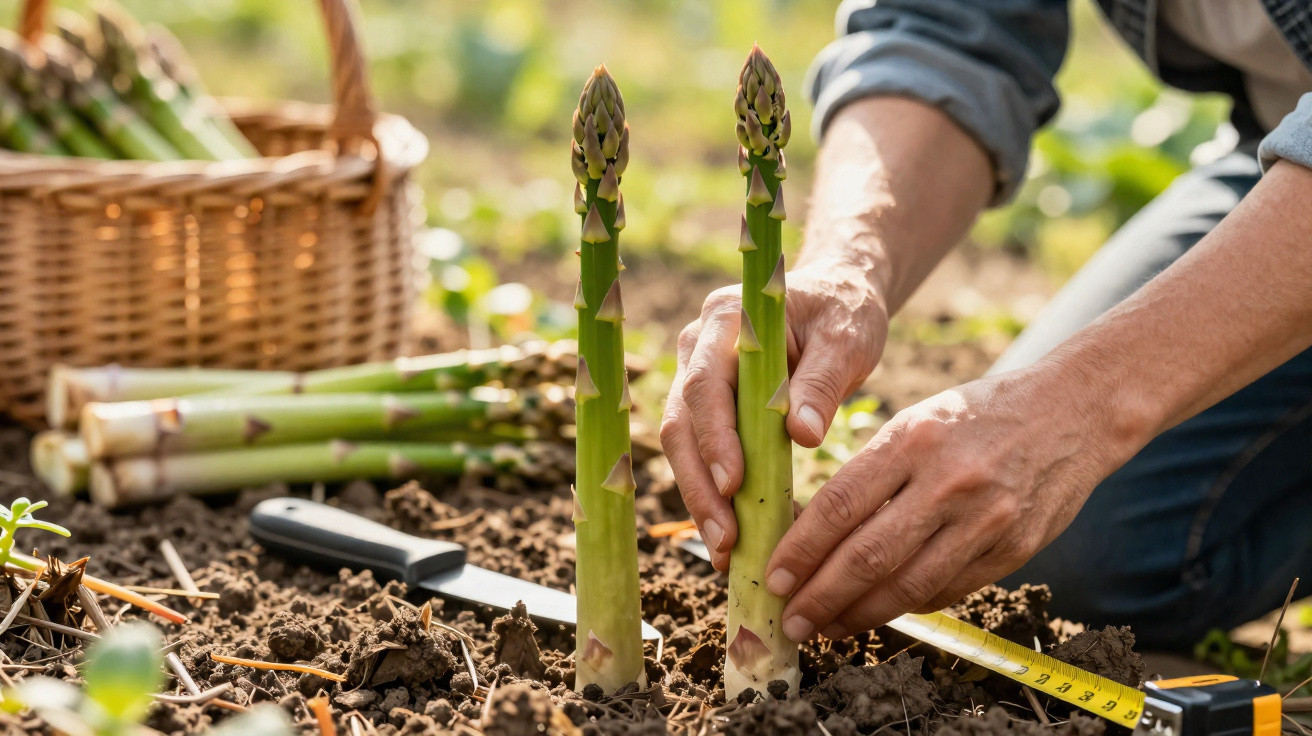
In spring, the first asparagus spears push up through the soil – and this is precisely when amateur gardeners often make a fatal mistake that ruins the entire harvest.
Anyone growing asparagus in their own garden knows the feeling: the spears visibly grow from one day to the next, making it tempting to let them shoot up a little further. More length, more weight, a bigger yield – it sounds logical. In reality, though, this thinking turns tender spears into woody stalks that are no pleasure either on the plate or in the mouth.
The great temptation: “Wait one more day and it will grow really big”
Why chasing size backfires with asparagus
Few vegetables grow as quickly in spring as asparagus. Those who walk through the garden each day can practically watch the tips emerging from the ground. This is exactly where the problem begins: many gardeners deliberately wait longer, hoping for a few extra centimetres of length and more weight in the basket.
From the plant’s perspective, however, something quite different happens during those hours than many people assume. The asparagus no longer puts its energy into juicy, tender tissue, but into strength and stability. It needs to stand upright, withstand the wind and produce foliage. That takes energy – and the plant draws it from the very part we later want to eat.
“Anyone who cuts asparagus too late harvests bulk rather than quality – and loses what makes it so sought-after in spring: tenderness and flavour.”
More length, less enjoyment: the damaging trade-off
With every extra centimetre, the balance inside the spear changes. The plant increasingly develops supporting tissue to hold its growing length. For us, that means fibres, toughness and hard work when chewing. The spear may look impressive on the plate, but eating it is disappointing.
Anyone raising asparagus in the garden will have spent months tending it, hoeing, fertilising and watering. That makes it all the more frustrating when, during preparation, half of it has to be cut away because the lower section consists of nothing but stringy, woody material.
How asparagus becomes woody within a few hours
The change from buttery tender to rock hard
The crucial process takes place in the outer layer of the asparagus spear. Once the plant reaches a certain height, it responds to wind, sunlight and its own weight. It produces more lignin – the natural “concrete” of the plant world that makes stems sturdy and firm.
For those eating it, lignin is what makes asparagus difficult to chew: fibrous structures that can barely be broken down in the mouth. Its delicate, creamy texture becomes a firm, straw-like mass in a short time.
The signs are particularly clear in everyday handling:
- The lower part of the spear no longer bends, but snaps.
- You encounter strong resistance when peeling it – the skin feels almost like wood.
- Cooked asparagus remains tough, however long it stays in the pan.
When flavour and sweetness disappear
It is not only the texture that suffers; the flavour does too. Young asparagus spears contain plenty of natural sugars, responsible for their distinctive mildly sweet, slightly nutty character. If the spears are left standing for too long, the plant uses these reserves to fuel further growth.
The result is asparagus that tastes watery and bland – and is often unpleasantly bitter. The delicate spring flavours for which so many people eagerly await the season have vanished. What remains is a vegetable that can only be partly rescued with plenty of sauce, butter or ham.
“Asparagus harvested too late is like an overripe apple: perhaps attractive on the outside, but far from ideal in flavour.”
The perfect time: when does asparagus really need to come out of the ground?
The 20-centimetre rule – and why it is so strict
One rule of thumb is widely followed by experienced gardeners: harvest asparagus when the spear is around 20 centimetres long. At this point, the balance between length, tenderness and flavour is at its best.
At this stage, the asparagus is:
- not yet heavily woody,













Comments
No comments yet. Be the first to comment!
Leave a Comment