Experts reach a very different conclusion.
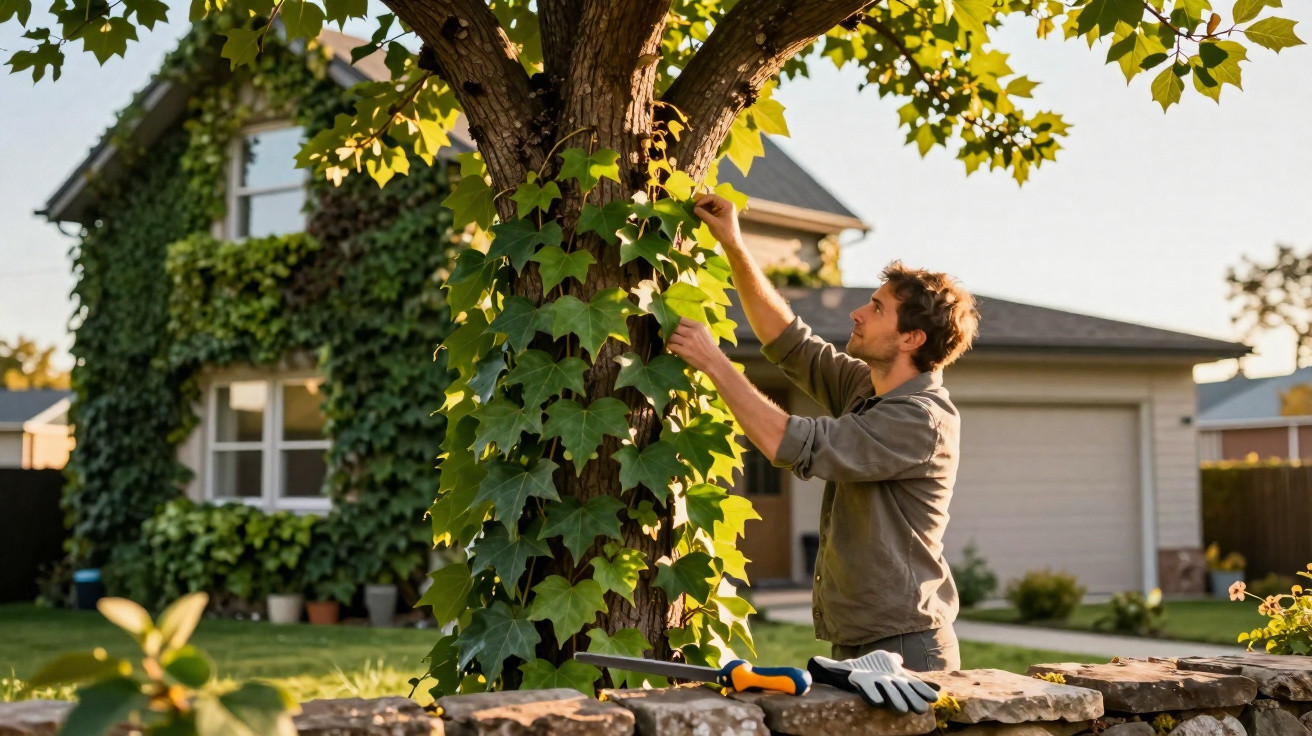
The same scene plays out in many front gardens every year: someone reaches for the shears and forcibly pulls ivy shoots from an old apple tree or house wall, firmly convinced that they are doing the right thing. However, new studies and practical experience present a more nuanced picture: anyone who removes ivy without thinking often loses an important protective layer for trees, walls and biodiversity.
Why ivy is not a parasite
The most important point first: climbing ivy (Hedera helix) does not behave like mistletoe or other parasites. Its roots grow in the soil rather than in the trunk. The clinging roots on bark or render serve solely as anchors.
“Ivy does not tap into a tree – it uses it as a climbing frame, not as a source of food.”
This changes the way many gardening instincts should be viewed. Completely tearing away ivy removes more than green ‘decoration’; it often takes away a functional part of the garden’s microclimate. Experts now describe this as a temporary symbiosis: both sides can benefit, provided certain limits are observed.
Ivy on trees: a natural coat rather than a danger
On a robust, healthy trunk, ivy acts like an extra layer of clothing. Its leafy cover insulates the tree and cushions it against extreme conditions.
- Sun protection: bark is less likely to overheat on hot days.
- Frost buffer: winter temperature fluctuations are less severe, making stress cracks less likely.
- Protection from driving rain: hail and heavy rainfall no longer strike the bark directly.
- Moisture buffer: the air around the trunk remains slightly more humid.
There is also an ecological aspect that many people underestimate. Dense growth provides hiding and nesting places for birds, refuge for small mammals, and shelter for countless insect species. Around the base of the tree, a carpet of ivy helps to prevent drying out and erosion.
“A single old covering of ivy can house hundreds of animals over the course of a year – from ladybirds to blackbirds.”
When ivy genuinely harms trees
Problems begin when the tree itself is weakened. In that case, ivy can amplify risks that already exist.
Typical warning signs include:
- very old, brittle trees
- clearly leaning trunks or visible areas of decay
- young trees and fruit trees with thin branches
- a canopy that is already heavily thinned out
In these situations, several effects can occur:
| Situation | Risk posed by ivy |
|---|---|
| weak tree | added weight in the canopy, creating a greater risk of breakage in storms |
| young tree / fruit tree | competition for light, crowding out fruit and shoot buds |
| already diseased tree | canopy structure is barely visible, so damage is identified late |
Doing nothing in these circumstances creates an avoidable risk during storms. The answer is not wholesale removal, but careful containment: prune ivy back from the canopy, while the lower trunk can often remain covered.
How to manage ivy on trees properly
Before taking action, assess the tree rather than the ivy. Check its structural condition first, then reach for the shears.
Practical rules of thumb:
- Healthy, vigorous tree: ivy can largely remain, with controlled pruning every two to three years.
- Young trees: only allow ivy at ground level and keep the trunk clear regularly.
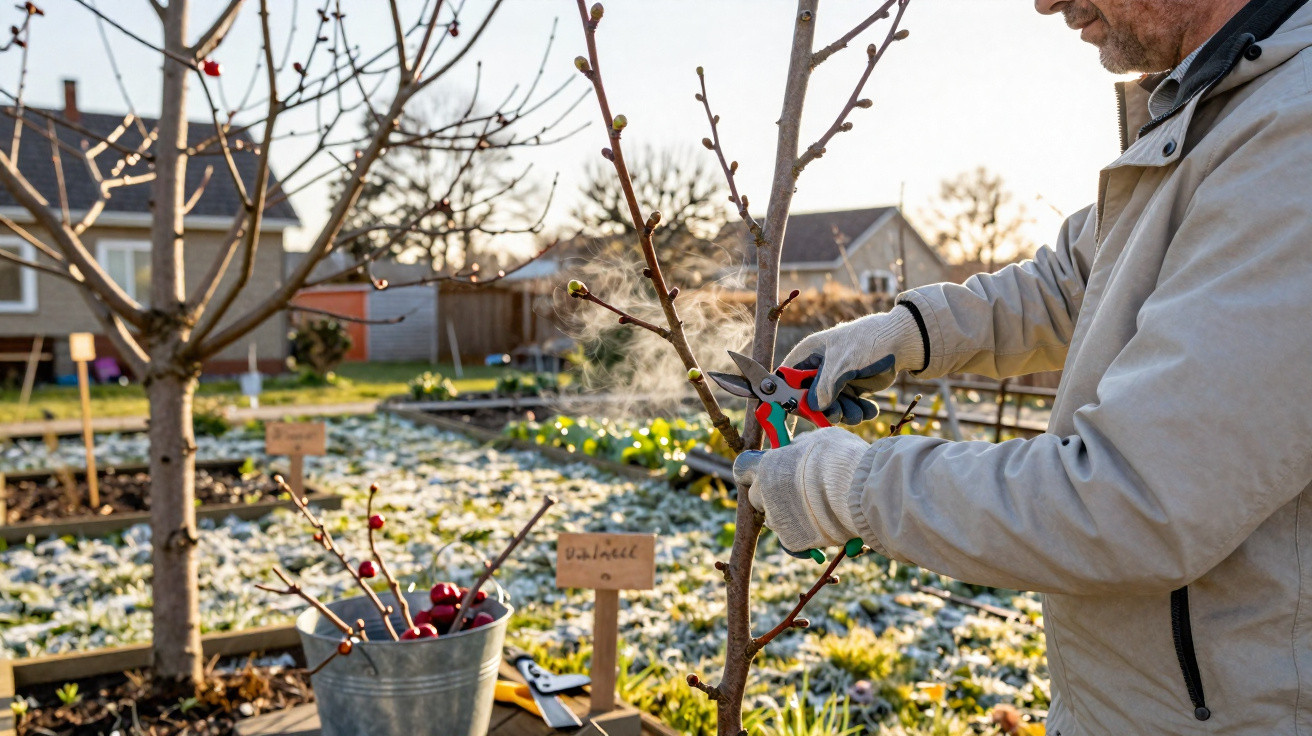
- Fruit trees: remove ivy consistently from the canopy so that light can reach the crown.
- Old problem tree: consult a tree surgeon and reduce the ivy gently rather than pulling it all away abruptly.
If you wish to cut back ivy, sever several main stems at around chest height and leave them in place. The upper sections will then gradually die back and dry out. This makes bark less likely to split, while wildlife has time to move elsewhere during the transition.
Ivy on façades: enemy or natural insulation?
A similar myth circulates around houses: ivy supposedly always tears apart walls and drags homes into ruin. Experts make much finer distinctions.
On an intact façade with sound render or neatly pointed brickwork, the clinging roots attach only at the surface. The stems sit against the wall like a second skin.
“On sound walls, ivy acts more like a protective curtain than a crowbar.”
This green curtain has measurable effects:
- protection from rain and splashback, especially during driving rain
- reduced extreme temperature peaks on the surface
- a slight improvement in thermal protection during winter
- filtration of fine dust and soot particles from the air
Urban façades in particular benefit from this filtering effect: dust sticks to the leaves, is washed away by rain, and therefore does not end up in window frames or ventilation ducts.
When ivy actually damages walls
The situation changes when the façade already has defects. Crumbling mortar joints, flaking render and fine cracks provide ideal entry points for ivy. Clinging roots penetrate them, wind moves the stems, water collects, and the damage worsens.
Particularly critical are:
- crumbling joints on older buildings
- flaking render and loose paint layers
- unprotected facing brickwork with open joints
- walls already affected by damp and salt deposits
- blocked gutters and downpipes
In such cases, ivy accelerates existing processes rather than causing them. Removing the stems without repairing the masonry therefore does not solve the issue. The cracks remain and continue to widen – simply without green growth.
How to check whether your façade can support ivy
Before planting ivy, and also before cutting it back radically, it is worth carrying out a quick visual inspection. This can be done with the naked eye.
- Tap the render and brickwork: a hollow sound indicates that something is loose.
- Look for fine cracks around windows and doors.
- Inspect the plinth area for rising damp or salt staining.
- Check gutters and downpipes for leaves and remaining stems.
If the wall appears stable, ivy can remain or be planted anew. Where there is visible damage, the order should be: repair first, then add greenery. This allows the plant to protect the façade rather than grow into its weak points.
Ecological role: ivy as a secret weapon for biodiversity
Ivy is one of the few native plants that flowers very late in the year. In autumn, when many other nectar sources have dried up, it still opens its blooms. For bees, hoverflies and wasps, this is like a late buffet.
Later, dark berries hang from the stems throughout winter. For many bird species, they are among the last reliable food sources once other fruit has long been eaten. At the same time, the foliage provides wind protection and camouflage for nesting sites.
“Anyone who banishes ivy completely from the garden creates a gap in the food and shelter chain from late autumn until spring.”
Practical examples: when to prune and when to leave it alone
Scenario 1: Ivy on an old apple tree
The trunk is sturdy and still bears fruit well, but the canopy looks somewhat sparse. In this case, it is enough to cut the ivy back heavily in the upper section. The lower trunk can remain green, the canopy receives light, and birds retain their hiding places.
Scenario 2: A fully greened house façade from the 1960s
The render has cracks and there are already damp problems in the cellar. Here, a planned removal is advisable: take away the ivy step by step, repair the render and repoint the joints. Later, a trellis with new climbing plants can be installed so the wall is not directly burdened.
Scenario 3: A modern new-build with a smooth rendered façade
Here, ivy can act as living sun protection, especially on south- and west-facing sides. Controlled planting, combined with pruning every few years, ensures that windows remain clear and gutters do not become overgrown.
Risks and how to limit them
No form of plant cover is entirely risk-free. Climbing plants generally increase wind resistance and can make maintenance more difficult. Anyone allowing ivy to grow should set clear limits:
- Regularly cut it back from windows, roof edges and gutters.
- Keep a particularly close eye on old, tall ivy-covered trees when storm warnings are issued.
- Carry out a visual inspection of the façade once or twice each year.
- Consult a structural engineer or tree surgeon if you are unsure.
With this minimum level of care, most risks can be contained without losing the ecological and structural benefits.
What terms such as ‘clinging root’ and ‘parasite’ really mean
The term ‘parasite’ repeatedly causes misunderstandings in discussions about ivy. A parasite actively takes nutrients from its host. Ivy, by contrast, keeps its root system in the soil. The clinging roots on a wall or trunk are not feeding organs, but tiny anchors.
The distinction between surface moisture and water saturation also matters. Ivy retains some moisture at the surface, while also shielding it from driving rain. Critical water saturation occurs only when cracks are present, allowing water to penetrate deep into the masonry.
How ivy can be combined with other garden ideas
Ivy does not need to stand alone. In naturalistic gardens, it is often paired with flowering climbers such as clematis or climbing roses. Ivy provides the evergreen base, while its companions add colour in summer. It remains important, however, that the overall weight on trees or façades does not become excessive.
Anyone wishing to encourage more small wildlife in the garden can use ivy as the backbone: add piles of leaves beneath it for hedgehogs, an insect hotel nearby, and a small deadwood pile. This creates a close network of shelter and food sources that offers far more than a sterile, ‘tidy’ garden.














Comments
No comments yet. Be the first to comment!
Leave a Comment