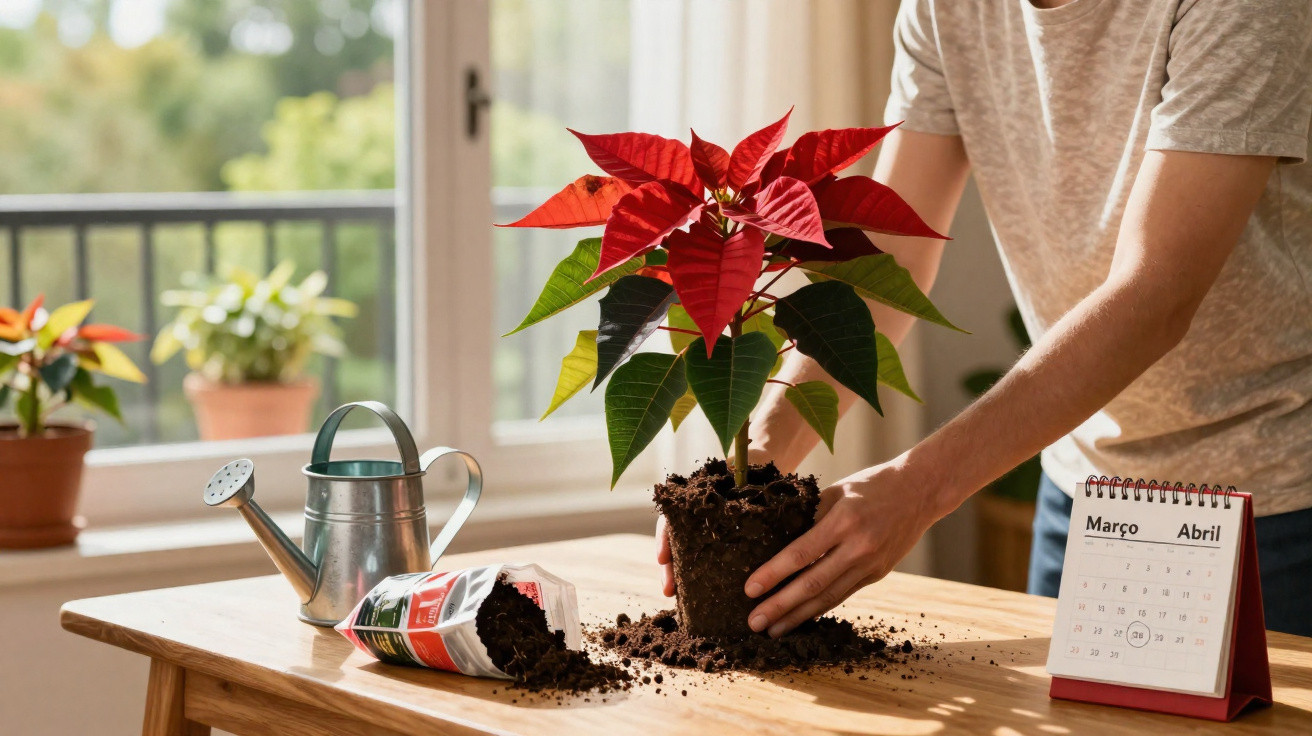
Many poinsettias end up in the bin in March – completely unnecessarily.
Avoid one simple mistake now and you can keep a strong, richly green houseplant well into summer.
Once the festive period has passed, a poinsettia can soon look rather forlorn: its red bracts fade, leaves drop and the plant appears to be “finished”. At precisely this point, many households throw it away. Yet Euphorbia pulcherrima, the botanical name for the poinsettia, is far more than a short-lived Christmas decoration.
Why poinsettias so often “give up” in spring
Appearances can be deceptive. When leaves turn yellow and the red bracts disappear in February or early March, this does not necessarily mean that the poinsettia is dying. It is entering a dormant period, much like many perennial garden plants outdoors. The plant is conserving its energy for the coming growing season.
This is where the usual mistake occurs: in March, many people still care for their poinsettia as though it were in the middle of its flowering season. It receives too much water, air that is too warm and, in some cases, full sunshine through the window. This puts the plant under stress, causes roots to rot and leaves to fall, and eventually sends the pot to the bin.
“Anyone who waters a poinsettia in March as if it were an actively flowering plant takes away its chance to recover.”
The right approach is the reverse: less water, cooler conditions and no fertiliser. In late winter, a poinsettia needs rest rather than a “spa treatment”.
In March: give it rest instead of “drowning” it
The genuine recovery period begins towards the end of winter. During this stage, it is decided whether the plant will continue into summer as a beautiful green specimen or finally give up.
The best position during the resting period
- A bright location away from direct sunshine
- Cool surroundings, at roughly 13 to 16°C
- No radiator directly beneath it
- No cold draughts from windows or doors
An unheated but bright stairwell, or a cool and well-lit hallway, is often ideal. During this phase, the poinsettia is not well suited to a living room beside an operating radiator.
Watering: this is where the major mistake happens
During December, many poinsettias are kept permanently slightly moist. Continuing this in March can lead to root rot. The compost should now be allowed to dry out almost completely before it is watered again.
- Watering is often needed only every two to three weeks
- Only water once the upper layer of compost is clearly dry
- Pour away excess water from the saucer immediately
- Do not apply fertiliser at this stage
If you are unsure, push a finger 2–3 centimetres into the compost. If the root ball still feels slightly damp, leave the watering can alone.
A few individual leaves may still drop during this period. Although this can look alarming, it is often part of the normal dormant phase. Carefully remove brown, dead leaves, preferably while wearing gloves, as the white sap can irritate the skin.
In April: repot at the right time and gently “wake” the plant
As soon as small, fresh green leaves emerge on the shoots in April, the plant is giving its own signal: dormancy is over and growth is starting again. This is when many people make a second mistake through lack of knowledge, overwhelming the poinsettia by doing too much at once.
“In spring, a poinsettia needs a careful restart: fresh compost and more light – but no drastic measures.”
Moving to a fresh pot in spring
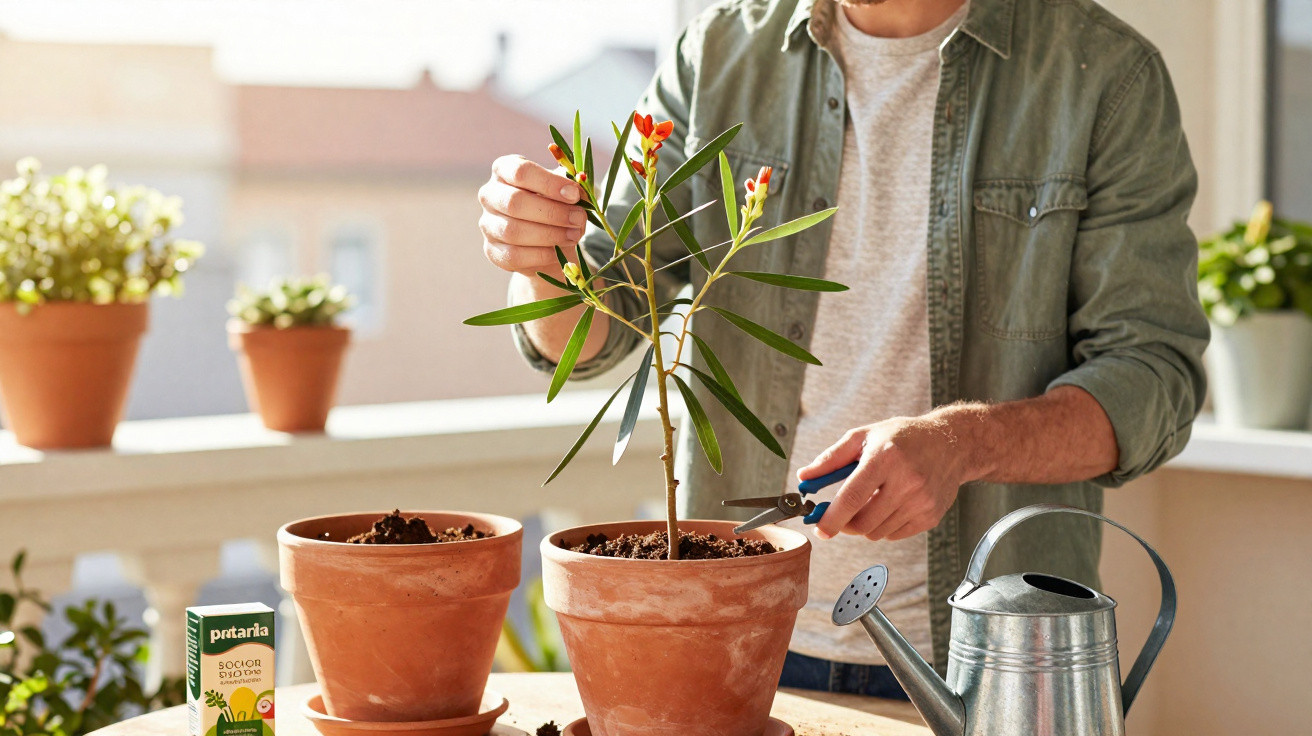
Repotting in April gives the plant a considerable boost. Choose a new pot that is only slightly larger than the old one. An extra-large container offers no benefit because the compost will then remain wet for too long.
Suitable compost and preparation:
- Good-quality houseplant compost with a loose texture
- Drainage at the base of the pot, such as expanded clay pellets or coarse gravel
- Gently loosen old, heavily compacted compost from the roots
- Remove damaged or mushy roots
After repotting, water moderately so that the root ball can take up moisture without becoming waterlogged. Standing water remains off limits at this point too.
Light and temperature: plenty of brightness, no scorched leaves
In spring, the poinsettia can be kept a little warmer. A room temperature of 18 to 20°C is a useful guide. The key requirement now is sufficient light:
- A bright spot by a window, but out of intense midday sun
- A south-facing window only with light shading or some distance from the glass
- West- or east-facing windows are often ideal
In April, many people are tempted to “put the plant in the light”, meaning placing it directly in full sun. Behind glass, this can quickly scorch the leaves. It is better to acclimatise it gradually to brighter conditions.
From late April: turning a throwaway product into a green summer houseplant
From late April or early May, the poinsettia starts growing vigorously. It then becomes an entirely normal yet attractive green houseplant with an exotic character.
The new watering and feeding routine
The plant can now be watered regularly again, but it must still not have “wet feet”:
- Water when the upper layer of compost has dried out
- Always allow water to drain away fully
- Apply liquid fertiliser for flowering plants every two to three weeks
Fertiliser helps the new foliage become strong and richly green. With enough light, the poinsettia will also develop into a compact bush.
Outside on the balcony or terrace – with care
Once there is no longer any risk of overnight frost, the plant may move outdoors. It enjoys fresh air but cannot cope with a sudden cold shock.
For a successful start outside:
- Put it in partial shade for a few hours each day at first
- Avoid direct midday sun, particularly during the first week
- Choose a position sheltered from wind
- Watch for temperature drops below roughly 13°C
During summer, the poinsettia behaves like a tropical ornamental plant. On a balcony or terrace, it develops dense, bushy growth and looks far more lively than its typical appearance on a supermarket shelf in December might suggest.
How the red poinsettia bracts return in autumn
The famous red bracts – which are not true flower petals botanically – do not return automatically simply because the poinsettia has remained healthy through summer. The plant responds to day length. To produce its Christmas colouring again, it needs long nights for several weeks in autumn.
From around mid-September until November, a typical “colour schedule” looks like this:
- About 14 hours of complete darkness every day, for example from evening until the following morning
- No streetlights, television light or permanent lighting in the room
- A bright position during the day as usual
- Consistency for at least eight to ten weeks
Many home gardeners use a separate dark room or place a lightproof cardboard box over the plant each evening, removing it again in the morning. Those who have taken summer care seriously are much more likely to be rewarded with intensely coloured bracts.
How poisonous is the poinsettia really?
Warnings about Euphorbia pulcherrima have circulated for years, and they are often exaggerated. Its milky sap can irritate skin and mucous membranes, and children and pets should not chew the plant. However, describing the commonly sold cultivated varieties as highly poisonous is only accurate to a limited extent.
A few precautions are still advisable:
- Wear gloves when pruning and repotting
- Keep the plant out of reach of young children and pets
- Avoid getting the latex sap in the eyes or mouth
Anyone with very sensitive skin or a tendency towards allergies should wash their hands thoroughly after handling the plant.
Why the effort is worthwhile
A poinsettia that survives for several years often looks more interesting than the newly bought miniature plants from a garden centre. Over time, it develops:
- Stronger shoots
- Denser foliage
- Individual growth habits, sometimes almost shrub-like
There is also a practical advantage: anyone who does not need to buy a new poinsettia every year saves money and creates less waste. From a sustainability perspective in particular, it no longer makes much sense to dispose of a robust houseplant after only a few weeks simply because its colouring changes.
Respect the resting period in March, use the opportunity to repot in April and care for the plant sensibly until summer, and it soon becomes clear: Euphorbia pulcherrima is not a disposable item, but a reliable, versatile houseplant capable of far more than shining red once a year.












Comments
No comments yet. Be the first to comment!
Leave a Comment