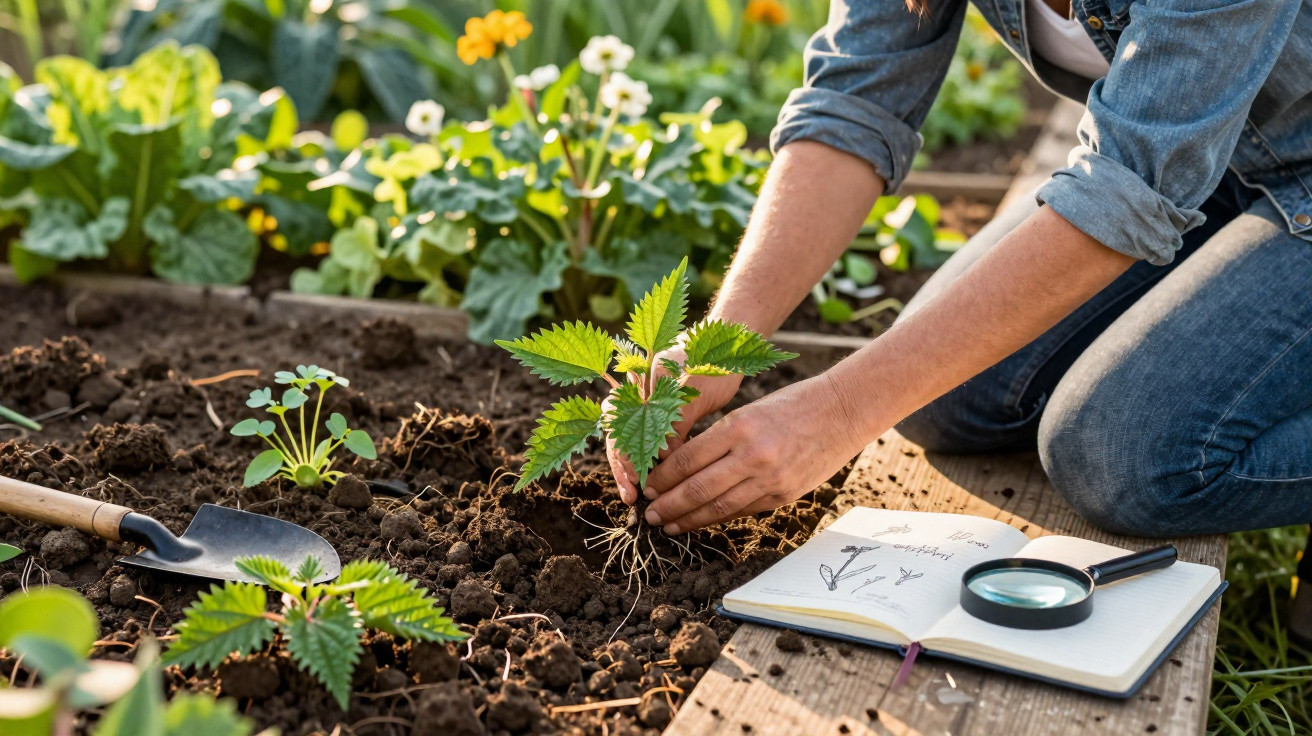
Perhaps you are destroying the best free soil test available.
Young vegetable plants, lawns and garden paths can suddenly seem to fill with wild plants. The automatic response is often to reach for a hoe or a glyphosate alternative. Yet these self-sown herbs do far more than simply “get in the way”: if you know how to interpret them, they offer remarkably precise clues about the condition and quality of your soil.
Weeds as a diagnostic tool: your soil is speaking to you
What the term “indicator plants” means
Professional horticulture refers to “bioindicators” or indicator plants. The principle behind this is straightforward: plants do not germinate in a particular place by chance. They need very specific conditions, including suitable moisture, temperature, soil structure, nutrients and soil life. A seed will emerge from dormancy only when these factors are right.
“When a species grows densely and becomes dominant, it gives a fairly precise indication of what is happening in the soil – for better or worse.”
Rather than removing every leaf on reflex, take a closer look. Many of these “weeds” reveal whether the soil is:
- rich in humus or exhausted;
- too wet, too dry or compacted;
- suffering from an excess of nutrients;
- structurally stable and full of life, or comparatively “dead”.
Anyone able to read these signs can often avoid costly soil analyses. Your garden provides constant, living monitoring right beneath your feet.
Why one plant alone is not enough
A single dandelion growing from a paving joint proves nothing. For a dependable diagnosis, abundance matters. It is only when a particular plant species or plant family occurs over a wide area that you can draw more reliable conclusions about soil characteristics.
For instance, if similar moisture-loving species repeatedly appear in several parts of the garden, this is more likely to point to waterlogging or heavy soil than to a random seed blown in on the wind. Experienced gardeners therefore look for dominant groups rather than individual specimens.
When weeds bring good news
Stinging nettles and chickweed: signs of fertile soil
The stinging nettle is the classic enemy of barefoot children and amateur gardeners. Anyone with whole clumps of nettles in the garden may quickly become frustrated, but their presence is actually a genuine compliment to the soil.
Dense nettle growth indicates:
- a high level of organic matter;
- plentiful nitrogen;
- a good supply of iron.
Such soil is exceptionally well suited to hungry vegetable crops, including pumpkins, courgettes, tomatoes and aubergines. Rather than simply cursing the spot, you can use targeted planting to create a highly productive bed there.
Chickweed is less conspicuous but equally revealing. This delicate plant, with its small white star-shaped flowers, readily forms closed carpets just above the ground.
“A dense carpet of chickweed reveals that the soil is rich in humus, well aerated and full of microorganisms.”
These are precisely the ideal conditions for many vegetable crops. So, if chickweed is growing in your bed, you can be reassured: measures already taken, such as mulching, adding compost or avoiding deep digging, have evidently worked well.
When abundance becomes a problem
Nutrient-rich soil is valuable, but too much can upset the balance. Some wild species respond particularly strongly to excessive fertility and then suddenly appear in large numbers.
Warning signs may include:
- spreading carpets of couch grass (common couch grass);
- vigorously growing knotweed species in damp areas;
- fast-growing, soft-leaved grass directly beside heavily fertilised spots.
These plants often point to an excess of nitrogen or certain organic substances. Anyone who applies generous amounts of artificial fertiliser, plenty of manure or highly concentrated organic fertilisers every year is feeding not only the intended vegetables, but also the wild herbs.
A change of strategy helps here:
- Reduce fertiliser applications or leave longer intervals between them.
- Grow a wider range of crops instead of only a few heavy feeders.
- Use cover crops and green manures to capture nutrients.
What plant families reveal about soil
Brassicas and other “problem indicators”
In gardens, species from particular plant families often occur together in greater numbers. Recognising these groups makes it quicker to understand which soil issues need attention.
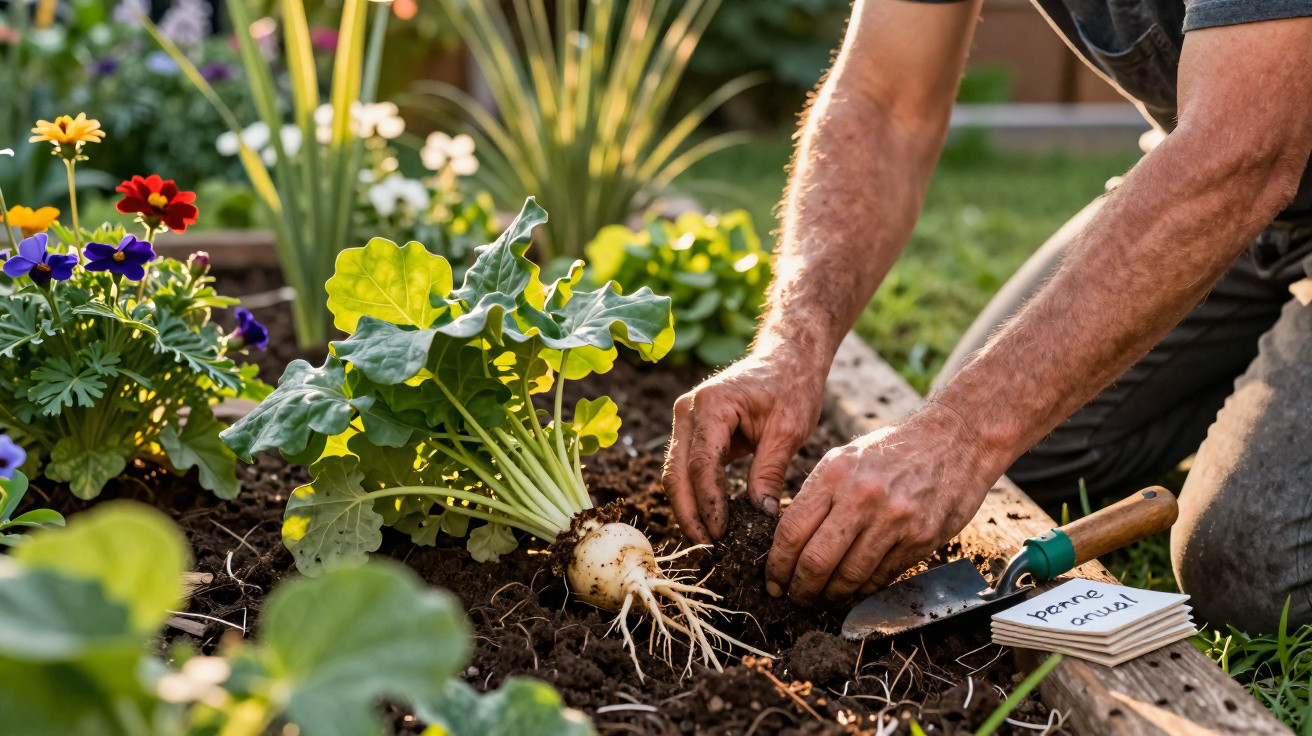
Brassicas such as shepherd’s purse, field mustard and wild radish often appear where soil structure is suffering. Their roots penetrate compacted layers and loosen the soil to some extent, while also signalling that deficiencies are present.
“A great deal of brassica growth can mean that the soil has been driven over too often, worked when too wet or regularly dug deeply.”
Other species can also point to problems, including:
- heavy growth of dock species in compacted, wet areas;
- increased occurrence of sorrel and mosses in acidic soils;
- dominant grass cover with little diversity in exhausted areas.
If you are unsure, use a regional plant guide. Many environmental centres and regional agricultural bodies provide leaflets or apps showing typical indicator plants for different areas.
How to build an observation system in your garden
Instead of weeding blindly, it is worth keeping a kind of “soil diary”. It does not need to be perfect, but it should be consistent:
- A few times each year, record which wild plants are appearing more frequently and where.
- Mark noticeable areas on your bed plan.
- Link your observations to what you have done there: how much was fertilised, watered or dug over?
After one or two years, a surprisingly clear picture emerges. Many gardeners then notice that certain “problem weeds” always grow exactly where compost has been spread especially thickly or where heavy equipment is used repeatedly.
Managing weeds intelligently instead of eradicating them completely
Which wild plants can stay – and where the limit lies
No one needs to allow the entire garden to become overgrown. The aim is a sensible middle ground. Some species can remain at the edges, beneath hedges or in quiet corners, where they can perform their function. Others compete too strongly with cultivated plants and need to be removed.
One possible approach is:
- In vegetable beds, consistently remove anything that competes directly with your crops.
- Deliberately leave a few nettles along fence lines and behind the shed for insects.
- Tolerate chickweed as living mulch between robust crops, provided it does not smother them.
This allows you to benefit from indicator plants without losing control of the garden.
When weeds become a resource
Many of these unpopular plants offer benefits that are rarely used. Nettles, for example, are excellent for making liquid feed: they provide a free, highly effective fertiliser that returns nutrients exactly where the soil needs them. Chickweed and other soft herbs are also used in some kitchens as an addition to salads.
Harvesting these plants deliberately changes the way you see what previously seemed merely “annoying”. The soil that produced them is indirectly valued too, because its nutrients are put to sensible use within your own garden.
A knowledge advantage from looking at the soil
Many soil-science terms sound dry, yet they have direct consequences for everyday gardening. Humus, for example, describes the proportion of organic matter in soil. Soil rich in humus stores water more effectively, buffers nutrients and provides a home for countless microorganisms. Chickweed, for instance, signals exactly this condition.
Compaction means that soil pores are missing because the ground has been compressed by vehicles, foot traffic or cultivation in wet conditions. Water then collects, while roots can barely access air. Brassicas, docks and certain grasses can indicate such problems. The countermeasures are to walk on the soil less, work it only once it has dried, add organic material regularly and loosen it shallowly rather than digging deeply.
By linking the behaviour of wild plants with these basic concepts, you will develop a very refined feel for your garden. The plot will no longer seem like an opponent that must be kept “tidy”, but as a system that sends clues. Those clues can make the difference between vegetable plants that struggle and ones that virtually burst into growth in summer.












Comments
No comments yet. Be the first to comment!
Leave a Comment