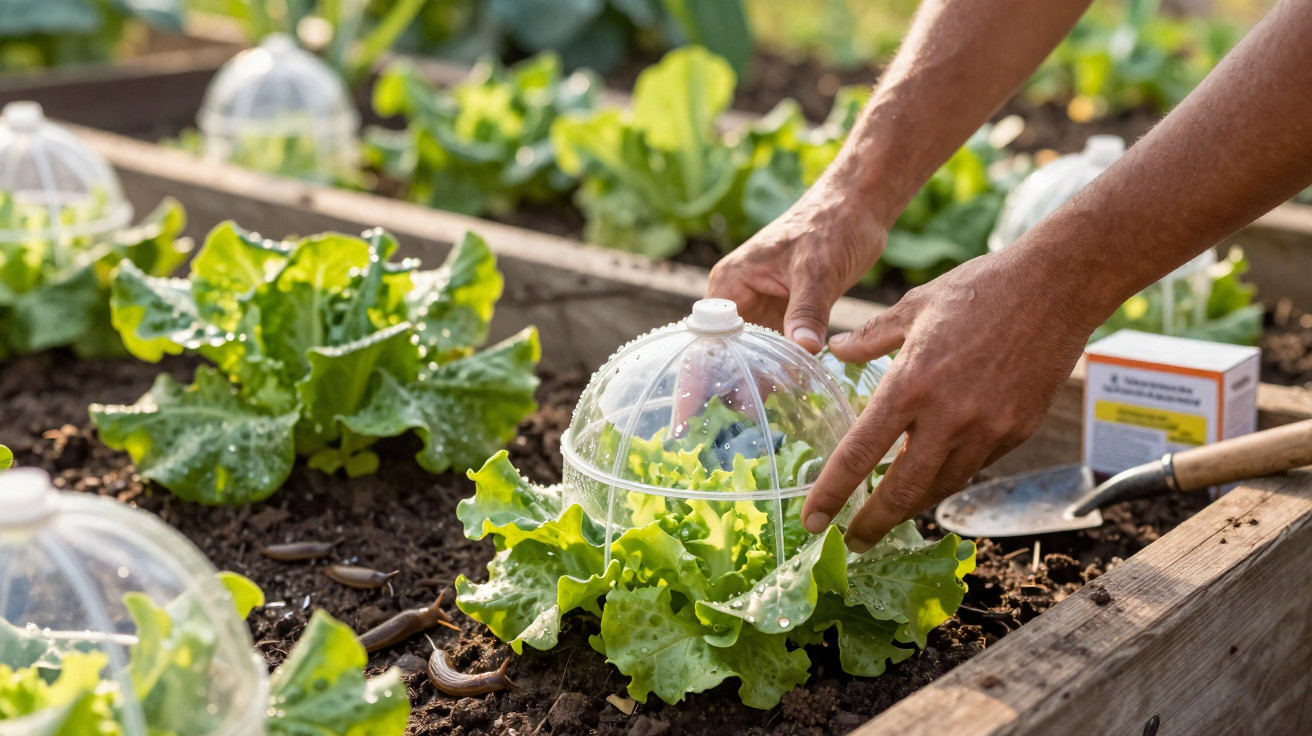
Many amateur gardeners reach for blue pellets from a packet in frustration when all that remains of their lettuce in the morning is a chewed stalk. Although this may seem convenient, it comes at a considerable cost to the garden, wildlife and even pets. A straightforward plastic-bottle method protects young plants far more gently – and often more effectively.
Why slug pellets can do more harm than good in the garden
Slugs are widely regarded as the number-one enemy in the vegetable patch. They make holes in lettuce, strip down young courgettes and do not stop at strawberries. At first glance, slug pellets appear to offer a quick fix.
However, many of these blue pellets contain metaldehyde, a pesticide that affects more than just slugs. Birds, hedgehogs, frogs, toads and pets may eat the bait itself or consume poisoned slugs, sometimes with serious consequences.
“Slug pellets do not kill only slugs; they affect the entire mini-ecosystem in the garden.”
Even products containing ferric phosphate, which are often marketed as “organic”, are, strictly speaking, plant-protection products. They interfere with natural cycles and are not entirely neutral for other soil organisms.
There is another aspect that many people overlook: slugs have a role to play as well. They help break down dead plant matter and provide an important food source for natural predators such as ground beetles, hedgehogs and birds. Killing them in large numbers weakens the very animals that could help regulate their population over time.
From poison to a barrier: protect plants rather than kill slugs
More and more gardeners are changing their approach. They want to keep their young plants safe without poisoning life in the garden. The principle is not to fight the slug, but to prevent it reaching the plants it wants to eat.
Barrier methods have a key advantage: they protect individual plants precisely, without harming the rest of the ecosystem. One of the simplest options uses an item found in almost every household – a plastic bottle.
The plastic-bottle method: a mini greenhouse instead of chemicals
The idea is so easy that it can be underestimated. A clear plastic bottle becomes a small protective cover for each vulnerable young plant, including lettuce, squash, courgettes or strawberries.
“An empty bottle can become effective slug protection in just a few minutes – without a single grain of poison.”
How to make a plastic-bottle plant cover
You will need:
- one clean, transparent PET bottle (1.5 or 2 litres)
- a sharp knife, craft knife or sturdy scissors
- tape or a stapler, if required
Step by step:
- Remove the label from the bottle so that as much light as possible can pass through.
- Cut off the base of the bottle around 3 to 5 centimetres above its bottom edge.
- Make several small holes in the bottle wall or cap to prevent excess moisture building up.
- Place the bottle over the young plant and press its lower edge 2 to 3 centimetres into the soil.
- Loosen the cap slightly if the inside becomes too damp or too warm.
This creates a type of mini greenhouse with three functions: it keeps out slugs and other crawling creatures, shelters the plant from wind, and retains some warmth and moisture in the soil.
Where the plastic-bottle cover works especially well
This method is particularly suitable for:
- lettuce and cut-and-come-again salad leaves
- young cabbage plants
- courgettes, squash, cucumbers and other cucurbits
- strawberry plants in their first year
- delicate ornamental plant seedlings
The cover only needs to stay on during the critical early stage, when the plant is most vulnerable. Usually, two to three weeks are enough for the roots to establish and the leaves to become stronger.
How effective is plastic-bottle slug protection?
Gardeners who use this approach consistently report noticeably less feeding damage. Depending on the level of slug activity in the garden, losses can fall dramatically. It is essential to push the bottle securely into the soil all the way around, so slugs cannot crawl in from the side.
“Unlike slug pellets, the bottle solution remains permanently free from pollutants – even when children or pets are in the garden.”
The transparent cover provides another benefit: during the day, it warms the air around the plant. This can support growth on cool nights, much like a small cold frame.
If you have several beds, it helps to organise protection systematically. This simple guide can assist:
| Situation | Recommended number of bottles |
|---|---|
| Small lettuce bed (approx. 2 m²) | 8–12 bottles |
| Mixed vegetable bed (approx. 4 m²) | 10–15 bottles for vulnerable plants |
| Strawberry row (5–6 plants) | 1 bottle per young plant |
Once the first stage has passed, the bottles can be reused: simply clean them and use them for the next round of planting. This also extends the useful life of the plastic rather than sending it straight to the bin.
A few extra measures can improve protection further
Anyone wishing to combine the plastic-bottle method with other measures can create an unpleasant ring for slugs around the cover. Rough or drying materials are suitable, including:
- crushed eggshells
- a thin line of dry sand
- dried wood ash, used sparingly
- rock dust
These materials are not poisonous to slugs, but they tend to avoid sharp or strongly drying surfaces. Used alongside the bottle, they create a double protective barrier.
It is also worth considering the garden as a whole. Watering in the evening attracts slugs because of the moisture. Watering in the morning keeps the night considerably drier, which slugs dislike. A pile of leaves, a deadwood stack or a small hedge can also offer shelter to hedgehogs and beetles, which in turn feed on slugs.
What gardeners should also know about slugs
Slugs are most active after rain and on warm, damp nights. Freshly dug, open soil and tender young plants are an easy meal for them. Those who get through the critical period in spring and early summer usually have far less trouble for the rest of the year.
The plastic-bottle cover is equally useful in balcony planters or raised beds. Slugs may still arrive via walls or climbing supports, but the plant itself remains protected beneath the cover. Even small urban gardens can save a worthwhile amount of produce this way.
Some gardeners wonder whether the air inside the bottle could become too damp. A few extra holes in the sides are useful for this reason, particularly during prolonged wet weather. Taking the cap off briefly at midday on sunny days prevents heat from building up.
Over the long term, a combination of measures pays off: robust varieties, well-maintained soil, targeted protection during the early stage and habitats for natural predators. The bottle is a simple tool that removes one of the greatest frustrations – finding a chewed-over bed in the morning.
Anyone who has seen their rows of lettuce get through the first week of the season unharmed beneath these covers will reach for a packet of poison far less often. The garden benefits from more life, greater balance and, ultimately, a larger harvest.












Comments
No comments yet. Be the first to comment!
Leave a Comment