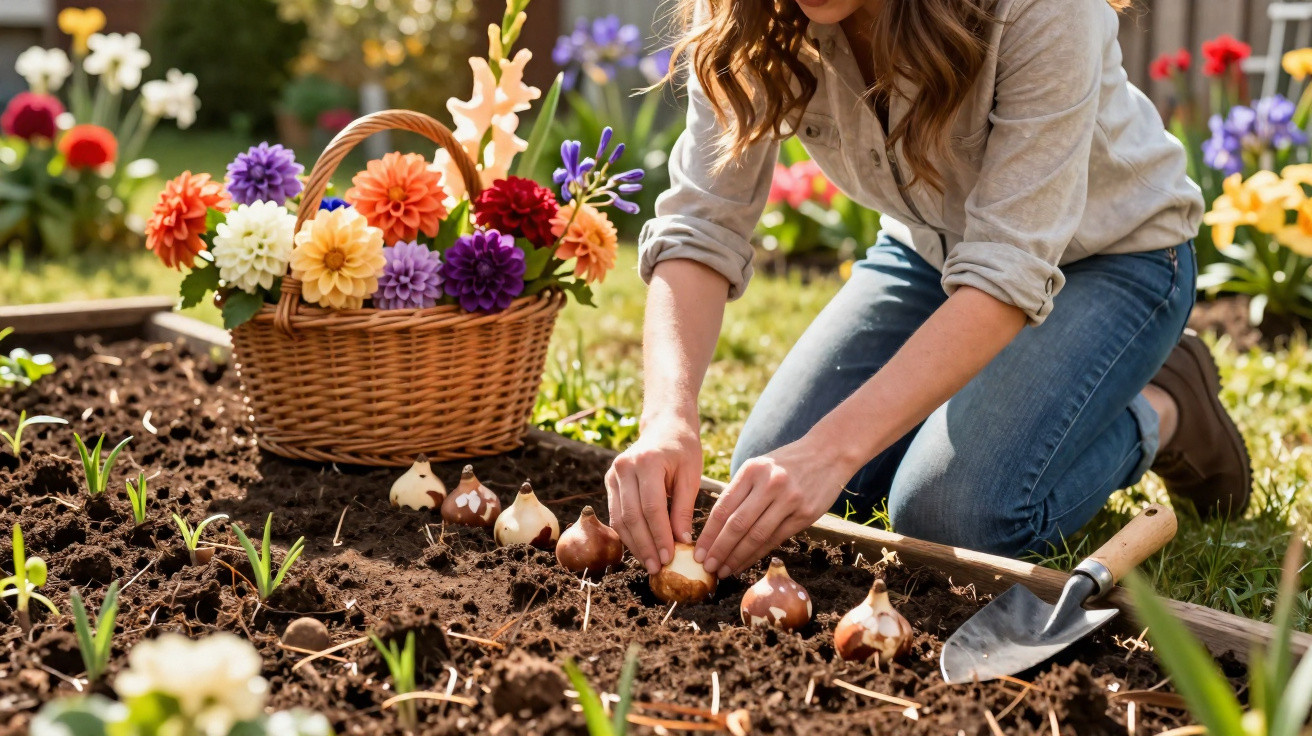
If you reach for a spade and a box of bulbs in March, you give your summer garden a genuine head start. The soil is beginning to warm up while still holding plenty of moisture – conditions that many summer-flowering bulbs love. With suitable varieties and well-timed planting, flowering can continue from June into October.
Why March is an ideal time to plant summer-flowering bulbs
In March, the garden may still look decidedly wintry. Beneath the ground, however, plants are already getting to work. Rain over recent months has left the soil well supplied with moisture, while temperatures rise a little more with each passing week.
Planting summer-flowering bulbs in March gives them time to establish a strong network of roots – making them more resilient later on during hot, dry spells.
The best planting time varies slightly by location:
- Mild areas / wine-growing regions / sheltered urban sites: Planting can often begin as early as the start of March.
- Central regions: Mid to late March is usually the right time.
- Cooler or higher areas: It is generally better to wait until early April, or start them under glass in pots beforehand.
Where late frosts remain a risk, protect young shoots in the evening with horticultural fleece. A light mulch of leaves or bark chippings can also soften sudden changes in temperature.
How to plant flower bulbs correctly in March
Before planting, inspect the bulbs carefully. Firm, plump bulbs with no rotten patches or mould will make a much stronger start than specimens that feel soft or look shrivelled.
The best position and soil
Summer-flowering bulbs generally prefer the following conditions:
- Loose, free-draining soil: Waterlogging is harmful, especially in spring.
- A nutrient-rich growing medium: Well-rotted compost makes an excellent starting feed.
- Plenty of sun: Species with particularly impressive flowers, above all, need many hours of light.
Improve heavy soil with sand or fine grit. If rainwater continues to sit in puddles for a long time, the spot is unsuitable for bulbous plants.
The straightforward depth rule that nearly always works
There is an easy rule of thumb for deciding how deeply to plant:
Planting depth = around 2.5 to 3 times the height of the bulb.
For example, a bulb measuring 5 centimetres high should be planted 12 to 15 centimetres below the soil surface. Position it with the pointed end facing upwards. Gently firm the soil after planting, then water thoroughly once.
Tall varieties with long flower stems benefit from having a support cane added at planting time. This prevents shoots from snapping in the wind or collapsing in heavy rain.
Seven bulb stars that put on a real summer show
These seven varieties can be used to create a border full of colour from June through to autumn – without needing watering every day.
Dahlias: an explosion of colour until October
Dahlias are among the favourites of many amateur gardeners. Depending on the variety, they flower from high summer until late autumn. Planted in free-draining soil in March or April, they form vigorous bushy plants covered in countless blooms, from simple flowers to pompon types.
- Position: Full sun and shelter from the wind.
- Spacing: 40 to 80 centimetres, depending on the variety.
- Tip: Removing faded flower heads regularly encourages fresh buds to form.
In areas where frost is likely, it is worth starting the tubers in pots indoors or in a greenhouse. Move the plants outside once the final frosts have passed.
Lilies: elegant fragrance and bold vertical interest
Lilies add structure to herbaceous borders. Their flowers generally open between June and August, producing a fragrance that can be more or less pronounced depending on the species. Plant the bulbs deeply so that they remain cool and securely anchored.
- Position: A bright site, ideally with their “feet” lightly shaded by low-growing perennials.
- Planting depth: Usually 15 to 20 centimetres.
- Tip: A little sand beneath each bulb helps to prevent rot.
Lilies work particularly well in mixed borders, rising above a base of perennials and ornamental grasses.
Tuberous begonias: bright colour for shade
Tuberous begonias are specialists for partially shaded and shady places. Where other summer flowers struggle, they bring colour to window boxes, containers and border edges, usually from July into autumn.
- Position: Partial shade to shade, protected from wind.
- Use: Ideal for balcony boxes, hanging baskets and shaded front gardens.
- Tip: Start them indoors in pots in March, then put them outside from May.
Lay the tuber shallowly, with its slightly hollow side facing upwards. A loose compost that never becomes completely waterlogged will help prevent rotting.
Gladioli: spectacular flower spikes for cutting
Gladioli are the classic cut flowers of a grandmother’s garden – and they are currently enjoying a revival. Their tall flower spikes make a striking statement in borders and cottage gardens.
- Position: A sunny, sheltered place.
- Successive planting: Planting fresh corms every two weeks extends the flowering period.
- Tip: Insert a supporting cane at the same time as planting.
As gladioli are prone to wind damage, they are best placed in front of walls or hedges. In narrow borders, they can also be hidden behind low perennials so that only their flower spikes emerge above them.
Cannas: tropical character beside the patio
Cannas, also known as canna lilies, instantly lend a holiday feel to the garden with their broad, often brightly patterned leaves and large flowers. They are especially dramatic in sizeable containers.
- Position: Full sun, warmth and protection from wind.
- Soil: Nutrient-rich and consistently moist, but never wet.
- Tip: Start them indoors in pots in March, then move them outside after the last frosts.
In cooler areas, overwinter the rhizomes frost-free in a cellar or garage. They can be divided the following spring to produce new plants.
Crocosmia: fiery arching stems for late summer
Crocosmia, often sold as montbretia, stands out for its arching flower stems in shades of orange, red or yellow. It brings movement to a border and suits naturally styled gardens well.
- Position: Sun to partial shade.
- Planting: Set them in groups for the strongest colour effect.
- Tip: A light winter covering of leaves helps them through periods of severe cold.
Their fine foliage and curved stems create attractive contrast with compact perennials or grasses.
Agapanthus: spherical flowers for enthusiasts
Agapanthus, or African lily, carries large rounded flower heads in white or blue throughout summer. In many gardens it is grown in a pot, as it is not reliably hardy everywhere.
- Position: Sun, preferably beside a warm house wall.
- Container growing: Closely packed roots encourage more abundant flowering.
- Tip: Overwinter in a bright, frost-free place and water sparingly.
Gardeners in mild areas can also plant hardy varieties in the ground. Free-draining soil and winter protection are essential in this situation.
Combining the seven varieties for a long season of flowers
To ensure the garden remains interesting for months rather than producing only a brief burst of colour, it helps to make a broad flowering plan. One possible sequence is:
| Month | Typical flowering plants from the selection |
|---|---|
| June | Lilies, early gladioli, first agapanthus varieties |
| July | Dahlias, begonias, gladioli, cannas, agapanthus |
| August | Dahlias, cannas, crocosmia, begonias |
| September/October | Dahlias, late begonias, remaining flowers on cannas |
For a balanced look in the border, place tall plants such as dahlias, gladioli and cannas towards the back. Crocosmia and lilies occupy the middle layer, while begonias and smaller agapanthus varieties belong at the front.
Practical essentials: feeding, watering and common mistakes
Summer-flowering bulbs are fairly undemanding garden plants when a few basic rules are followed:
- Water moderately but thoroughly: It is better to water generously less often than to give a little every day.
- Nutrient boost: One application of organic fertiliser or compost in spring is usually sufficient.
- Remove spent blooms: This directs more energy into fresh buds rather than seed production.
Common mistakes include soil that is too wet, planting out too early in frost-prone locations and positioning bulbs too closely together. Ignoring the spacing stated on the packet can lead to fungal diseases and weak growth.
What amateur gardeners should know before the next season
Many summer-flowering bulbs and tubers are not fully hardy. In harsher areas, for example, dahlia tubers, cannas and some gladiolus varieties should be lifted from the ground in autumn and placed in boxes filled with slightly damp growing medium. Kept cool, dark and frost-free, they will last until the following spring.
From a gardening perspective, this small amount of extra effort is worthwhile: once purchased, most of these varieties will stay with you for many years. Each season, you can divide them, replant them and try new colour contrasts – gradually shaping your own summer garden, which begins in March both on paper and in the border.












Comments
No comments yet. Be the first to comment!
Leave a Comment