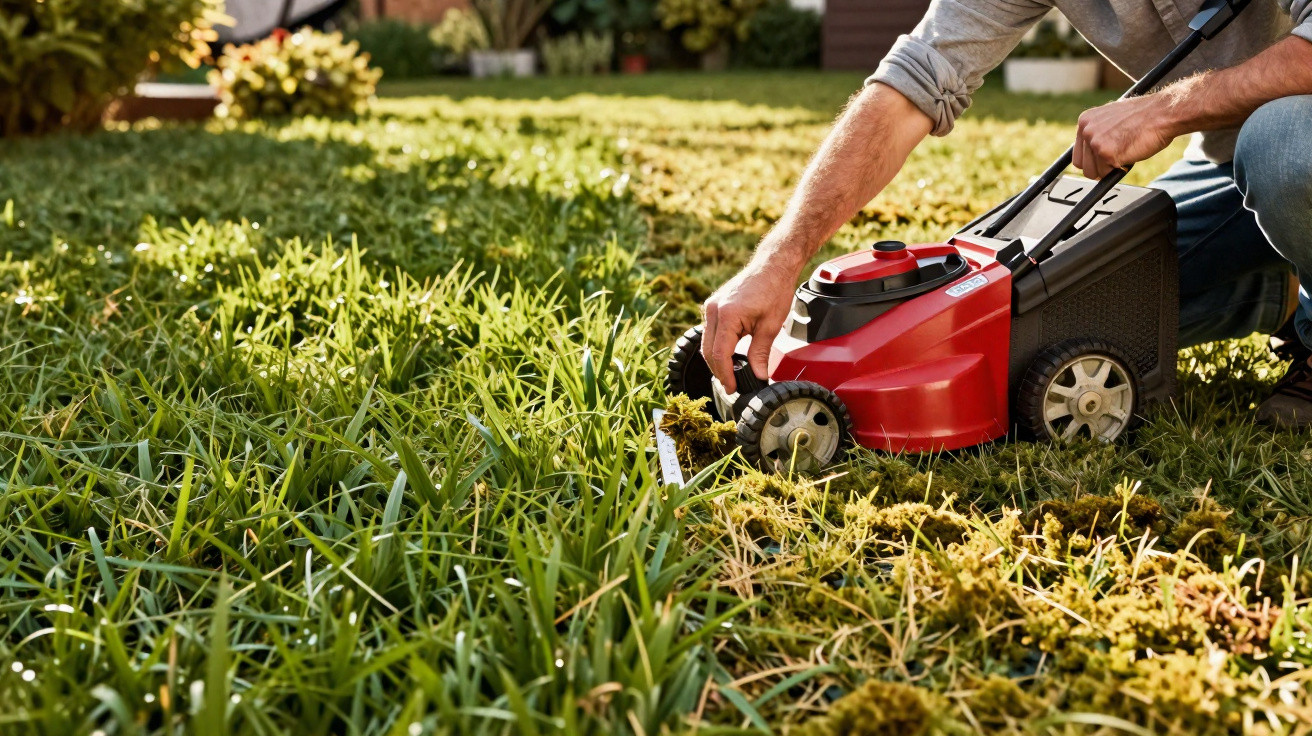
Often, however, the real issue is simply that the cutting height is wrong.
If you genuinely want to strengthen your lawn, adjust the lawn mower before reaching for the fertiliser spreader. The height set for the blade determines whether the grass stays richly green or whether moss, clover and bare patches gradually take over. An experienced gardening expert explains the precise setting required for each area and why just a few millimetres can determine your lawn’s future.
Why cutting height matters more than fertiliser
When problems arise, many garden owners immediately blame a lack of nutrients: “My lawn needs more fertiliser.” In practice, however, a professional often sees a different cause: most lawns are simply mown incorrectly - cut too short, mown too infrequently or kept at the same height all year.
Grass blades act like tiny solar panels. The more leaf area they have, the more energy they can generate; this allows roots to grow deeper and helps the lawn withstand heat, drought and foot traffic more effectively.
“An appropriate cutting height encourages deeper root growth, keeps the soil cooler and makes life considerably harder for moss.”
If a lawn is cut exceptionally short, the plant has to draw on its reserves. Its roots become shorter, the soil dries out more quickly, blades turn yellow and gaps emerge. Those spaces are exactly where moss settles, along with other unwanted visitors.
Conversely, a lawn left permanently too long does not receive enough air around the turf. Moisture builds up, dead plant material creates a thick thatch layer and the surface can no longer dry properly. These are ideal conditions for moss.
The ideal cutting height: keeping your lawn free of moss
There is no single correct height for every lawn. Location, use and the season are what matter. The gardening professional uses clear guide values that are easy for non-specialists to follow.
Lawn in full sun
For an ordinary hard-wearing lawn in a sunny position - the typical family lawn used by children, ball games and barbecues - the following applies:
- Spring: 4–5 cm
- Summer: 6–8 cm in hot weather
- Autumn: 5–7 cm
Around 4 to 5 centimetres is a sound standard in spring. It gives the blades sufficient leaf mass to grow strongly while keeping the lawn neat and able to tolerate use. Below 3 centimetres, even robust lawn varieties begin to struggle - and a moss-free lawn is then out of the question.
Lawn in shade and damp corners
Where trees, hedges or walls block much of the light, grass needs slightly more leaf area to cope with reduced sunshine. The recommendation here is:
- Shaded and damp areas: 6–8 cm
Longer blades capture more light and can therefore still produce enough energy despite poorer conditions. They also provide light shade for the soil, preventing it from becoming completely waterlogged. Moss, which favours damp and dark conditions, consequently finds it much harder to spread.
Fine and ornamental lawns
Anyone maintaining an ornamental lawn or a surface resembling a bowling green will be working with finer grasses. These can tolerate lower settings, provided the soil, watering and maintenance are right. The expert recommends:
- Fine lawn / ornamental lawn: around 2–2.5 cm
For a standard family garden, though, these heights are suitable only to a limited extent. Inadequate watering, children, dogs and spells of hot weather can quickly leave extremely closely cut lawns prone to scorching and bare patches. Unless you maintain a show garden, 4–5 centimetres is generally the much safer option.
The “one-third rule”: how often you should really mow
The mowing height is not the only important factor; the timing of the next cut also has a major impact. The gardening professional follows one simple rule: never remove more than one third of the current blade length in a single mow.
“If you regularly just ‘stroke’ the tips, the lawn stays dense and healthy - and moss loses its opportunity.”
In practical terms, this means:
- In spring, when grass is growing vigorously, mowing twice a week may be necessary.
- From March to October, mow at least once a week.
- After winter, begin with the mower at its highest setting, then lower the cutting height gradually.
Mowing only every two or three weeks and then cutting everything back drastically puts enormous strain on the lawn. The plants suddenly lose too much leaf area, the soil is exposed and dries out, and moss takes advantage of the weakened conditions.
Common mistakes that practically invite moss in
The same patterns appear repeatedly in many gardens. Above all, the professional notices two habits:
- “Golf-course lawn” in the home garden: The mower is kept permanently on a very low setting, leaving the lawn almost “shaved”. The result is weak roots, yellow areas and moss in the gaps.
- Treating mowing as a chore for “when it really can’t be put off any longer”: The blades become knee-high before the whole lawn is cut short. The result is shock for the plants, a scorched appearance, and moss and weeds taking over.
Breaking these two habits already makes a significant difference. The changeover takes a few weeks, but the effects become apparent quickly: denser growth, fewer bare patches and far fewer cushions of moss.
Practical guide: setting your lawn mower correctly
A few fixed, easy-to-remember values are enough to set the mower for practical use. This straightforward guide can help:
| Area | Recommended height | Note |
|---|---|---|
| Sunny hard-wearing lawn | 4–5 cm | Standard height for spring |
| Shade / damp conditions | 6–8 cm | More leaf area for less light |
| Summer in hot weather | 6–8 cm | Soil stays cooler and dries out more slowly |
| Autumn | 5–7 cm | Sufficient leaf area for winter reserves |
| Ornamental lawn / fine lawn | 2–2.5 cm | Only worthwhile with intensive maintenance |
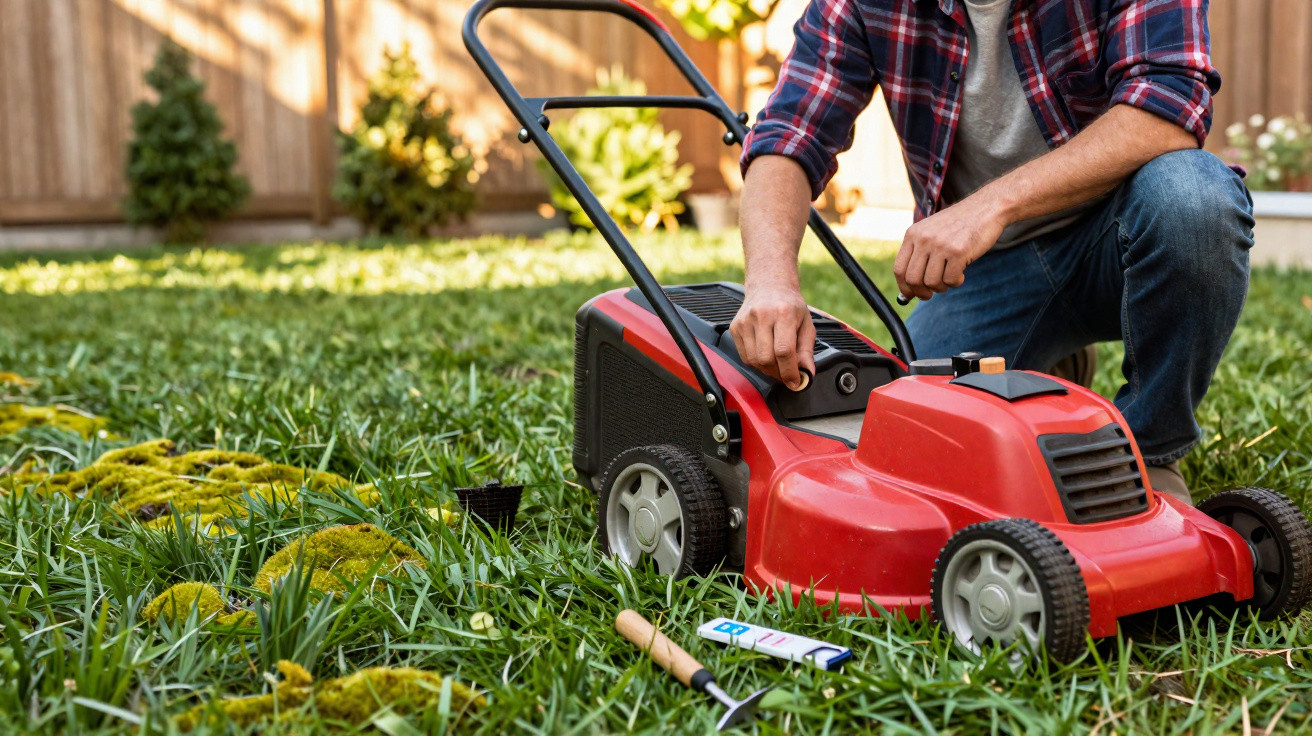
Many mowers do not have a centimetre scale and instead offer only numbered settings. A simple ruler is useful here: allow the grass to grow in one spot, cut it to the desired length, measure the piece removed, note the setting - and you are done.
What else helps against moss besides cutting height
Correct height is the most important tool, but it is not the only one. Anyone who wants to tackle moss consistently should also consider several additional points:
- Mow only in dry weather: Wet blades tear more easily, the turf compacts faster and clippings form clumps.
- Scarify or aerate regularly: This removes lawn thatch and allows air and water to reach the roots more effectively.
- Check soil acidity: Very acidic soils encourage moss. A straightforward test from a garden centre will provide clarity.
- Fertilise moderately: A balanced lawn fertiliser strengthens the grasses without overloading them.
By addressing these points one at a time, you will often need neither chemical moss killers nor drastic measures. The lawn stabilises itself once it receives the right care.
Why moss seems so persistent - and how to stay relaxed
Moss does not disappear overnight. Even with a perfect cutting height, older cushions will remain visible for a while. The key point is that new moss patches no longer form as easily when the lawn grows dense and strong.
Particularly in shaded gardens or on heavy, waterlogged ground, there will always be corners where grass can thrive only to a limited extent. In these areas, a different approach may make sense: rather than forcing a lawn to grow, ground-covering plants, shade-loving perennials or a narrow gravel strip can offer less stressful solutions.
However, if you want to keep your lawn overall, start by adjusting the cutting height. The difference between 3 and 5 centimetres may seem small, but for the turf it is the difference between continual stress and stable growth. This is precisely what decides whether moss remains a visitor or becomes a permanent tenant in your garden.













Comments
No comments yet. Be the first to comment!
Leave a Comment