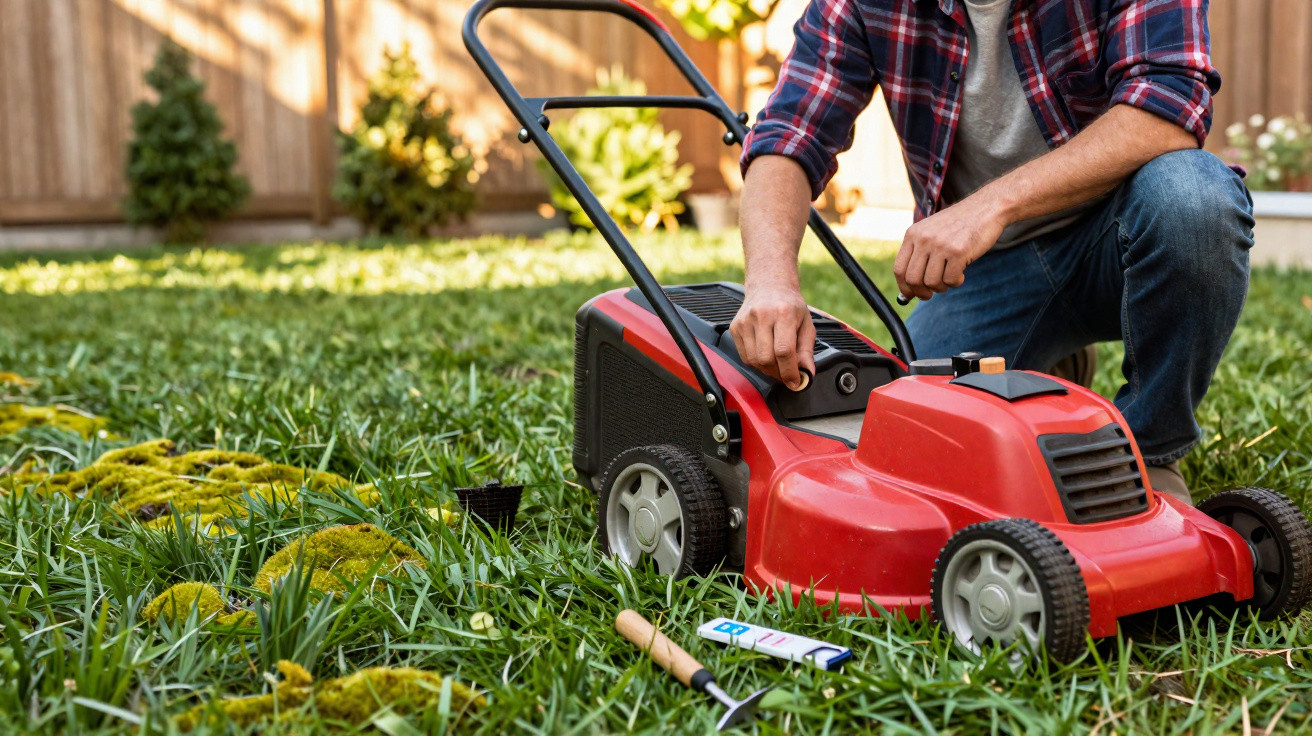
Many amateur gardeners are damaging their lawn without realising it – by using the wrong cutting height.
Yet this single setting determines whether moss or lush green grass comes out on top.
People who think about feeding, liming and scarifying often overlook the simplest adjustment in the garden: the setting on their own lawnmower. Just a few centimetres higher or lower can decide whether the turf remains dense or whether moss and weeds spread. An experienced garden professional explains which precise height is sensible now – and why the wrong setting can seriously drain a lawn’s strength.
Why cutting height determines moss or a dream lawn
Grass blades need enough leaf area to produce energy through photosynthesis. The more green surface remains on each blade, the more strongly the roots grow downwards. This makes the lawn more resilient to heat, dry spells and foot traffic.
If grass is repeatedly cut too short, the plant has to draw on its reserves. Its roots become shorter, while the soil warms up and dries out more quickly. The blades turn yellow and gaps appear. Moss and unwanted weeds establish themselves precisely in these bare patches.
However, letting grass grow too long is equally problematic. If it remains permanently tall and dense, moisture builds up at the soil surface. A kind of thatch layer made up of cut blades develops. This layer provides poor soil aeration and keeps the surface constantly damp – ideal conditions for moss.
“The correct cutting height is the most important tool against moss – even before fertiliser or a scarifier.”
The role of the seasons
The time of year matters too. In autumn, for example, a medium cutting height helps: the lawn retains enough leaf mass to build reserves for winter, without the blades collapsing and rotting. In high summer, keeping it slightly longer shades the soil like a parasol and slows moisture loss.
The ideal lawn height: how to set your mower correctly
The garden expert gives clear figures that anyone can use as a guide. The key point is that not every part of the garden needs the same height. Sun, shade and use all make a major difference.
Recommended cutting heights at a glance
| Area | Use | Recommended height |
|---|---|---|
| Full sun, standard family lawn | Playing, sitting, everyday use | 4–5 cm |
| Shaded or damp areas | Under trees, north-facing side | 6–8 cm |
| Fine ornamental lawn / boules or bowling area | Hardly any use | 2–2.5 cm (specialist lawn only!) |
| Spring (everyday lawn) | Start of the season | 4–5 cm |
| Summer (everyday lawn) | Hot, dry periods | 6–8 cm |
| Autumn (everyday lawn) | Before winter sets in | 5–7 cm |
For most gardens in German-speaking regions, one simple rule of thumb is enough: keep it at 4 to 5 centimetres in sunny areas, and set it one or two levels higher in the shade.
“Even an ornamental lawn suffers below 3 centimetres – for a normal family lawn, it is practically a number-one clipper cut.”
The most important rule: never remove more than one third
The professional follows one clear golden rule: with every cut, remove no more than one third of the current blade length. If the lawn has grown to 6 centimetres, for instance, it should be trimmed back to around 4 centimetres – not down to 2.
This rule also affects how often the lawn needs attention. Anyone who mows only every two or three weeks can quickly end up cutting off far more than one third. That puts the plants under stress, weakens the blades and allows moss to take over.
How often you should actually mow
- Spring (March to May): During strong growth, mow twice a week if in doubt; otherwise, at least once weekly.
- Summer (June to August): Once a week is usually sufficient; in dry weather, mow less often and use a higher setting.
- Autumn (September to October): Roughly every 7–10 days, with the cutting height raised slightly.
A gentle start to the season is important: immediately after winter, begin with the mower on its highest setting, then lower it gradually over several cuts. This allows the lawn to adapt to the strain while retaining enough strength.
Common mistakes that practically invite moss
The expert repeatedly sees the same patterns in gardens:
- Cutting permanently too short: The lawn is effectively “scalped”, roots shrink and parts of the soil are left exposed.
- Mowing rarely but drastically: The grass grows tall, then far too much is removed in one go.
- Using the same height regardless of sun or shade: Shaded areas are especially sensitive, and the balance there quickly shifts in favour of moss.
- Cutting wet grass: The blades stick together, and the mower tears rather than cuts – damaging the turf and leaving weak points for disease and moss to exploit.
“Anyone who loves their lawn does not set the height once a year – they adjust it to the light, weather and season.”
What else helps prevent moss besides cutting height
The right mowing height acts as a foundation. Adding a few straightforward measures to the care routine gives the lawn even more of an advantage over moss.
Aerate the soil and remove thatch
In heavily used areas, soil becomes compacted over time. Water drains away less effectively and little air reaches the roots. Moss thrives in these conditions. The following can help:
- Aerating: Use a hollow-tine aerator or a garden fork to make small holes in the soil, allowing water and air to penetrate.
- Scarifying: Lightly score thatchy lawns in spring to remove dead blades and cushions of moss.
These measures should only be carried out in dry weather and never too aggressively, otherwise new gaps will form and need to grow back in.
Check pH and nutrients
Many lawns across central Europe are slightly too acidic. Moss copes with these conditions better than grass does. A simple soil test from a garden centre will show the pH level. Where the soil is strongly acidic, a careful application of lime can help shift the balance in favour of the lawn.
A lack of nutrients also encourages moss because weakened grasses grow more slowly. A suitable slow-release fertiliser in spring and early summer promotes grass growth – and, combined with the correct cutting height, makes the lawn visibly denser.
Practical examples: an annual plan for a typical garden
An average family garden with plenty of sunshine and a few shady corners can be maintained with a straightforward plan:
- March/April: Set the mower to its highest level and mow for the first time in dry conditions; then gradually reduce the height to 4–5 centimetres. Scarify lightly if there is a lot of thatch.
- May to June: Mow once a week and maintain the blades at 4–5 centimetres. Schedule a second weekly cut during vigorous growth.
- July to August: Raise the cutting height to 6–8 centimetres, and skip mowing on very hot days to avoid putting the lawn under additional stress.
- September to October: Shorten it slightly again to 5–7 centimetres, with the final cuts before winter carried out when the soil is dry.
In shady corners or beneath large trees, the mower should remain set slightly higher throughout the year. Grass needs every extra leaf there to capture sufficient light. Moss finds it much harder to spread when the blades grow strong and compact in these areas.
Why a few mower clicks often achieve more than new equipment
When moss becomes a problem, many garden owners quickly turn to expensive specialist products, lawn sand or new seed mixes. In practice, though, the cause is often the lawnmower itself: the wrong height, the wrong timing or mowing too infrequently.
Anyone who follows the points above – an appropriate height for sun or shade, the one-third cutting rule and regular care – will usually notice within a few weeks that the lawn becomes denser and moss retreats. Overseeding then establishes more easily because the existing grass is no longer under constant stress.
This produces a simple, almost unremarkable key to a strong green carpet: mow more intelligently, not more. The crucial centimetres are set on the mower – not at the fertiliser spreader.
















Comments
No comments yet. Be the first to comment!
Leave a Comment