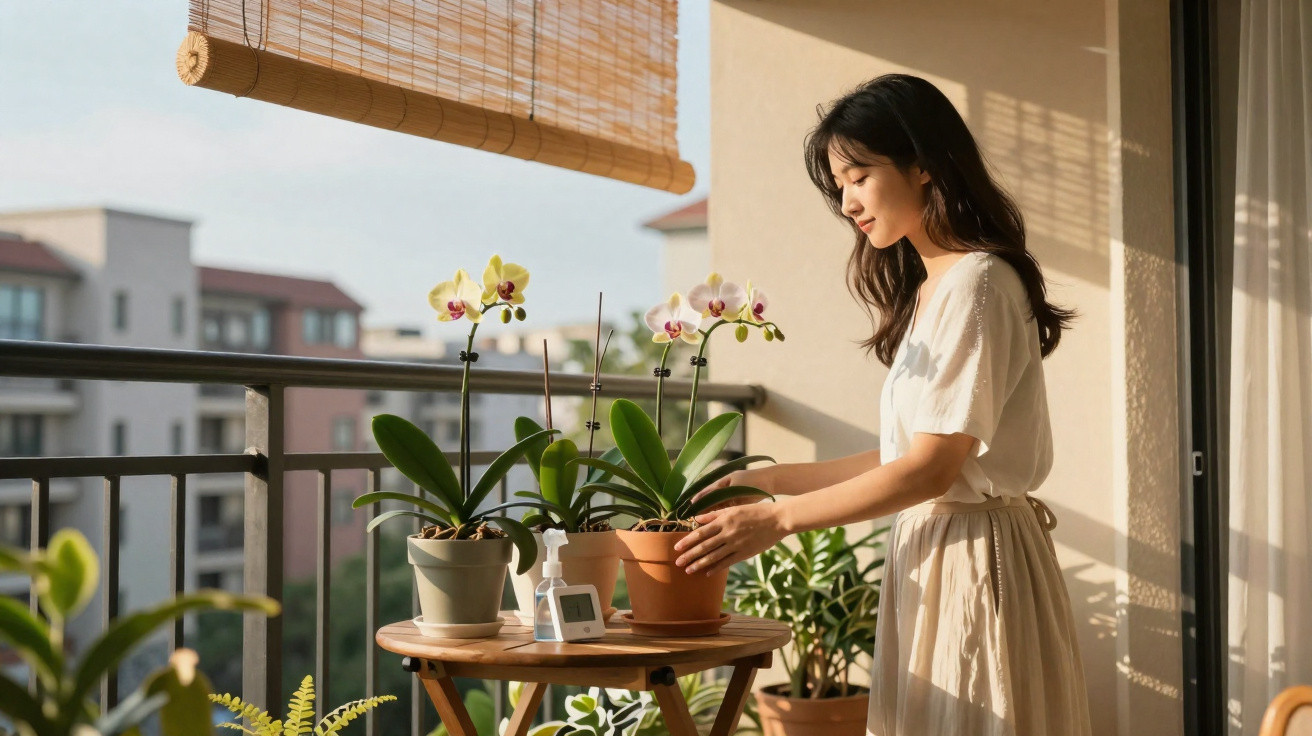
Many orchids end up as permanent living-room decoration – and eventually stop flowering.
The real mistake is often neither the fertiliser nor the watering routine, but one detail that is routinely overlooked.
Anyone buying a moth orchid initially enjoys its abundant flowers. A few months later, only several green leaves remain – and the plant seems “offended”. Watering advice, specialist fertiliser and new pots: nothing appears to work. Yet a look at the way this tropical plant lives reveals the issue: the plant is not difficult; its position is simply completely unsuitable. One straightforward, slightly unconventional change of location can stimulate flowering again year after year.
Why orchids often refuse to flower on the windowsill
Most indoor orchids in Central Europe are Phalaenopsis. Originating in tropical forests, they do not grow in soil there, but cling to tree trunks. The air is humid, nights are noticeably cooler than days, and the light is filtered by the canopy.
Conditions in our homes are very different: central heating, a constant 20 to 22 degrees, dry air and little air circulation. The plant receives hardly any indication that the seasons are changing. Yet it needs precisely these signals to produce a new flower spike.
Orchids only develop new flower stems when they sense that the days are warmer than the nights – and that the light is changing.
When the plant remains on the same windowsill throughout the year, often directly above a radiator, several issues arise:
- Constant temperatures: Day and night are almost the same, so there is no stimulus for flowering.
- Dry heated air: Humidity is far lower than it is in tropical forests.
- Difficult light conditions: Too dark further into the room, yet too harsh in a sunny south-facing window.
Temperatures of around 18 to 22 degrees during the day and 12 to 15 degrees at night are ideal, creating a noticeable difference. Many living rooms never achieve this because they are heated continuously.
The unusual trick: move them into the fresh air
A Scandinavian garden designer repeatedly surprises guests with a simple method: her orchids flower every year without specialist fertiliser or high-tech lighting. Her secret is to move the plants outdoors in summer.
Rather than sitting on the windowsill, they are placed outside in a hanging basket. They are not exposed to blazing midday sun or constant rain, but kept in a partially shaded, airy spot where they experience wind, humidity and natural temperature changes.
Moving outdoors in summer acts like a natural start button for the orchid’s next flowering phase.
The reasoning is simple: the plants regain the conditions familiar from their native environment – warm days, cooler nights, humid air and gentle light. These conditions tell the roots that it is worth forming new flowers.
How to create the ideal summer position
Anyone with a garden or balcony can move orchids outside from early summer. The exact month matters less than the weather:
- Night-time temperatures consistently above around 12 degrees
- No risk of late frost
- A spot that is sheltered from strong wind but still airy
Keep the plants in their usual pots and simply place those in a hanging basket. The basket should hang high enough to prevent slugs and other crawling creatures from reaching it. Rain may lightly wet the orchid, but heavy downpours and waterlogging are risky.
Light, air and temperature: what orchids really like
Many owners underestimate the importance of light. Orchids prefer bright conditions, but not glaring sunshine. Direct midday sun through glass can easily scorch the leaves. A position with indirect brightness is better, for example:
- An east-facing window with morning light
- A west-facing window with gentle evening sun
- A south-facing aspect where a curtain lightly diffuses the light
Similar principles apply outside: orchids usually find suitable conditions beneath a lightly shaded tree, under a balcony overhang or on a north-facing side that still receives plenty of daylight. Gentle air movement also helps leaves and roots dry more effectively after watering, preventing rot.
The right care during their “summer holiday”
Outdoors, the growing medium and aerial roots dry more quickly than they do on a windowsill. It is therefore worth adjusting the routine slightly:
- Water once the top of the growing medium has dried out clearly
- Allow water to drain thoroughly; do not leave standing water in the outer pot
- Apply a mild fertiliser no more than every two to three weeks
Rain can replace individual watering sessions, but it should not continually fall from above into the leaf axils. If water remains there, rot can develop.
What the orchid needs for the rest of the year
As nights become noticeably colder again in late summer, bring the plants back indoors. For many areas, late August to early September is suitable.
Indoors, a somewhat cooler room at night is worthwhile: a bedroom, an unheated hallway, a bright unheated veranda or a well-ventilated bathroom. These places offer pleasant daylight during the day, while temperatures can drop noticeably at night.
| Period | Location | Special consideration |
|---|---|---|
| Spring | Bright window without harsh sun | Slightly cooler at night; water moderately |
| Summer | Outdoors in a partially shaded hanging basket | Higher humidity and noticeable temperature changes |
| Autumn | Back indoors, in a bright and airy place | Flower stems form; water carefully |
| Winter | Bright, with no direct heated air beneath | Less water, but never allow complete dryness |
Common mistakes that prevent flowering
Knowing what orchids particularly dislike can avoid plenty of frustration. Common pitfalls include:
- Permanently wet roots: These cause rot; the plant puts its energy into survival rather than flowers.
- Completely dark positions: Even being a metre too far from the window can be enough.
- A radiator directly beneath the pot: The air becomes too dry, leaves shrivel and buds drop.
- No temperature differences: Without cooler nights, there is no trigger for fresh flower spikes.
If you have a balcony rather than a garden, simply hang the basket from the ceiling or railing. Even a small north-facing balcony offers the benefit of fresh air and humidity, provided there is still enough light.
Why temperature changes are so vital for orchids
In nature, tropical nights still bring clear temperature fluctuations despite consistent day length. This allows the plant to “sense” the boundary between day and night. The rhythm affects hormones that control growth and flower production.
Without cooler nights, the orchid effectively remains in permanent daytime mode – leaves grow, but flowers fail to appear.
If hanging the plant outside is not possible, you can at least use a small indoor workaround: keep it in a bright living room during the day, then move it to a cooler room overnight. This takes a little routine, but it restores a temperature-based stimulus for flowering.
Practical examples for city flats
Even flats without a balcony offer options that make use of different locations:
- An east-facing kitchen window, with the window left on the latch overnight for cooler air
- A bright hallway with a roof window that is not heated at night
- A bathroom with a window, offering light in the daytime and ventilated well after showering
Balance remains important: excessive temperature drops stress the plant, while gentle differences encourage it. A gap of around 4 to 7 degrees between day and night is often enough.
Anyone with several orchids can test this carefully: leave one plant in its old position, while moving another outdoors into a hanging basket for summer. After one or two years, it will usually become clear which approach produces new flowers more often. Over time, this builds a sense of which conditions work best in your own home.













Comments
No comments yet. Be the first to comment!
Leave a Comment