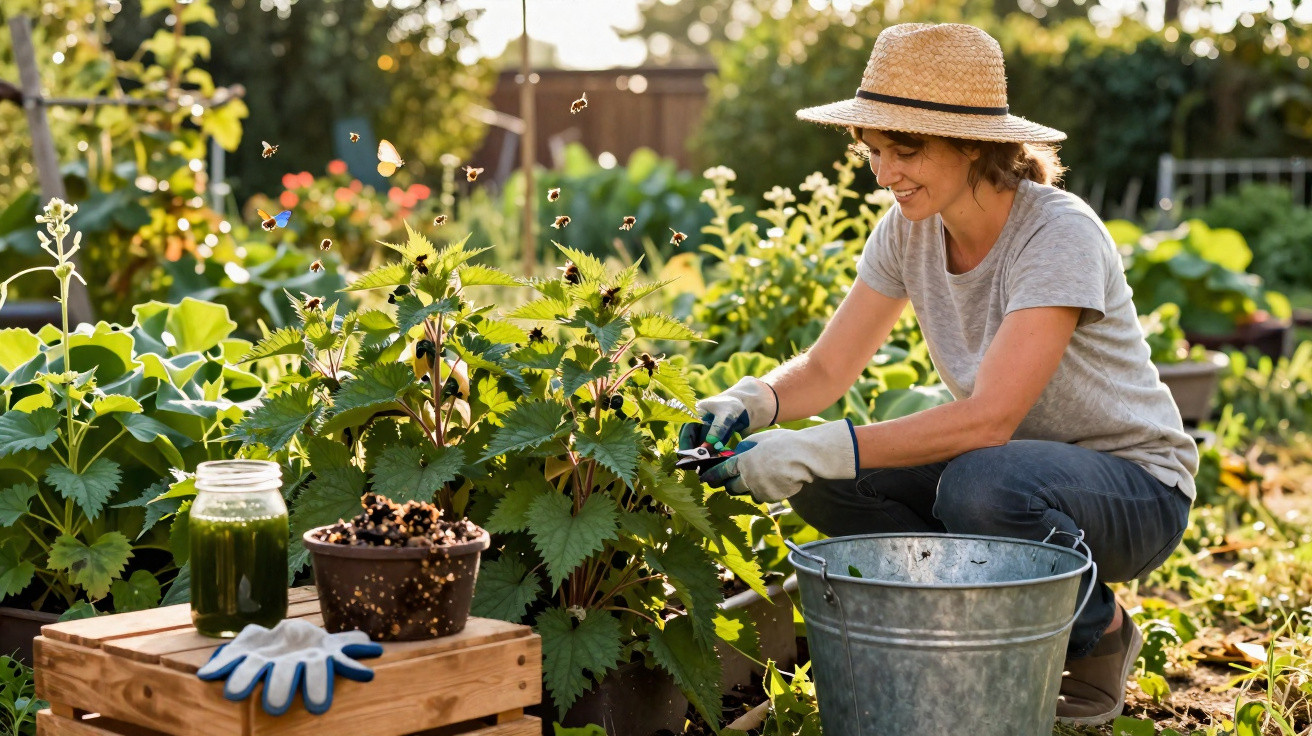
Many amateur gardeners reach for a spade at the first opportunity and ruthlessly remove every nettle from the bed. That is understandable: who wants to touch a plant that stings? Yet removing them completely ultimately harms the soil, the vegetables and even biodiversity in the garden. Beneath the surface, the unassuming nettle does remarkable work.
Why nettles are unfairly regarded as “weeds”
Nettles have an image problem. They look wild and unruly, and touching them is unpleasant. They are rarely seen in neatly kept front gardens, while vegetable beds often treat them as an enemy. In fact, the opposite is true: where nettles grow, the soil is usually nutrient-rich and full of life.
Gardeners who look more closely will see that this plant is not an irritating intruder, but a free tool for healthy beds. It indicates good soil quality, provides fertiliser, stimulates compost, protects other plants from pests, and supplies food and shelter for countless insects.
Leaving nettles in place brings a small natural powerhouse straight into the bed – free of charge and without chemicals.
Nettle liquid fertiliser: free power for your vegetables
The greatest strength of the nettle lies in its leaves, which contain plenty of:
- Nitrogen – essential for vigorous leaf growth
- Potassium – supports cell structure and fruit formation
- Calcium – stabilises plant tissue and soil structure
- Magnesium – vital for photosynthesis
- Iron – helps prevent chlorosis (yellow leaves)
These nutrients make a classic of natural gardening: nettle feed. This homemade liquid fertiliser can replace costly products from the garden centre.
How to make nettle feed correctly
The method is straightforward, even for beginners:
- Prepare a bucket or tub, but do not use metal.
- Cut fresh nettle shoots, chop them roughly and fill around two thirds of the container.
- Add rainwater until the plants are covered.
- Cover the container loosely and place it somewhere quiet and shaded.
- Stir it daily for 7 to 10 days, until it no longer foams heavily.
- Strain the liquid and dilute it with water at a ratio of 1:10.
Use this mixture to water hungry crops such as tomatoes, squash, cabbage or courgettes. The plants respond with deep green foliage and strong growth. Lightly sprayed onto leaves, the feed strengthens the natural defences of your crops.
Nettle feed provides nutrients, strengthens plants’ immune systems and can significantly reduce the use of chemical fertilisers.
Many gardeners also apply it specifically to keep pests under control. Aphids and spider mites in particular dislike the treatment. It is important never to water with it undiluted, as the concentration would be too high for young plants.
Why nettles make compost mature faster
Anyone with a compost heap should not throw nettles away, but use them there deliberately. Their leaves provide ample nitrogen, which fuels the microorganisms in compost. The heap becomes warmer, decomposition speeds up, and organic matter breaks down more effectively.
Roughly chopped nettles can simply be mixed into the layers. The ideal combination includes:
- “Brown” material: leaves, woody waste, straw and shredded branches
- “Green” material: grass clippings, vegetable scraps and nettles
This balance prevents either rotting or drying out from taking over. As nettles decompose, they lose their sting completely and the irritating hairs break down. Compost containing nettles becomes particularly nutrient-rich and crumbly, making it ideal for vegetable beds and container plants.
A refuge for butterflies and beneficial insects
Tidying away everything that looks untidy removes wildlife habitat. This is especially true of nettle patches. Many butterfly species depend on them, as their caterpillars feed exclusively on nettle leaves; without them, there can be no new generation.
These include:
- Peacock butterfly
- Small tortoiseshell
- Red admiral
- Map butterfly
Such species need “wild corners” that are not cut down every week. Leaving a few square metres of nettles creates a miniature nature reserve right behind the house. At the same time, the whole system attracts further beneficial creatures, including ladybirds, hoverflies, solitary bees and spiders. They naturally keep aphids and other pests in check.
A strip of nettles along the fence can do more for garden balance than any spray mixture from the DIY shop.
Medicinal plant and wild vegetable: the underestimated superplant
Nettles benefit more than just your tomatoes; they can benefit you too. They are among Europe’s most nutrient-rich wild plants. Young spring shoots in particular are suitable for eating.
Common culinary uses include:
- Soup made from fresh tips, similar to spinach soup
- Pesto with oil, nuts and cheese
- Tea made from dried leaves
- A vegetable side dish, briefly blanched like spinach
The plant provides plenty of vitamins A, C and K, as well as iron and minerals. In folk medicine, it is described as diuretic, anti-inflammatory and strengthening. Many people use it for joint problems, tiredness or to support hair and nails.
Important: always wear gloves when gathering nettles, and ideally cut only young, clean shoots away from roads and places where dogs are walked. Heating or thoroughly chopping them removes the stinging effect entirely.
Control nettles rather than fighting them
Despite all their benefits, the entire garden does not need to become a nettle jungle. The plant spreads through root runners and seeds, and can overrun beds if left entirely to its own devices.
You can keep it under control by:
- Assigning it a fixed area, such as a corner by the fence or behind the shed.
- Installing a root barrier where necessary, similar to one used for bamboo.
- Cutting plants back regularly before they set seed.
- Using cut shoots immediately for nettle feed or compost.
With sensible planning, you can combine both approaches: a small, controlled strip of nettles as a source material and butterfly hotspot, while vegetable and flower beds remain clear.
What nettles really do in the soil
Below ground, the plant works for you in the background. Its root system loosens the soil, creates fine channels and thereby improves aeration. Rainwater can soak in more readily, while earthworms and other soil organisms find better living conditions.
When nettles grow in one place, this usually indicates humus-rich, rather moist and nutrient-rich soil. Many vegetable crops thrive in exactly these conditions. Simply pulling out the plant therefore means losing a natural indication of where the soil is especially fertile.
| Nettle signal | Meaning for the gardener |
|---|---|
| Strong growth, deep green | Soil is very nutrient-rich, ideal for hungry crops |
| Few, stunted plants | Soil is more depleted or too dry |
| Dense clumps by a fence or compost heap | High humus levels; a good site for berries and vegetables |
Be bolder with a wild corner in the garden
Many problems in amateur gardens – struggling plants, poor yields and hardly any butterflies – are linked to excessive tidiness and too much chemical use. Nettles symbolise a different approach: less intervention and greater cooperation with nature.
A bed of tomatoes and peppers may look tidy. An adjoining wild strip of nettles, wild plants and deadwood provides the supporting “infrastructure”: beneficial insects, nutrients and soil life. Together, they form a system that functions more reliably and largely regulates itself.
When creating a new area of garden, you can intentionally set aside a small space for nettles instead of eliminating them completely. This is particularly useful along property boundaries, behind sheds or in difficult-to-reach corners. The appearance is barely noticeable there, but the benefits are substantial.
Many gardeners report that even one season of deliberately using nettles changes a great deal: stronger vegetables, lower pest pressure, and noticeably more butterflies and insects in the garden. The “enemy” becomes a quiet helper, working almost unnoticed.












Comments
No comments yet. Be the first to comment!
Leave a Comment