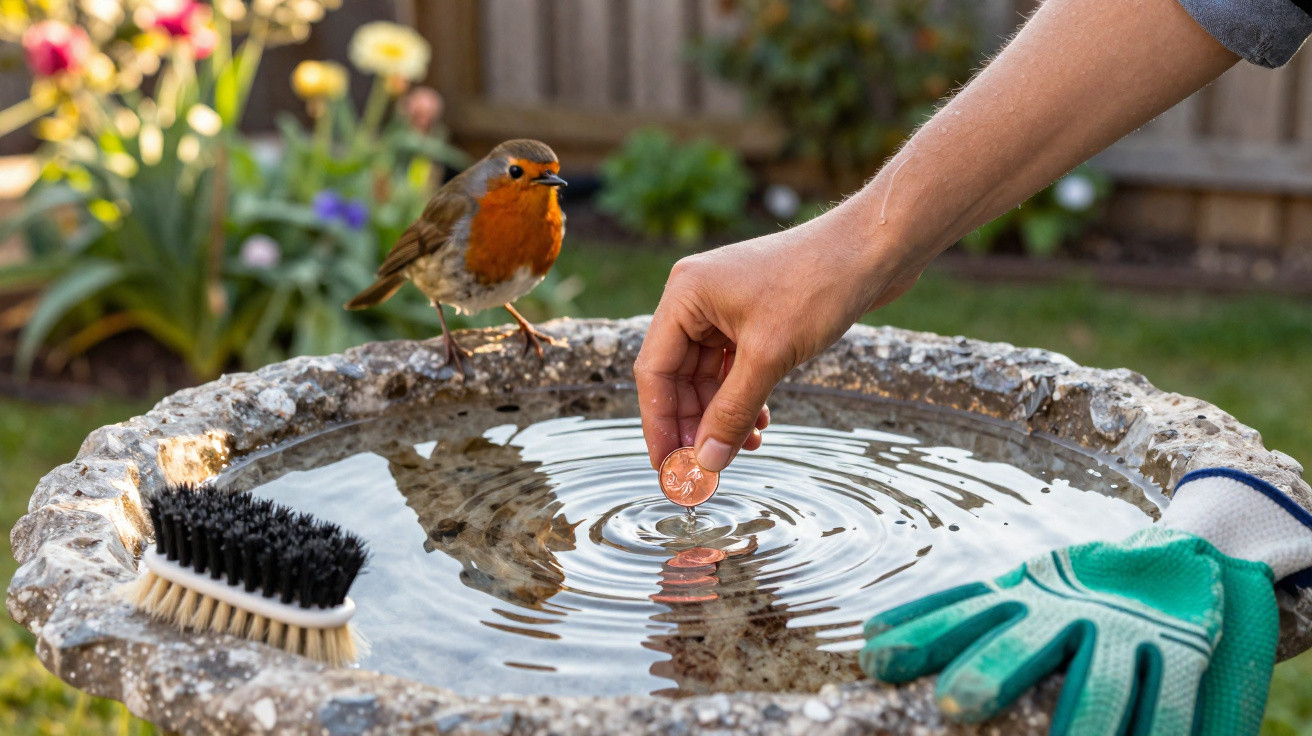
A curious tip is currently circulating in gardening forums and on social media: anyone with a bird bath in the garden should place a 1-cent coin in the water. Many amateur gardeners swear that this makes the green sludge in the basin develop far more slowly. There is no magic behind the trick, however; it relies on an old acquaintance from chemistry lessons: copper.
Why a bird bath quickly turns into algae-filled water
Anyone topping up bird food with fresh seed every day in summer is often surprised: birds may come to drink and bathe, yet the water deteriorates rapidly. Within only a few days, a green film forms, and the bird bath can sometimes even start to smell unpleasant.
Garden designers and experts give a straightforward explanation. An open bowl of water is constantly collecting material. Leaves, pollen, dust, leftover seed and bird droppings create ideal conditions for algae in warm water. Direct sunshine on the bird bath then speeds up the process considerably.
“The combination of stagnant warmth, nutrients and sunlight turns any unmaintained bird bath into an algae-filled tub in a short time.”
Conservation organisations also highlight a risk that many people underestimate: dirty bird baths can spread pathogens. When many species gather there, disease-causing organisms can quickly enter the water via droppings and beaks. At the same time, a neglected pool offers excellent conditions for mosquito larvae.
The result is that anyone failing to clean their bird bath regularly may end up harming the very animals they are trying to help.
What the 1-cent coin in water really does
The viral tip involving a cent coin mainly originates in countries where traditional copper-containing coins remain in circulation. The principle is simple: copper has a natural effect against algae. It restricts their growth and can kill or weaken some of the microorganisms in the water.
Here too, 1- and 2-cent coins are made from steel coated with copper. When one of these coins is placed in water, it releases very small quantities of copper ions. These ions interfere with algae’s metabolism, slowing their growth.
“A cent in a bird bath is not a miracle cure, but a small brake on algae – it does not replace daily cleaning.”
Specialists regard it as a “nice extra”, rather than permission to be careless. The water will generally stay clear for slightly longer, but the bird bath will still turn eventually if nobody tops it up with fresh water.
How to use a copper coin safely in a bird bath
Anyone wishing to try the method should follow several basic rules. Too much copper in the water can be problematic for smaller birds.
Recommended practice for clean, safe bird baths
- Empty the bird bath fully and refill it with fresh water at least every two days.
- Once a week, scrub the basin thoroughly with a brush or sponge and remove deposits.
- After cleaning, put one 1- or 2-cent coin into a small bowl; use no more than two coins in a large bird bath.
- Replace the coins roughly every three months, particularly if they are heavily corroded.
- Position the bird bath in partial shade where possible, as strong direct sun increases algae growth.
Adding more coins does not automatically make the effect happen faster; it merely raises the copper concentration. Small songbirds in particular are sensitive when levels become too high. Experts clearly advise restraint here.
Aggressive cleaning products are strictly off limits: household cleaners, chlorine, bleach, swimming-pool algaecides and salt have no place in a bird bath. Their residues can damage feathers, irritate eyes or directly harm animals when they drink.
What an ideal garden bird bath should look like
The copper trick only works properly if the basics are right. A species-appropriate bird bath should resemble natural puddles and shallow shorelines.
Key criteria at a glance
| Aspect | Recommendation |
|---|---|
| Water depth | No more than 5–8 cm in the centre, with gently sloping edges |
| Location | Bright but not in full sun all day, with a good view for the birds |
| Base | Stable and not wobbly, preferably slightly raised |
| Material | Stone, ceramic or robust plastic – easy to clean |
| Safety | No cat hiding places immediately nearby, with adequate escape routes |
Models with a rough base or moulded structures are useful. They give birds grip and stop them from slipping while bathing. Anyone with only a smooth bowl can place a few flat stones inside. These act as steps and are visually appealing too.
Signs that bird bath water is no longer suitable
Garden owners should not rely on routine alone, but inspect the water with a quick glance. Warning signs include:
- a distinctly green or brown tint across the water surface
- a slimy, smooth layer on the bottom or rim of the bowl
- a strong, musty smell
- an unusually large number of insect larvae in the water
If any of these signs appear, the bird bath needs a complete clean immediately, whether or not there is a cent coin in it.
Other ways to combine the 1-cent coin idea
Anyone who already cleans regularly can combine the copper trick with further straightforward measures. A lightly shaded position, for example, not only reduces algae but also prevents the water from becoming excessively warm. During very hot spells, it is better to put out an additional shallow bowl of fresh water than to try desperately to keep a single bowl “perfect”.
For large gardens, several smaller bird baths in different locations are suitable. This spreads the birds out more effectively and reduces the risk of disease transmission. A single copper coin can then be placed in each bowl, in measured amounts.
What gardeners should know before using the trick
Many people wonder whether contact between copper and water can also damage plants. With one coin in a small bird bath, the quantities released are very low. There is generally no issue if the water is poured over lawns or ornamental plants after changing it. Anyone wishing to be especially cautious should pour heavily soiled water down the drain or into the sewer, and use only slightly cloudy water for watering.
Interestingly, the same effect has long been used in gutters and on roofs. Copper strips along roof ridges use rainwater to prevent mosses and algae from spreading heavily across roof tiles. A similar process is therefore taking place in the bird bath, only on a much smaller and weaker scale.
Ultimately, the cent in the water is a useful aid, nothing more and nothing less. Those who care for their bird bath properly, change the water frequently, choose its position wisely and give the birds peace and quiet are making the most important contribution. The small coin simply helps the water remain clear for a little longer, as birds prefer it and gardeners would like it to be.













Comments
No comments yet. Be the first to comment!
Leave a Comment