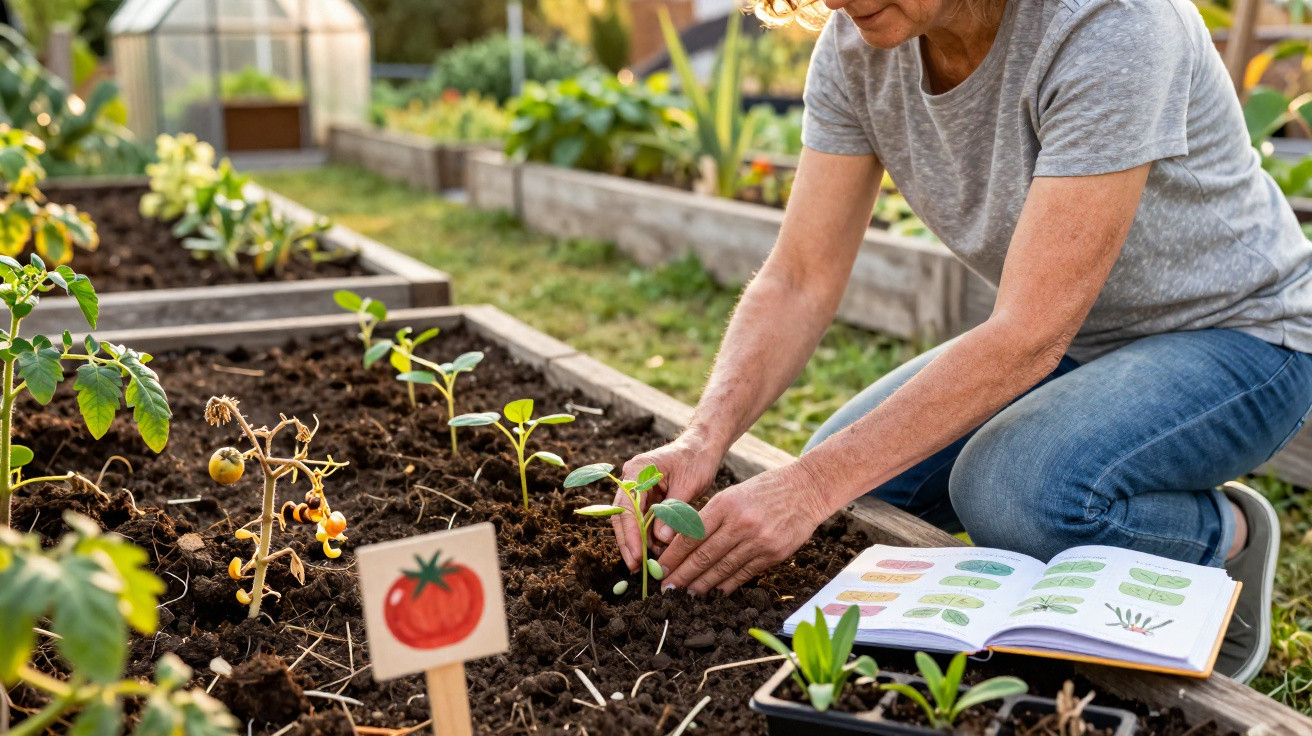
The difference is often not down to fertiliser, the variety or even having green fingers, but to an unobtrusive trick when planning your beds. Anyone who plants tomatoes on the same square metre year after year is gradually creating their own harvest trap.
Why tomatoes eventually struggle in the same place
Tomatoes are among the hungriest vegetable crops in a bed. Over many weeks, they draw substantial quantities of nitrogen, potassium and calcium from the soil. If they remain in the same spot every year, that nutrient reserve becomes increasingly depleted.
The effects are not usually visible straight away, often only after two or three years:
- plants make a weaker start to the growing season
- fruits stay smaller and ripen less successfully
- leaves turn yellowish or appear “tired”
There is also a second issue: soil structure. Growing the same crop continuously can compact or erode the soil. Either water runs away too quickly and roots dry out, or it collects and encourages rot. Both situations place plants under considerable stress.
The most serious risk, however, is the gradual build-up of diseases in the soil. In particular, the feared late blight fungus (often simply called “mildew” or rot) leaves spores behind in soil and plant debris. Planting tomatoes in exactly the same spot again effectively rolls out the red carpet for the pathogen.
Tomatoes in the same location often look normal at first – until a combination of nutrient deficiency, tired soil and fungal spores takes hold.
The key professional rule: give tomatoes at least four years away
Professional vegetable growers take a firm approach: tomatoes do not return to the same bed for at least four years, and often not until five years have passed. It is a clear timetable that many home gardeners underestimate.
So, if you plant tomatoes in a particular bed in 2026, you should not grow tomatoes there again until at least 2030. This gap breaks the disease cycle and allows the soil time to recover.
Paying attention to plant families is equally important. Tomatoes belong to the nightshade family, along with:
- potatoes
- peppers
- chillies
- aubergines
All of these crops share many common pests and diseases. Simply following tomatoes with potatoes or peppers in the same place only moves the problem along – it does not solve it.
Nightshades should be treated as a small family in one location: if one arrives, the whole family needs several years away from that spot.
What to grow in the bed after tomatoes
The space left after tomato season is not a problem but an excellent opportunity. The right follow-on crops help the soil recover and can even make it more fertile.
1. Legumes as natural soil improvers
Peas, beans and broad beans form a partnership with special bacteria on their roots. These micro-organisms capture nitrogen from the air and add it to the soil. For the bed, this means free nutrient feeding.
- peas sown densely in spring: around 100 grams of seed per 10 square metres
- dwarf beans planted in rows in summer: they loosen and invigorate the soil
- broad beans planted very early in the year: they make the most of the cool season
2. Green manure instead of bare soil
Leaving a bed empty through autumn and winter means losing soil life and nutrients. A living “protective carpet” is the better option:
- phacelia: grows quickly, flowers attractively and draws in insects
- winter vetch: also fixes nitrogen
- oats: develop fine roots and loosen heavy soils
As a guide, 20 to 30 grams of phacelia seed per square metre is enough to create a dense cover. In spring, the plants can be worked lightly into the soil or left in place as mulch.
3. Light crops to fill the gaps
Less demanding crops that put little strain on the soil also work well after tomatoes:
- radishes
- small turnips or navettes
- lamb’s lettuce
- leeks
These crops take only moderate amounts of nutrients and share very few diseases with tomatoes or other nightshades. This keeps the risk of fresh fungal and bacterial outbreaks low.
Crop rotation in a small garden: how it works in just 20 square metres
Many home gardeners assume that proper crop rotation requires a large farm. That is not the case. Even a small urban garden or a bed at a terraced house can be divided sensibly.
A straightforward way to begin:
- Divide the bed into three or four areas of equal size.
- Give each section one “main family” each year: for example, nightshades, brassicas, root vegetables or legumes.
- The following year, move each family on by one section – clockwise.
| Year | Bed A | Bed B | Bed C |
|---|---|---|---|
| 2026 | Tomatoes & peppers | Brassicas | Peas & beans |
| 2027 | Brassicas | Peas & beans | Root vegetables |
| 2028 | Peas & beans | Root vegetables | Lettuce & spinach |
There is no need for perfect planning. What matters more is not moving tomatoes back into the same corner every year out of convenience. A small notebook is sufficient: make a brief note of where each family grew – three minutes a year that will make a noticeable difference to the harvest.
Those who keep notes on their garden build knowledge. Plants repay this with more reliable harvests and fewer losses.
Greenhouse tomatoes: discipline is essential here
Protected growing conditions are ideal for many pathogens: warm, humid and often with very little air movement. As a result, fungi and bacteria can persist particularly stubbornly in greenhouses.
Tips for tomatoes grown under glass or polythene:
- do not plant tomatoes in precisely the same place in the greenhouse every year where space allows
- occasionally replace the top layer of soil or incorporate fresh compost
- remove diseased leaves and entire plants consistently, and do not put them on the compost heap
- ventilate thoroughly so moisture dries more quickly
If you only have a small polythene tunnel, containers can also be used. They can be filled with fresh compost every year or moved to another location, giving pathogens fewer opportunities.
Practical steps from autumn: strengthen the soil for the next tomato season
The best time to prepare for healthy tomatoes is not spring, but immediately after harvesting.
- Apply mature compost: two to three kilograms per square metre provides fresh nutrients and more life in the soil.
- Remove plant debris that looks suspicious rather than digging it in.
- Sow green manure so rain and frost do not “wash out” the soil.
- Deliberately plan tomatoes for a different corner the following year – and record it in your notebook.
Making these steps routine gradually creates stable, healthy garden soil. Many fungal problems then never arise in the first place, rather than needing to be tackled laboriously.
Why crop rotation achieves more than any specialist fertiliser
Garden centres offer countless tomato fertilisers, leaf-strengthening products and sprays. Yet changing the growing location remains the real foundation. Fertilising without crop rotation is like giving a caffeinated energy drink to someone who is exhausted: it helps briefly, but does not address the underlying issue.
A well-planned rotation of plant families:
- reduces fungal and bacterial pressure
- improves soil structure over the long term
- saves money on fertiliser and plant protection products
- makes harvests more predictable, even in difficult years
This forward-looking approach is especially worthwhile for tomatoes, which are particularly close to many gardeners’ hearts. Anyone who understands plants, soil and diseases as an interconnected system needs to spray less often and experiences fewer total losses from rot.
That is precisely the small secret of the professional vegetable grower next door: they do not plant tomatoes “just wherever there is space”, but deliberately give their former spot several years of rest. This one planning decision often determines whether only a handful of tired fruits hang from the canes in summer – or crates full of aromatic garden tomatoes are harvested.













Comments
No comments yet. Be the first to comment!
Leave a Comment