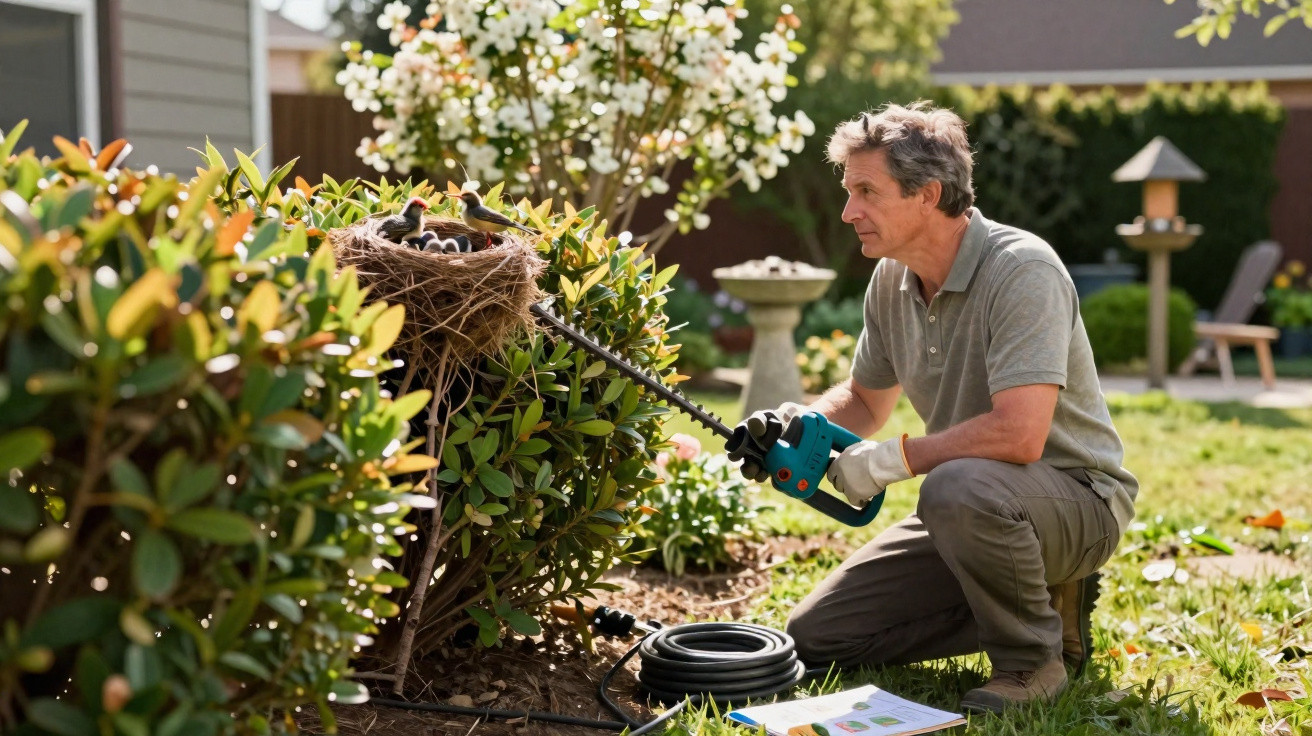
Many amateur gardeners plan a major hedge trim in March. Yet this is precisely when the sensitive nesting season begins for numerous bird species. Authorities, conservationists and agricultural rules therefore take a tougher approach than many people realise. Anyone who fails to check the rules risks not only fines but also causing serious harm to wildlife right outside their home.
Why hedge trimming in spring is problematic
From March to July, gardens are exceptionally busy. Blackbirds, robins, finches and many other species look for dense branches in which to build nests and rear their young. Hedges and shrubs provide ideal locations – which is exactly where routine cutting work takes place.
“Anyone who reaches for the hedge trimmers in spring may destroy nests, eggs and young birds – often without even realising it.”
Even an apparently “light shaping trim” may render an entire clutch unviable. Some species abandon nests once they have been touched or exposed, while young birds may freeze or be left vulnerable to predators.
Strict rules for farmers – and indirect implications for private gardens
What agricultural law requires
The position for farmers is clear: under the Common Agricultural Policy (CAP / PAC), hedge trimming is expressly prohibited during the main nesting season. Field hedges and comparable features must not be cut back between 1 April and 31 July.
- Prohibited period: 1 April to 31 July
- Reason: protecting the nesting and breeding season, while safeguarding biodiversity
- Context: linked to EU agricultural support and nature-conservation requirements
- Consequences: in extreme cases, prison sentences of several years and substantial fines
Within agricultural landscapes, hedges are classed as landscape features. They provide shelter for birds, insects and small mammals, retain water, reduce wind and capture CO₂. For this reason, they receive greater protection than many people appreciate.
Rules for private gardens
Domestic gardens generally do not have one uniform nationwide closed season. That does not, however, mean that everything is permitted. Several levels of regulation may apply:
- local by-laws and regulations, for example those issued by councils or districts
- nature-conservation law, which prohibits the destruction of active nests
- guidance from wildlife charities, some of which is very explicit
Many specialists advise avoiding hedge trimming altogether from mid-March, regardless of the minimum legal requirements. The first nesting attempts commonly begin in March, while nests are often so well concealed that they go unnoticed during cutting.
“Anyone who cuts a hedge back drastically during the nesting season can quickly breach the ban on destroying bird nests – even in a private garden.”
The best times for hedge trimming
Late winter: ideal for shaping and maintenance cuts
As a rule, the best time for a substantial shaping cut is at the end of winter. Plants are then coming out of dormancy but have not yet fully started growing. At the same time, birds have not begun building nests.
Depending on the region, the most suitable window is usually from late February to mid-March. During this period, a hedge can be cut back significantly without putting nests at risk. Trimming encourages dense new growth, helping the hedge remain compact and provide privacy.
Late summer: light pruning after the nesting season
A second appropriate period comes at the end of summer. Once the nesting season has finished and many birds have successfully raised their young, minor adjustments can be made.
Flowering shrubs are an exception: gardeners should ideally prune them immediately after flowering. This allows new flower buds to form for the following year and keeps the plants healthy and vigorous.
| Period | Recommended action |
|---|---|
| Late February – mid-March | More substantial shaping cut, rejuvenation pruning |
| Mid-March – late July | No cutting, except in absolute emergencies and with great care |
| Late August – September | Light maintenance pruning, thinning and shape correction |
| Immediately after flowering | Special case for flowering shrubs: pruning to encourage new blooms |
Supporting garden birds effectively
What happens during the nesting season?
For many species, the key period runs from March to July. They gather suitable materials, construct nests, lay eggs and feed their offspring. Hedges and densely growing shrubs protect them from predators and poor weather.
Cutting at this time can have several consequences:
- destruction of existing nests containing eggs or young
- loss of essential cover from cats, martens and birds of prey
- stress for adult birds, which may lead to the nest being abandoned
By being considerate, gardeners can instead create a genuine miniature nature reserve immediately outside their door.
Simple measures with a big impact
Small changes to everyday gardening can make a noticeable difference for birds. Feeding stations can be set up in winter, when natural food is scarcer. From November to March, high-quality seed mixes, sunflower seeds or fat-based food provide valuable additional nourishment.
From spring onwards, birds generally find enough insects, worms and seeds. The feeding station can then gradually be phased out so that they continue to use their natural food sources.
“Those who leave their garden a little wilder and do not ‘tidy up’ every corner help birds, insects and small animals the most.”
Nest boxes in sheltered locations, a small “wild area” with leaves and dead wood, native shrubs and a dish of fresh water can quickly turn a garden into a bird paradise.
Which shrubs particularly promote biodiversity
Native woody plants as natural refuges
Not every ornamental plant is suitable habitat for birds. Native shrubs that offer both food and shelter are especially valuable. These include, for example:
- various rowan species with abundant berries
- black elder, with flowers for insects and berries for birds
- viburnum species with dense crowns and attractive flowers
- hawthorn species, whose thorns offer protection from cats
- holly and other dense evergreen shrubs
- firethorn, with thorny branches and plentiful fruit
Such plants are not only decorative: they serve several species as nesting sites, food sources and places of refuge. Anyone planting anew should therefore choose native woody plants rather than purely ornamental exotic species with no ecological value.
Legal pitfalls and practical tips for garden owners
When cutting cannot be avoided during the nesting season
Occasionally, intervention cannot be prevented – for instance, where branches obstruct routes, damage house roofs or present a hazard. In such cases, cut as late as possible, remove only what is necessary and inspect the hedge carefully beforehand.
Before undertaking any major pruning, it is worth checking the local official gazette or contacting the relevant environmental or parks department. Many local authorities publish clear guidance on nesting seasons, protected periods and permitted work.
Why later hedge trimming can be worthwhile
From a gardening perspective, patience has benefits. Cutting in autumn or late winter not only protects birds but often strengthens the plant as well. The work can be carried out more controllably because the shoots have matured. Disease spreads less easily, and new growth is more vigorous.
There is another advantage: observing growth first in spring makes it easier to identify which shoots are genuinely troublesome and which give the hedge its structure. The finished result looks more natural and less “cut back”.
Hedges have long served purposes beyond privacy screening. They are mini ecosystems and therefore an important feature of both urban and rural landscapes. Anyone who puts away the shears from mid-March makes a meaningful contribution to protecting native bird species with very little effort – and will usually end up with a livelier, more attractive garden.













Comments
No comments yet. Be the first to comment!
Leave a Comment