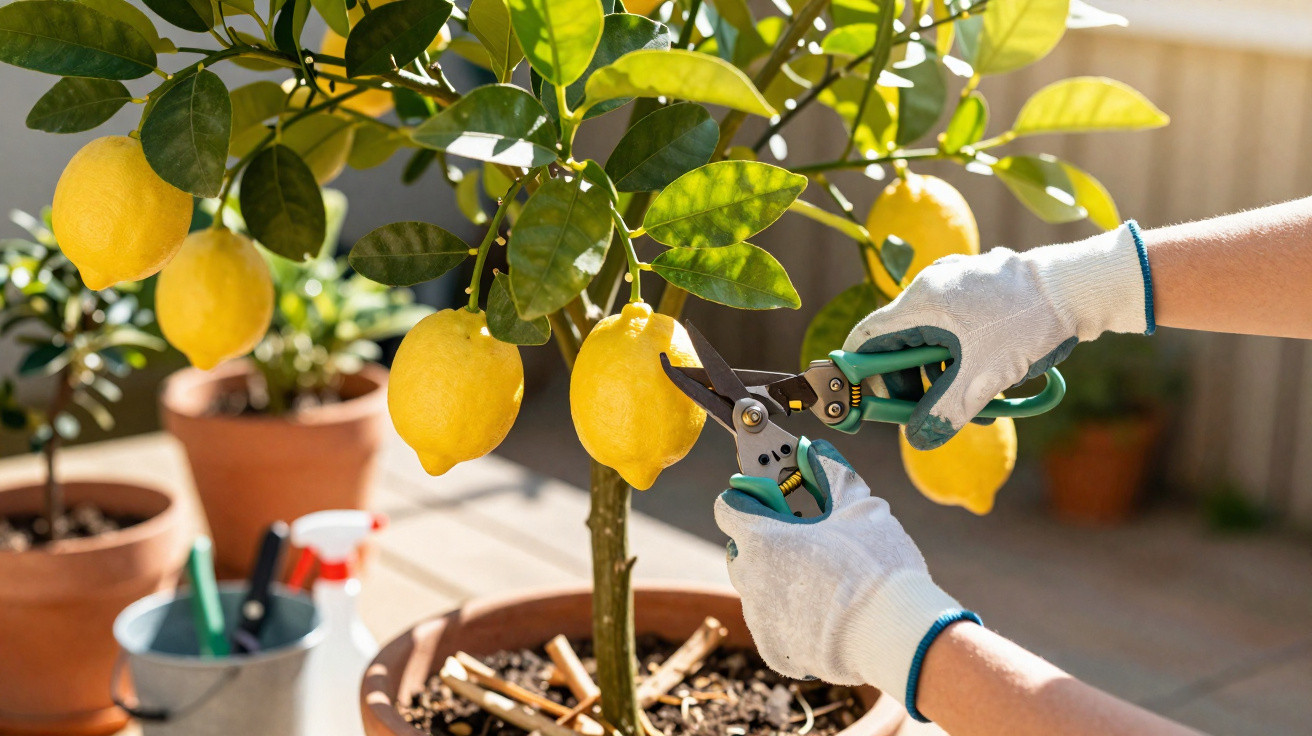
As winter begins to loosen its grip, a well-timed prune can determine whether your lemon tree merely produces a few meagre fruits or rewards you with baskets of fragrant citrus in summer. Knowing when to cut and following several straightforward principles will help you get far more from citrus plants grown in pots or in the garden.
Why timing before spring matters so much
Citrus trees, including lemon, orange, mandarin and grapefruit, behave differently from apple and cherry trees. They have virtually no true winter dormancy. Although their metabolism slows over winter, they remain active. As soon as the first warmer days arrive, sap begins to rise, buds swell and the tree prepares to flower and set fruit.
"Those who prune too late remove precisely the shoots that would later carry flowers and fruit."
The ideal time to prune is therefore at the end of winter, before visible new growth begins. During this interval, the following happens:
- The tree can seal pruning wounds without pressure.
- Fresh shoots develop purposefully on the new framework.
- Most flower buds are retained.
- The plant enters the growing season with a clear structure.
Anyone who waits until late spring will inevitably remove flower buds and sacrifice part of the harvest.
How citrus trees bear fruit – and the role of pruning
One important fact is often overlooked: citrus fruit forms mainly on the previous year's shoots. If you cut away newly formed branches, you are also cutting away your crop.
For this reason, pruning should primarily tidy, open up and thin the tree rather than radically stripping it bare.
How pruning affects crop quality
A well-structured tree with an airy canopy offers several advantages:
- More light: Sunlight can reach every fruit, helping the peel colour more evenly and intensifying the flavour.
- Improved air circulation: Moisture dries more quickly, making fungal infections less likely.
- Stronger branches: Fruit-bearing limbs are less prone to breaking under the weight of the crop.
- A clearer canopy: Pests and damaged areas can be spotted more quickly.
The difference can genuinely be visible after just one season: heavier fruiting, more uniform fruit size and richer colour.
Preventing diseases and pests with sensible pruning
Citrus plants are susceptible to a range of issues, including sooty mould fungi, which grow on sugary deposits left by aphids, gummosis on trunks and branches, viral diseases, aphids, scale insects and mealybugs. A dense, overgrown canopy gives pathogens an easy advantage.
"Every diseased or dried-out section of branch that is removed is one less risk factor for the whole tree."
Thinning the tree achieves three things:
- Removing affected growth: Diseased, dead or heavily encrusted branches should be taken out completely.
- Reducing hiding places: Aphids, scale insects and similar pests readily gather in tangled branch forks; less congestion means fewer places to hide.
- Improving access: If you later use water, soft soap or beneficial insects, the leaves are much easier to reach.
When making more substantial cuts on thicker branches, it is worth applying a wound sealant. This helps limit the entry of fungi and bacteria, while allowing the plant time to form clean callus tissue.
Step by step: how to prune your citrus tree correctly
Before picking up the secateurs, inspect the entire plant carefully from every angle. Ideally, turn a potted tree as you assess it, or walk all the way around a tree planted in the ground.
1. Prepare the tools
- Sharp secateurs for thinner shoots
- Loppers or a small pruning saw for thicker branches
- Disinfectant, such as alcohol or boiling water, for the blades
- Wound sealant for larger cut surfaces, if needed
Clean, sharp blades reduce stress for the plant and lower the risk of infection.
2. Remove dead and diseased wood
Always start with the most obvious growth:
- Completely dry, brittle branches
- Twigs with black, greasy or heavily encrusted bark
- Shoots that no longer carry any leaves
Cut these areas back into healthy tissue. Healthy wood can be identified by the pale green to cream-coloured layer beneath the bark.
3. Open up the canopy
Many citrus trees grown in containers develop a dense ball of foliage. The centre becomes dark and damp, while the outside forms a thick coat of leaves. The aim is a loose canopy with a gently goblet-like shape.
"The rule of thumb is that a small bird should be able to fly through the canopy without difficulty – then the ventilation is right."
Proceed as follows:
- Remove shoots growing towards the centre.
- Cut out branches that cross heavily or rub against one another.
- Thin areas where several branches emerge close together from the same point.
Use a stable basic framework of a few strong main branches as your guide; these should support the tree.
4. Do not remove too much
Citrus trees cope with pruning, but they respond best to restraint. The following are useful guidelines:
- Remove no more than roughly one third of the total volume of green growth.
- Thin older, ageing sections more firmly.
- Only shorten young, vigorous shoots lightly, so that they can continue to bear fruit.
A freshly pruned tree should still look complete, rather than like a skeleton. The objective is a balanced, lightly opened silhouette.
Common mistakes that cost you fruit
The same mishaps occur repeatedly in home gardens, and they are easy to avoid:
- Summer pruning during flowering: Cutting when the tree is already covered in blossom removes flowers and the fruit that would follow.
- Severe cutting back: Giving the tree a hedge-trimmer haircut may create a green ball, but it will produce very little fruit.
- Leaving stubs: Long branch remnants without buds often rot and can become entry points for disease.
- Blunt tools: Crushed wounds heal less effectively and are more vulnerable to fungal infection.
Those who keep these points in mind will often see noticeably more flowers and fruit in the following season.
How care and pruning work together
Even the best pruning will achieve little if the tree is growing in unsuitable compost or is permanently short of nutrients. After pruning, it is worthwhile carrying out a full check:
- Citrus compost with good drainage and no waterlogging
- A bright, preferably sunny, sheltered position
- Special citrus fertiliser from spring onwards, applied regularly but not excessively
- An even water supply, without leaving the root ball constantly wet
Pruning creates the tree's architecture, while fertiliser and water provide the building materials for leaves, flowers and fruit.
What many people overlook: citrus pruning is also psychological
Many home gardeners barely dare touch their citrus tree because they fear getting everything wrong. In the end, that hesitation often results in ageing, unhealthy plants with only a few fruits.
"Thoughtful, moderate pruning strengthens the tree – not the other way round."
It helps to start small: make a few corrections each year in late winter instead of intervening drastically every five years. Over time, you will know your tree so well that pruning becomes almost routine.
If you also check regularly for pests and remove dead parts immediately, you can enjoy fragrant blossom and abundant crops for many years, whether the tree is on a balcony, patio or in a garden bed.












Comments
No comments yet. Be the first to comment!
Leave a Comment