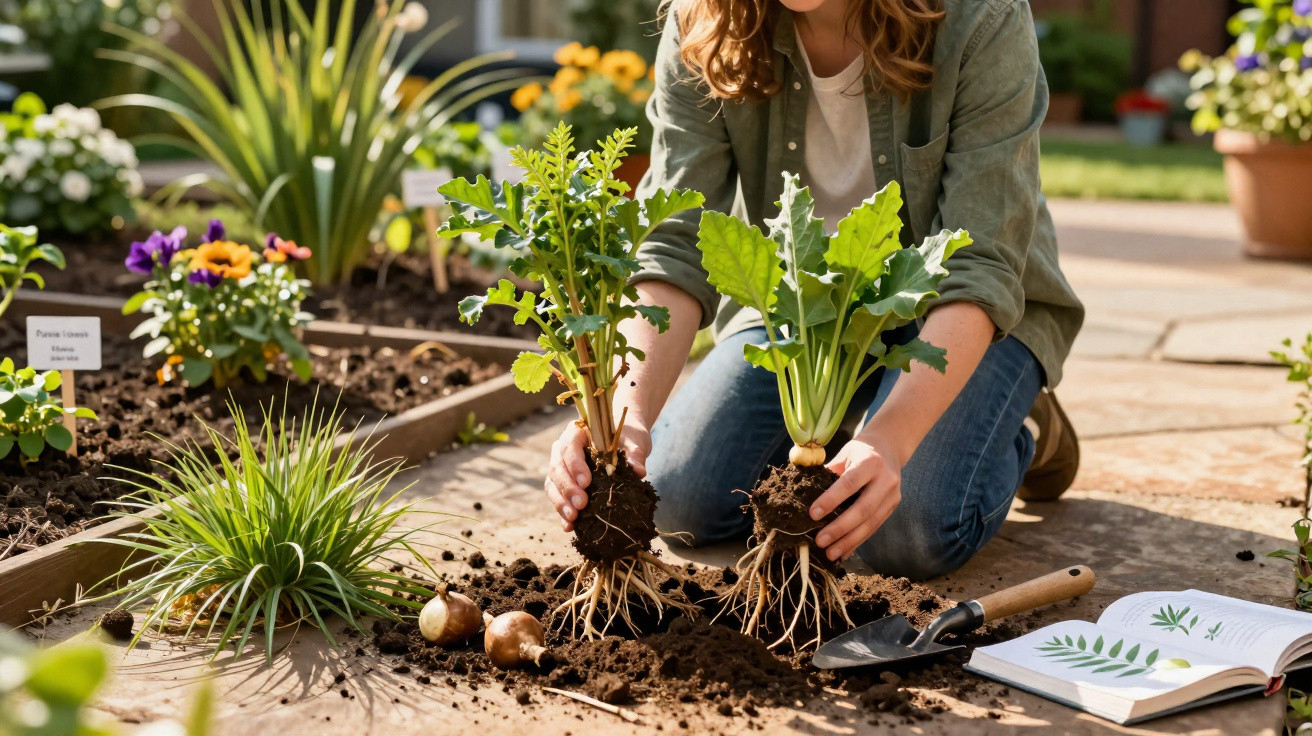
The secret to a garden that flowers reliably year after year is not spending heavily at the garden centre, but understanding which plants are genuinely perennial and which are simply one-season wonders. Being able to identify perennials with confidence saves money, time and disappointment – while delivering more blooms and less work every year.
What defines perennials in the garden
In everyday gardening terms, perennials are plants that live for more than two years and return regularly. They often die back completely over winter, then grow again from their roots, rhizomes, tubers or bulbs.
“Perennials are the long-term foundation of a garden – they stay while annuals come and go.”
The broad group of perennials includes, for example:
- Classic flowering favourites such as delphiniums, daylilies and hostas
- Medicinal and aromatic plants including Echinacea and sage
- Lawn grasses and many native wild grasses
- Bulb and tuber plants, such as daffodils and dahlias
It is important to note that shrubs and trees are also perennial plants in botanical terms. In gardening, however, they are usually discussed separately as “perennials” – long-lived plants without woody growth – and “woody plants”, which develop woody stems.
Perennials, annuals and biennials compared
This three-part distinction makes it easier to classify plants in a border:
| Type | Lifespan | Characteristics | Examples |
|---|---|---|---|
| Perennials | Several years | Return from roots, tubers or bulbs; some become woody | Daylily, Echinacea, hostas, many grasses |
| Annuals | One season | Set seed and die after flowering; rarely woody | Cosmos, sunflower, zinnia, basil |
| Biennials | Two years | Form a leaf rosette in the first year, flower in the second, then die | Foxglove, hollyhock (classic cycle), some brassicas |
Annuals must complete their entire life cycle within a few months: germinating from seed, growing, flowering, producing fresh seed and dying. This is why they grow so quickly and often flower with such striking abundance. Perennials take a longer view, directing resources into roots and storage structures.
How to spot woody perennials
A simple rule of thumb is that anything producing true wood survives for several years. Wood forms when older plant parts die and remain as a supporting framework, while the transport tissues are concentrated in younger growth near the bark.
Typical signs of woody plants include:
- Bark or firm brown stems rather than soft green growth
- A cross-section with paler heartwood and a darker bark layer
- Stems that remain standing through winter instead of becoming completely soft and mushy
Even tiny blueberry bushes or low ground-cover plants with small woody twigs belong in this group, although they may initially resemble annual seedlings.
Non-woody perennials: hidden strength below ground
Many popular garden perennials appear to vanish without trace in autumn. Their top growth turns brown and soft, but the plant has not died; it has simply withdrawn its energy below ground.
“What has disappeared above ground continues to live below it – in the roots or a storage organ.”
Bulbs, tubers and rhizomes: the plants that return unnoticed
Common storage structures found in non-woody perennials include:
- Bulbs: layers packed with nutrients, as in daffodils, tulips and many ornamental alliums
- Tubers: swollen storage organs, often found in flowering plants such as dahlias and gladioli
- Tubers / swollen roots: as with potatoes and sweet potatoes
- Rhizomes: underground stems that produce side shoots, as in irises, many grasses and mint
Plants would not build substantial storage organs if they were intended to survive for only one season. Annuals invest as much as possible in seed production, as that is their route to survival. Bulbs, tubers and swollen roots almost always indicate a perennial, or at least a long-lived edible plant.
Grasses: the garden’s lasting carpet
Grasses may be annual or perennial. A typical ornamental lawn is made up of long-lived grass species that produce new growth every year. A lawn that vanished entirely after one year would be a complete failure in most gardens.
Many native wild grasses used in naturalistic gardens also form permanent clumps or spreading underground runners, placing them firmly among the perennials.
Why perennials sometimes fail to return
It is a familiar garden frustration: everything looks promising in autumn, only for spring to reveal empty spaces where a burst of colour was expected. The explanation is often found in the details.
Energy reserves and nutrients
Plants need stored reserves to restart in spring. If they put all their energy into abundant flowering in their first year, there may sometimes be too little left for the following cycle. Tulips are a well-known example, often flowering far less strongly in their second year, or not at all.
Possible causes include:
- Nutrient-poor soil or unbalanced fertilising
- Too little leaf growth remaining after flowering because foliage was cut back too early
- Sites prone to waterlogging or very dry winters
Some perennials produce foliage only in their second year and hold back their floral display until the third. They build up strength first before flowering fully again.
“Perennial” in the catalogue, but not in your climate
Regional conditions are another crucial factor. A plant that survives for years in a mild climate may simply freeze in harsher areas. Garden centres often sell plants that are perennial in principle but cannot survive a British winter without protection. In practice, they then behave like annuals.
When annuals are secretly perennials
The reverse situation can be equally surprising: some plants sold as seasonal flowers are botanically perennial, yet are treated as disposable in the garden.
Typical examples include:
- Pansies: they can survive winter, although they usually look a little more tired in their second year
- Tomatoes, peppers and potatoes: perennial in warmer regions, but generally grown here as seasonal crops
- Herbs such as oregano and lemon balm, which return strongly even though many people buy replacements each year
“Whether a border contains annuals or perennials depends not only on biology, but also on climate, care and gardening habits.”
Volunteer seedlings: returning plants or simply diligent self-seeders?
When plants appear in spring where nobody has sown anything that year, they are often described as “returning”. The proper term for these visitors is volunteer seedlings.
They develop when seeds from the previous year overwinter in the soil and germinate the following spring. This can happen with both annuals and perennials, but the key point is that the original plant has died; only its seed has survived.
Common volunteer seedlings in the vegetable garden include:
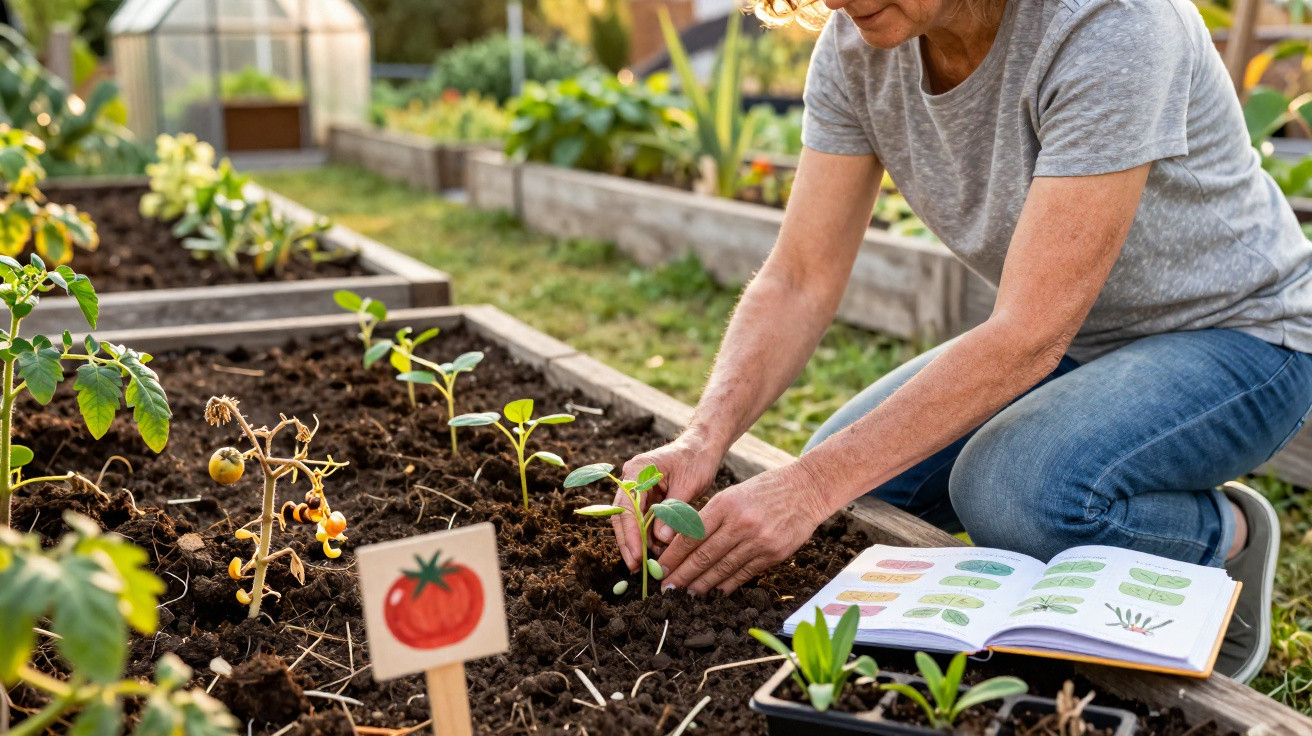
- Tomatoes growing from forgotten fruits
- Pumpkin and courgette seedlings emerging from compost
- Sunflowers that self-seeded the previous year
- Beans and peas whose seeds were “forgotten” in the soil
These plants can feel like perennials because they “keep coming back”. In reality, an entirely new generation begins every year.
Practical ways to identify perennials quickly
With a little practice, it becomes much easier to judge what will remain in the garden long term. A few simple questions can help:
- Does a woody remnant stay in place over winter, or does all growth die back softly?
- Can you see bulbs, tubers or thick rootstocks when moving the plant?
- Does it produce new shoots in the same spot year after year?
- Does it grow very rapidly and flower profusely in its first year – typical of an annual – or does it establish itself gradually?
The more your answers point towards “stays”, “stores” and “returns”, the more likely it is that you are looking at a perennial.
How perennials transform a garden over time
Anyone who deliberately chooses long-lived plants will notice a clear difference after only a few years: less planting work in spring, more stable structure in borders and greater insect activity. Areas that flower reliably provide bees and butterflies with a dependable food source and create a more natural balance in the garden.
The most interesting results often come from combining perennials with annuals. Perennials provide the framework, while annuals fill gaps and add seasonal bursts of colour. The result is a border that changes slightly every year without ever having to begin entirely from scratch.
Taking time to observe your own plants more closely – their roots, stems and spring growth – soon makes one thing clear: perennials are not merely an abstract gardening term, but the quiet, supporting foundation of a garden that works for more than one season.












Comments
No comments yet. Be the first to comment!
Leave a Comment