Summer is approaching and the terrace is calling – but parched lawns and biting pests can quickly spoil the mood.
One little-known aromatic plant is now changing that in gardens across the country.
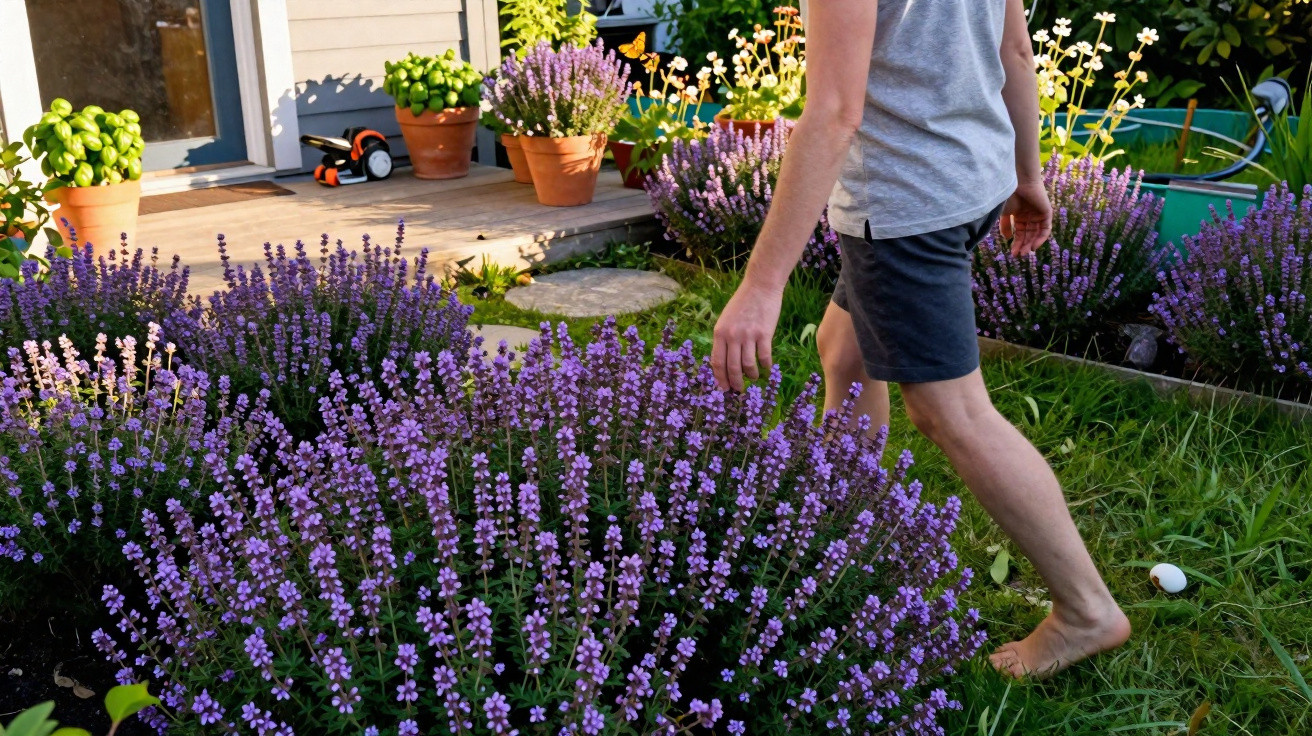
Anyone who has looked out into their own garden in recent summers will recognise the scene: scorched patches of grass, watering restrictions and mosquitoes around the ankles. Conventional lawn grass is becoming less suited to dry, hot summers. At the same time, more people want an outdoor space that looks good, needs little upkeep and, ideally, attracts fewer mosquitoes. This is where a striking alternative comes in: a low-growing thyme that spreads to form a fragrant carpet.
Thyme ground cover: a living carpet instead of a high-maintenance lawn
The trend centres on a particular variety of creeping thyme: Thymus serpyllum ‘Coccineus’, often sold as red creeping thyme or red sand thyme. This perennial remains exceptionally low, usually reaching just 5 to 10 centimetres, while spreading sideways. Each planting spot gradually develops into a thick, soft carpet.
The plant is especially eye-catching in late spring and early summer, when countless red to purple flowering cushions cover the ground. Its flowers are regarded as magnets for bees and other pollinators. Every brush of the foliage also releases the familiar herbal scent known from cooking – though more intense and warmer, with something of a southern hillside fragrance.
“Red sand thyme creates a hardy fragrant carpet where a conventional lawn burns away – and it needs remarkably little maintenance to do so.”
This ground cover thrives precisely where ordinary lawn grass usually fails: in full sun, on relatively poor ground, including stony soil, provided it drains freely. It does not tolerate waterlogging, but copes with drought far better than grasses. It is also resilient through winter, with established plants remaining reliable down to around minus 25 degrees Celsius.
Why a fragrant carpet gives mosquitoes fewer opportunities
Most gardens provide ideal conditions for mosquitoes: closely cut lawns watered in the evening, compacted spaces beneath pots, saucers holding water and dark, damp areas around the terrace. These are the places where the insects like to linger – hidden during the day and ready to emerge in the evening.
Red sand thyme noticeably changes this microclimate:
- Less moisture: Once established, the plant needs very little water. The soil dries more quickly and few persistently damp areas develop.
- Hardly any sheltered gaps: The dense carpet covers bare ground. Spaces where insects like to rest largely disappear.
- A strong fragrance: When walked over or brushed against, the leaves release essential oils. This scented cloud confuses mosquitoes nearby and makes the area less appealing to them.
It is important not to expect miracles: the plant is not a substitute for insect repellent and will not create a completely mosquito-free area. However, it can make a noticeable difference close to seating areas. The change is particularly apparent where a permanently watered lawn previously formed the surface.
Making the switch: from lawn to a thyme carpet
Anyone planning to create a fragrant carpet should keep several points in mind. The planting season runs from spring into autumn, as long as the ground is frost-free and there is no spell of extreme heat.
Preparing the site and soil
Choose a spot with plenty of sunshine, receiving direct light for at least half the day. The plant will grow in partial shade, but it will be less dense and flower less abundantly. Soil preparation is particularly important.
- Mix heavy, clay-rich soil with plenty of sand or fine grit.
- Loosen compacted ground deeply so rainwater can drain away quickly.
- Remove the existing lawn completely, including roots and the layer of thatch.
If desired, work in a thin layer of gravel. This reinforces the dry character of the planting and visually enhances the Mediterranean feel.
Spacing, first-year care and trimming
For a continuous surface with no large gaps, leave around 30 to 40 centimetres between young plants. This works out at approximately 9 to 12 plants per square metre. Planting more closely will create a dense carpet faster, but will cost more accordingly.
| Aspect | Recommendation |
|---|---|
| Planting period | Spring to autumn, during frost-free spells |
| Spacing | 30–40 cm, approximately 9–12 plants/m² |
| Water requirements | Water regularly in the first year, then only during prolonged dry periods |
| Trimming | Light trim after flowering |
During the first few months after planting, regular watering helps the plants establish, without soaking the soil. Once the roots are settled, even at the height of summer an occasional drink during hot spells is often enough.
After flowering, the carpet can be lightly trimmed into shape. This keeps the surface compact and encourages fresh growth. Mowing as you would a lawn is almost entirely unnecessary – a clear everyday time-saving benefit.
Around the terrace: smart combinations to deter mosquitoes
Using this planting around an outdoor seating area is particularly popular. A thyme carpet creates a soft transition between the terrace and the edge of the garden. Other fragrant companions that mosquitoes also dislike can easily be introduced into this zone.
“Combining a fragrant carpet, potted herbs and dry soil creates an area that is pleasant for people and considerably less attractive to mosquitoes.”
Suitable options include:
- Lemon basil in pots placed directly beside chairs and loungers.
- Scented geraniums with a lemony aroma along the edge of the terrace.
- Peppermint in large containers, so it cannot spread unchecked.
One point is essential: keep pot saucers as empty as possible so water cannot collect in them. Every small puddle can become a breeding site, regardless of how many aromatic plants surround it.
How much foot traffic can this ground cover handle?
Many amateur gardeners wonder whether children can still play on the area. The honest answer is that thyme tolerates occasional footsteps, a route to the table or perhaps a blanket for reading. It is only of limited suitability for football, trampolines or energetic dogs.
Anyone incorporating a fragrant carpet into a family garden can work with zones: use durable stepping stones or paving slabs for the main route, with planting cushions in between. This protects the plant while keeping the overall appearance cohesive.
Healthier soil, greater insect diversity and less summer stress
Using red sand thyme has benefits beyond the practical ones. Because it requires hardly any fertiliser and considerably less water, the soil can recover over time. Its roots loosen the ground, while the dense cushions protect it against erosion and drying out.
For bees, solitary bees and butterflies, the flowering period in spring and early summer provides a dependable food source. Anyone who previously had only lawn often notices a change in the garden’s soundtrack – more buzzing and less engine noise from the mowing routine.
Especially in years with watering restrictions or extreme heatwaves, switching to this type of fragrant carpet can deliver a noticeable improvement in comfort: fewer scorched areas, less garden work at inconvenient times and fewer damp corners where mosquitoes can spread. It also creates a Mediterranean-looking area that carries the scent of end-of-day relaxation before you even step outside.











Comments
No comments yet. Be the first to comment!
Leave a Comment