In the natural world, excelling at one task generally comes at the expense of another. Biologists refer to these compromises as trade-offs, and they appear almost everywhere researchers investigate.
Yet a small number of fungi seem to defy this principle. One species can prey on insects, decompose plant material in soil and enter living roots as a beneficial resident.
Scientists have long been perplexed by such adaptability. New research now identifies one underlying explanation.
The discovery could alter the way farmers manage pests. It also addresses a broader question about how living organisms develop new functions.
A fungus with three jobs
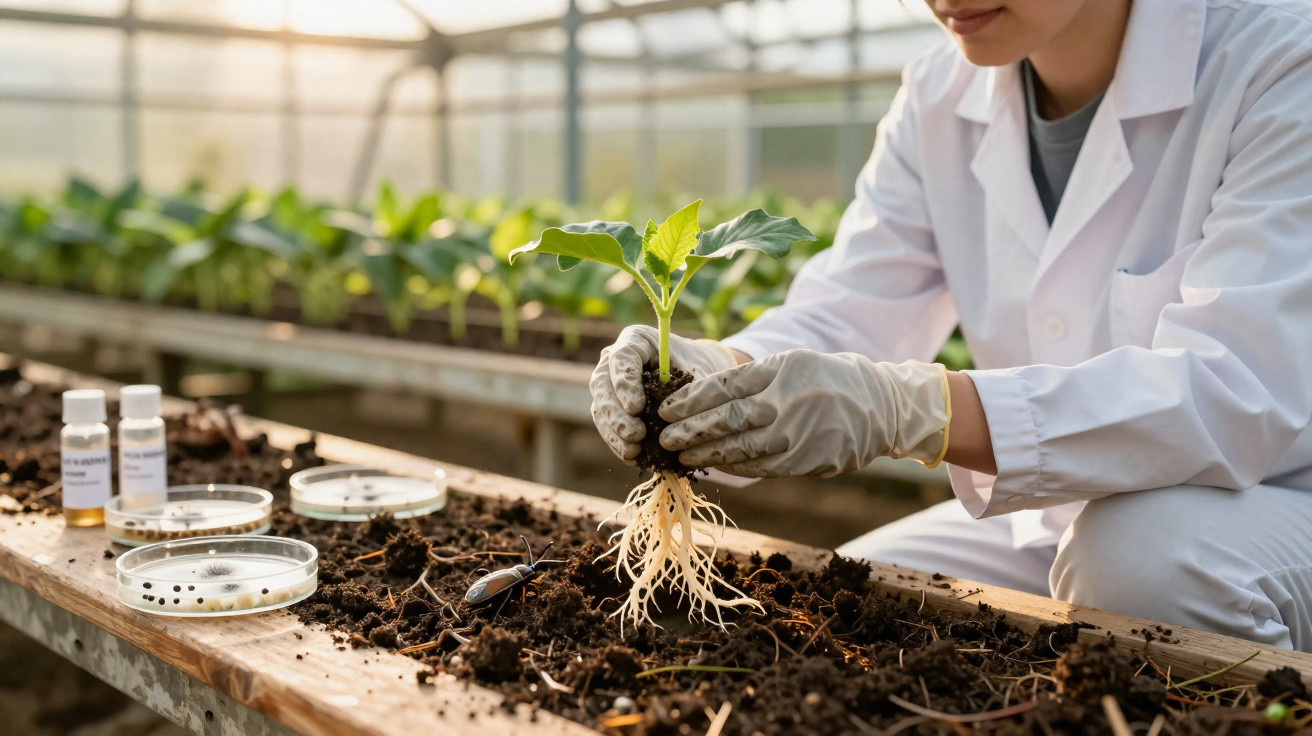
Some soil fungi have remarkably unusual lives. At one point, a fungus may act as a deadly insect pathogen; at another, it may break down organic matter; and at other times, it becomes a plant partner that transfers captured nitrogen directly to roots.
This final ability is particularly unusual. After killing an insect, the fungus extracts nitrogen from the remains and gives it to a plant in exchange for sugars.
The fungus also acts as a recycler underground, consuming dead material and releasing nutrients that can be used by other organisms.
Its hunting method resembles something from a horror film. Spores land on an insect, penetrate its outer shell and consume it from the inside.
For many years, scientists questioned how a single species could perform roles that seem so distinct. Destroying an insect and supporting a plant appear to require opposing abilities.
The trade-off that vanished
A University of Maryland (UMD) team searched for the biological compromise they expected to find.
They assumed that fungi which were more effective plant partners would sacrifice some of their ability to kill insects.
After all, specialists commonly pay a price for their narrow focus. An organism highly adapted to one job is often less capable at others.
But the results revealed something else. Both abilities increased and declined in parallel, connected by one concealed characteristic.
“We expected to see a trade-off – that becoming a better plant partner would come at the cost of being a good killer or vice versa,” said Raymond St. Leger, a Distinguished University Professor in the Department of Entomology at UMD.
“Instead, the two abilities rise and fall together, and what links them is the fungus’s underlying nutritional flexibility.”
Testing the ideal fungus
The team centred its investigation on Metarhizium robertsii. Farmers worldwide already use this fungus to manage insect pests, while laboratories are exploring its potential to promote crop growth.
Its practical history made it a strong candidate for the study. This strain is widespread, extensively researched and straightforward to compare over generations.
St. Leger and postdoctoral associate Huiyu Sheng examined eight strains spanning the species’ evolutionary tree. Their work relied as much on fungal genomes as it did on behaviour.
Genetic information placed every strain on the evolutionary tree. This framework revealed how the two lifestyles had diverged over millions of years.
The researchers recorded the rate at which each strain killed insects and its success in colonising roots. They also assessed toxin potency and growth on 95 distinct food sources.
Two survival strategies
The strains fell clearly into two groups. Their separation reflected the point at which each lineage originally diverged, in some cases more than six million years ago.
Older lineages acted like sleepers. Although they kill at a slower pace, they devote substantial resources to reproducing within the host and generating millions of spores.
These spores support a waiting strategy, remaining in place until another insect comes near.
Younger lineages behaved more like creepers. They establish quickly on insect surfaces and plant roots, kill rapidly and often use paralysing toxins.
Creepers invest little in spores. Rather, they develop fine fungal threads that extend from a dead insect towards nearby roots.
Each strategy has plainly succeeded. Both have persisted independently for millions of years.
Metabolism ties it together
One feature separated the two groups more clearly than any other: metabolic breadth, meaning the range of nutrients a strain is capable of consuming.
Fungi able to use a broader selection of sugars, amino acids and organic acids performed better overall. They infected insects more easily and entered roots with fewer difficulties.
“Instead of forcing fungi to choose between being insect killers or plant partners, evolution appears to have favored strains that are simply better at making use of whatever resources they encounter,” St. Leger said.
“Their versatility begins with metabolism.”
One toolkit with many targets
The results portray these insect killers as organisms with wide-ranging capabilities. Their capacity to attack insects and assist plants arises from a shared nutritional toolkit.
Scientists describe these strains as environmentally competent. The term reflects the way one metabolism can underpin extremely different ways of life.
The same processes used to digest an insect can also break down the materials provided by a root. One toolkit can therefore operate on many targets.
The study also gives biologists a useful model for examining a far larger issue: how microbes evolve the flexibility to move between such contrasting lifestyles.
What this means for farming
The findings have important agricultural implications. Farmers could eventually select individual fungal strains for specific objectives.
Strains with broad diets may suppress pests quickly while also colonising roots and supporting crop growth in fields.
Strains that produce abundant spores may be better suited to another role. Their persistence makes them more appropriate for gradual, long-term pest management.
Broader implications of the study
The benefits extend beyond practicality. Fungal pest controls could reduce the use of chemical sprays that harm soil and water.
“What we’ve learned could help growers use fungal pathogens more effectively,” St. Leger said.
Choosing the most suitable strain for each purpose could make these tools considerably more reliable. This level of precision is what interests the researchers.
The research also contains a simple lesson: a flexible diet can create opportunities that narrowly specialised organisms cannot access.











Comments
No comments yet. Be the first to comment!
Leave a Comment