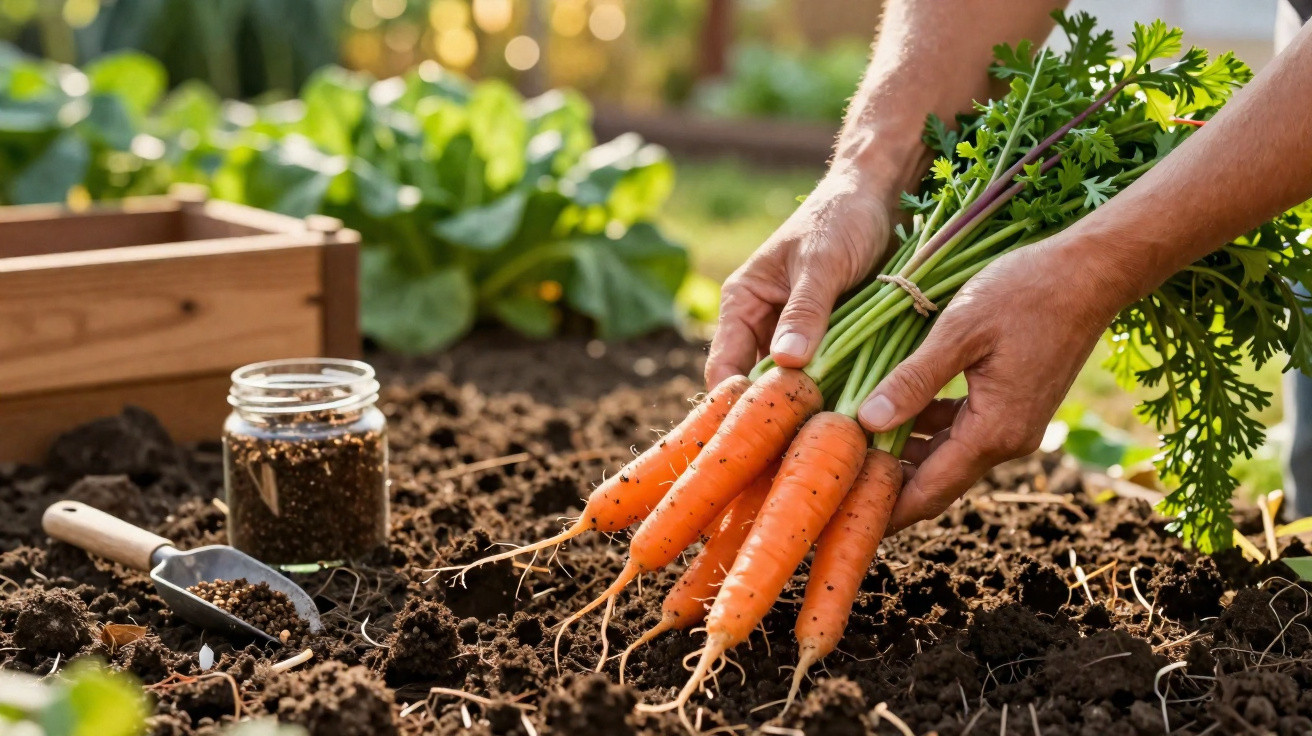
Recent research suggests that modern agriculture produces enormous harvests while noticeably depleting the nutrient content of many vegetables. An international team of researchers identifies tiny soil-dwelling allies as a promising answer: specialised microorganisms, used alongside organic fertiliser, could offset these losses while also restoring flavour and aroma.
Why vegetables now contain fewer nutrients
The study, published in 2025 in the specialist journal “Academia Nutrition and Dietetics”, presents a clear finding: the nutrient density of many vegetables has fallen sharply over the past eight to nine decades. Plant breeding has concentrated largely on yield, size, transportability and appearance rather than nutritional quality.
The researchers provide specific figures: commercially bred high-yield varieties have lost between 25 and 50 per cent of their original nutrient density. Key minerals are particularly affected:
- Sodium: around 52 per cent less
- Iron: around 50 per cent less
- Copper: around 49 per cent less
- Magnesium: around 10 per cent less
These figures are based on average comparisons with older data, when traditional varieties and less intensive cultivation methods were more common. The explanation is not solely found in plant genetics, but above all in the way agricultural land is managed.
How chemical fertilisers leave soil “starved”
According to the study, decades of intensive use of synthetic chemical fertilisers are a principal cause. Although these products supply plants with nutrients they can use quickly, they also impoverish the soil itself. This results in a substantial decline in the soil microorganisms needed for a fertile, living ecosystem.
“A healthy soil is not an inert support for roots, but a complex, living system – and it is precisely this system that is collapsing in many places.”
As microbial diversity declines, the soil becomes less able to retain, convert and make nutrients available to plants. Its physical structure also deteriorates. Water infiltrates less effectively, dry spells become more severe, and heavy rainfall washes away greater quantities of nutrients. Plants may still grow rapidly because fertiliser is applied “from above”, but they produce fewer secondary plant compounds and accumulate fewer minerals.
The alternative approach: microorganisms and organic fertiliser
In multi-year field trials, the research team from India tested a different strategy: largely dispensing with chemical fertilisers and instead using organic sources such as farmyard manure and worm compost, or vermicompost, supplemented with so-called plant growth-promoting microorganisms (PGPM).
These microorganisms, often bacteria around plant roots known as rhizobacteria, or fungi, form a kind of partnership with plants. The principle is straightforward: plants provide sugars from photosynthesis, while the microorganisms return nutrients, protection and improved growth.
What these microorganisms do in practice
- Fix nitrogen: They capture nitrogen from the air and make it available to plants.
- Release nutrients: They unlock poorly available minerals, including phosphorus and trace elements, from the soil.
- Improve soil structure: Metabolic products from microorganisms bind soil particles into stable crumbs, making the soil looser and better able to retain water.
- Reduce stress: Certain strains improve plants’ tolerance of heat, drought or salt stress.
Together with manure or vermicompost, they act as a natural boost to soil fertility. Organic matter provides food for microorganisms, which in turn release nutrients gradually – a cycle that actively strengthens soil life rather than suppressing it.
More minerals, more secondary plant compounds and better flavour
The field trials found clear differences between conventionally grown vegetables, using chemical fertilisers, and vegetables cultivated through microorganism-based organic methods. Their mineral content improved considerably in some cases. On average, levels of three important minerals increased as follows:
| Mineral | Increase with organic-microbial fertilisation |
|---|---|
| Zinc | +48.48% |
| Iron | +31.70% |
| Calcium | +23.84% |
The findings become even more notable when looking at nutraceuticals, meaning secondary plant compounds with added health benefits. The study highlights two everyday staples:
- Potatoes: 45 per cent more flavonoids and 49 per cent more total phenols.
- Onions: 27 per cent more flavonoids and 31 per cent greater antioxidant capacity.
Legumes such as peas and black-eyed beans also showed substantial increases in vitamins and antioxidants. These compounds are associated with a lower risk of cardiovascular disease, certain cancers and inflammatory processes.
“Vegetables from soils rich in microorganisms provide not only more minerals, but also more bioactive substances that can support health over the long term.”
Taste tests: microorganisms make vegetables more appealing
There is also a relevant finding for anyone trying to persuade children, or adults, to eat vegetables: plants treated with organic nutrients and PGPM consistently performed better in taste tests. They ranked ahead in every organoleptic assessment, including aroma, texture and flavour.
The measured “taste score” rose by as much as 27.9 per cent in some instances. The researchers attribute this to several factors: a slower, more balanced nutrient supply, increased secondary plant compounds, and more reliable water availability resulting from improved soil structure. Plants experiencing less stress can devote more energy to aromatic and colour-producing compounds.
“Hidden hunger”: when plates are full but bodies lack nutrients
Falling nutrient density intensifies a global issue that specialists call “hidden hunger”. According to the study, it affects more than two billion people. Calorie intake may be sufficient, or even excessive, yet minerals and vitamins are missing. Common consequences range from tiredness and poor concentration to increased susceptibility to infections and chronic illness.
When vegetables contain more iron, zinc, magnesium or antioxidant compounds, an ordinary serving can make a far greater contribution to meeting nutritional needs. The researchers therefore regard organic-microbial strategies not as a niche trend for organic-food enthusiasts, but as a tool against nutrient deficiencies and in support of greater food security.
Climate protection and environmental effects: more than a nutrition issue
Moving away from purely chemical fertilisers has further effects. Organic fertilisation that builds up humus and supports stable microbial communities stores carbon in the soil. This reduces the concentration of CO₂ in the atmosphere and can lower greenhouse-gas emissions.
At the same time, fewer nutrients are lost through leaching. Where chemical fertilisers are used in high doses, nitrates and phosphates can more easily reach groundwater or watercourses, where they encourage algal blooms. Organic systems release nutrients more slowly and bind them more firmly to soil particles and organic matter.
What this means for farming and home gardens
For farmers, the key question is whether this approach can be commercially viable. The Indian study indicates that yields for many crops remain stable or vary only slightly, while nutritional quality rises markedly. In markets where quality, local produce and sustainability are becoming increasingly important, this may offer a selling point.
Home gardeners can also benefit from these findings. Practical examples include:
- Use compost and vermicompost consistently instead of relying mainly on mineral fertilisers.
- Apply ready-made soil amendments containing beneficial mycorrhizal fungi or rhizobacteria.
- Dig over the soil as little as possible so that microorganisms and soil structure remain intact.
- Sow cover crops and green manures to provide the soil with roots and organic material throughout the year.
These measures can be introduced gradually without changing the entire system at once. Many gardeners report that vegetables develop a more intense flavour when soil has been enriched with compost over several years.
Understanding the terminology and the unanswered questions
The term PGPM, or Plant Growth Promoting Microorganisms, covers several groups: bacteria that fix nitrogen, fungi that extend root networks, and microorganisms that influence plant hormones. They rarely act alone, instead functioning as part of complex communities. A challenge for widespread farming remains the development of stable, practical products that work reliably under differing climatic conditions.
It also remains unclear how such systems perform across very large areas and in different climate zones. The Indian findings provide strong evidence that the approach is heading in the right direction, but they are not yet conclusive proof for every region of the world. Future studies could examine European soils, local vegetable varieties and local weather extremes in greater detail.
One point is certain: anyone concerned with nutrition, climate and agriculture cannot avoid the question of soil biology. Attention is shifting away from what grows above ground and towards the invisible network below it – billions of microorganisms that determine how nutrient-rich the food on our plates ultimately is.















Comments
No comments yet. Be the first to comment!
Leave a Comment